tesa® INSULATION Weatherstrip Foam M
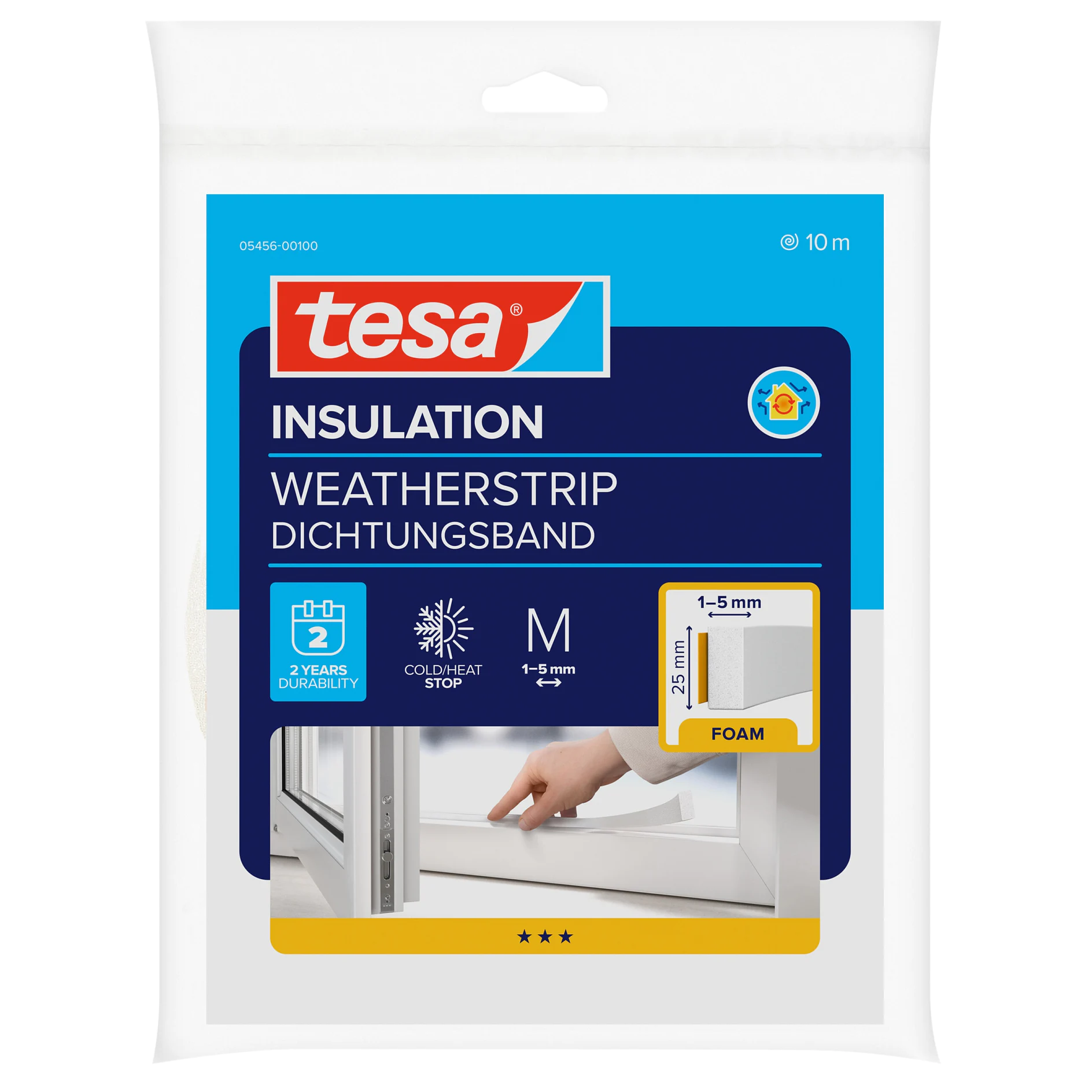
tesa® INSULATION Weatherstrip Foam M shields your home from cold, heat, noise, and moisture. Simple to fit, it seals 1–5 mm gaps on windows and doors to cut draughts and improve energy efficiency.
- Seals medium gaps (M) 1–5 mm to stop draughts
- Insulates against cold, heat, noise and moisture
- Quick, easy DIY installation (self‑adhesive)
Product details
![[en-en] tesamoll Sealing Tape Universal PUR Foam, 6mx9mmx5mm, blister card](/en-gb/files/images/202402/4/medium-11171575,11171575_crop4x3_18.webp "tesa_05412_05428_55604_step_1of5_ap")
Product description
Product description
tesa® Insulation Weatherstrip – the easy way to draught‑proof leaky windows and doors. Blocks cold and heat, reduces noise, and keeps out moisture. Simple DIY fitting with just a pair of scissors. Ideal for gaps of 1–5 mm and compatible with most window and door types. A quick, energy‑saving seal for a warmer home in the colder months.
More product details
- Seals medium gaps (M) 1–5 mm to stop draughts
- Insulates against cold, heat, noise and moisture
- Quick, easy DIY installation (self‑adhesive)
- Durability: up to 2 years
FAQs
What is the reason if the window does not close after attaching a tesamoll® sealing profile?
If a window does not close anymore after a tesamoll® sealing profile was attached to the window frame, you most likely used a profile which is too wide. The only solution is to remove the seal and replace it by a smaller size.
What should I do, if there are gaps of various sizes?
If you discover gaps of various sizes, use either tesamoll® PREMIUM FLEXIBLE or tesamoll® UNIVERSAL Foam. These products feature highly flexible foam, which is able to adapt to a wide range of gap sizes.
In which qualities are tesamoll® sealing profiles available?
tesamoll® sealing profiles come in four qualities with distinctive advantages:
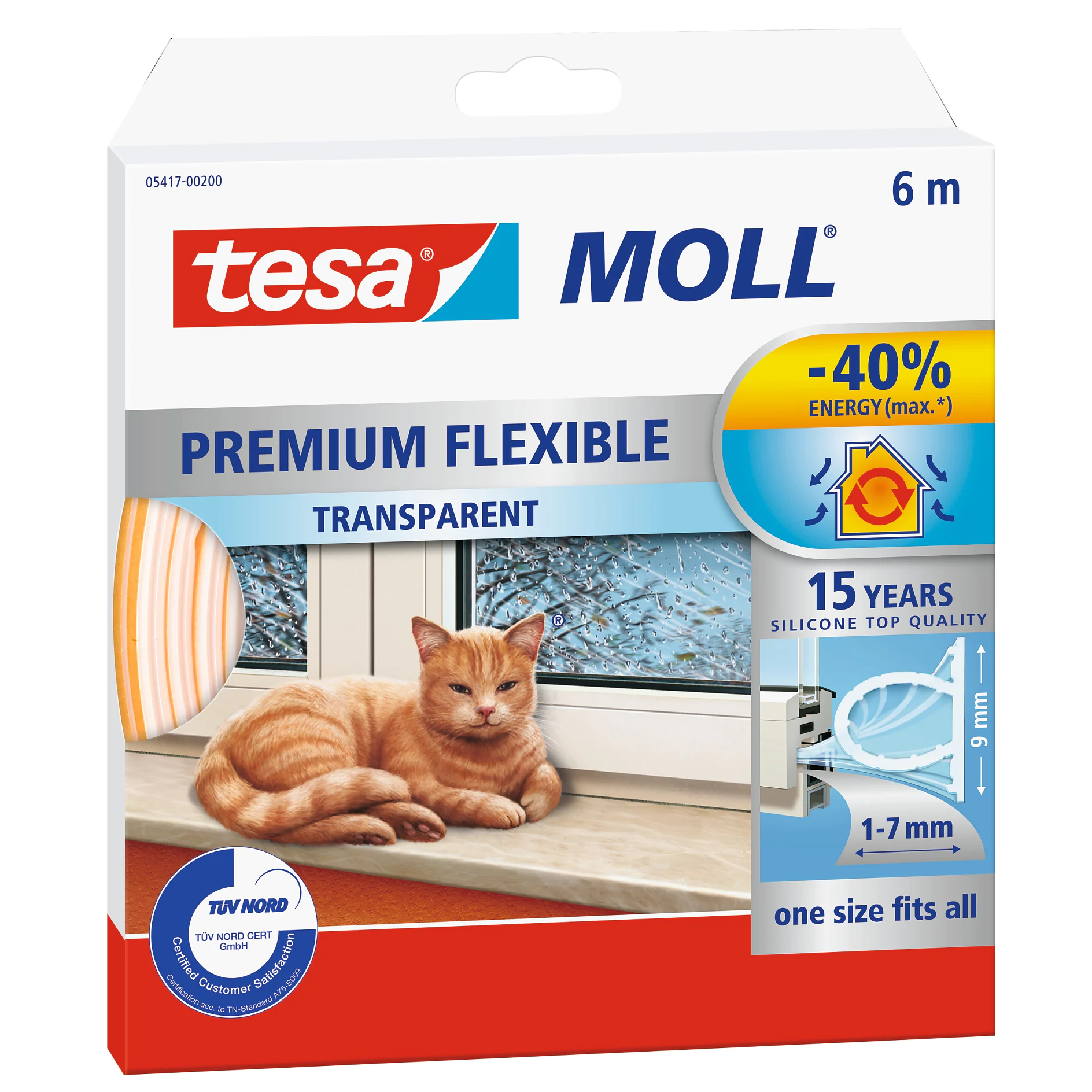
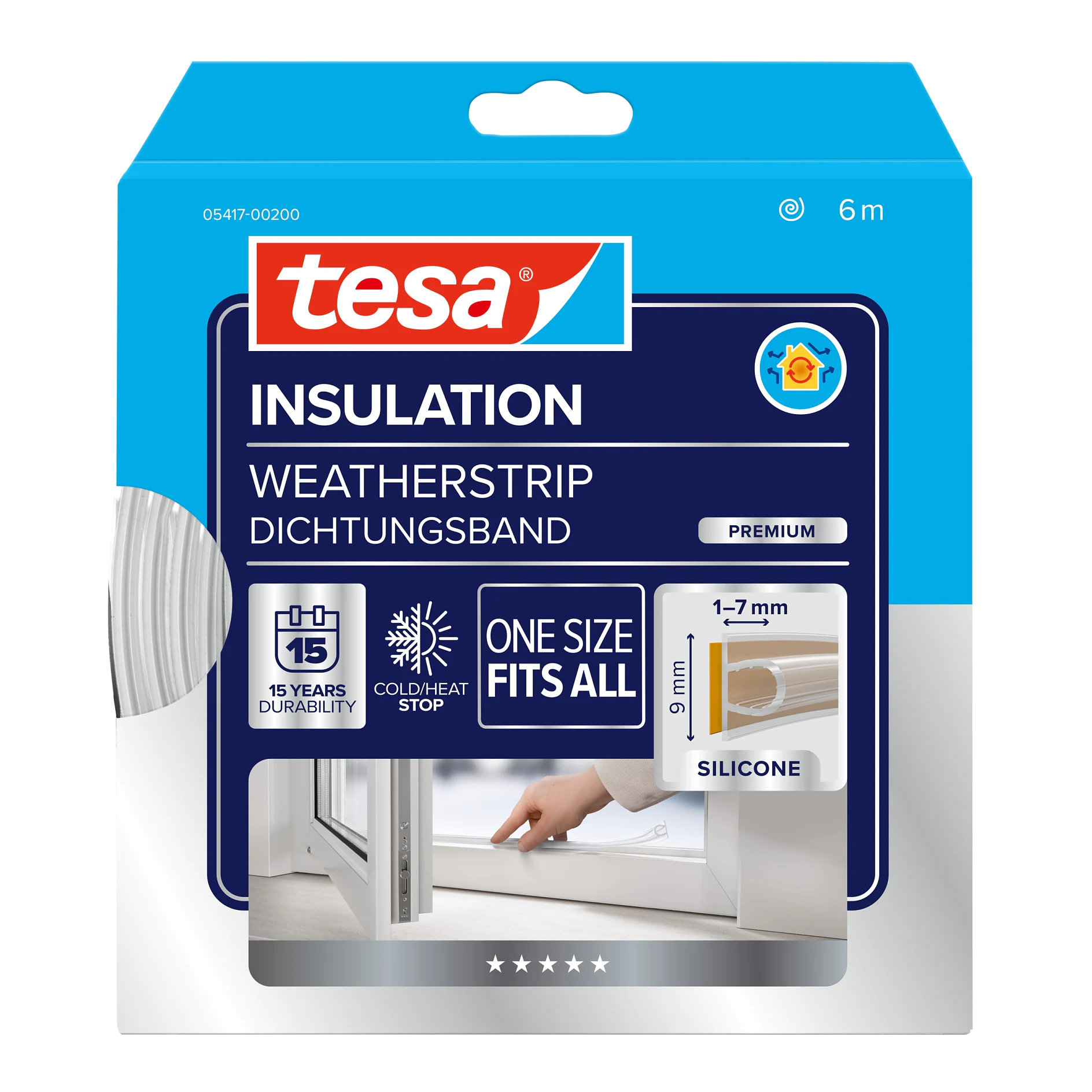
Silicone-based tesamoll® sealing profiles are extremely weather proof and temperature resistant. They come with a 15 year limited guarantee for durability.
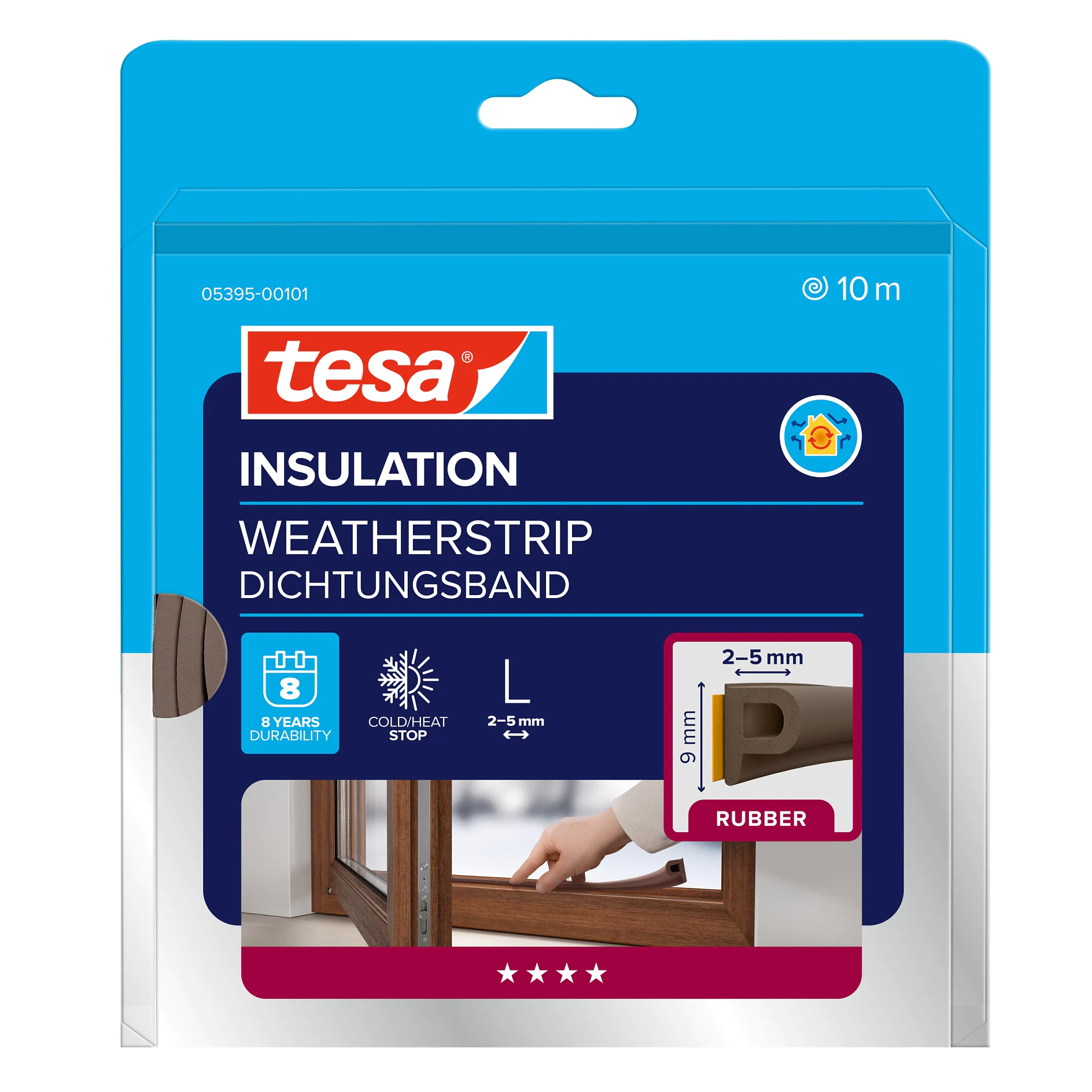
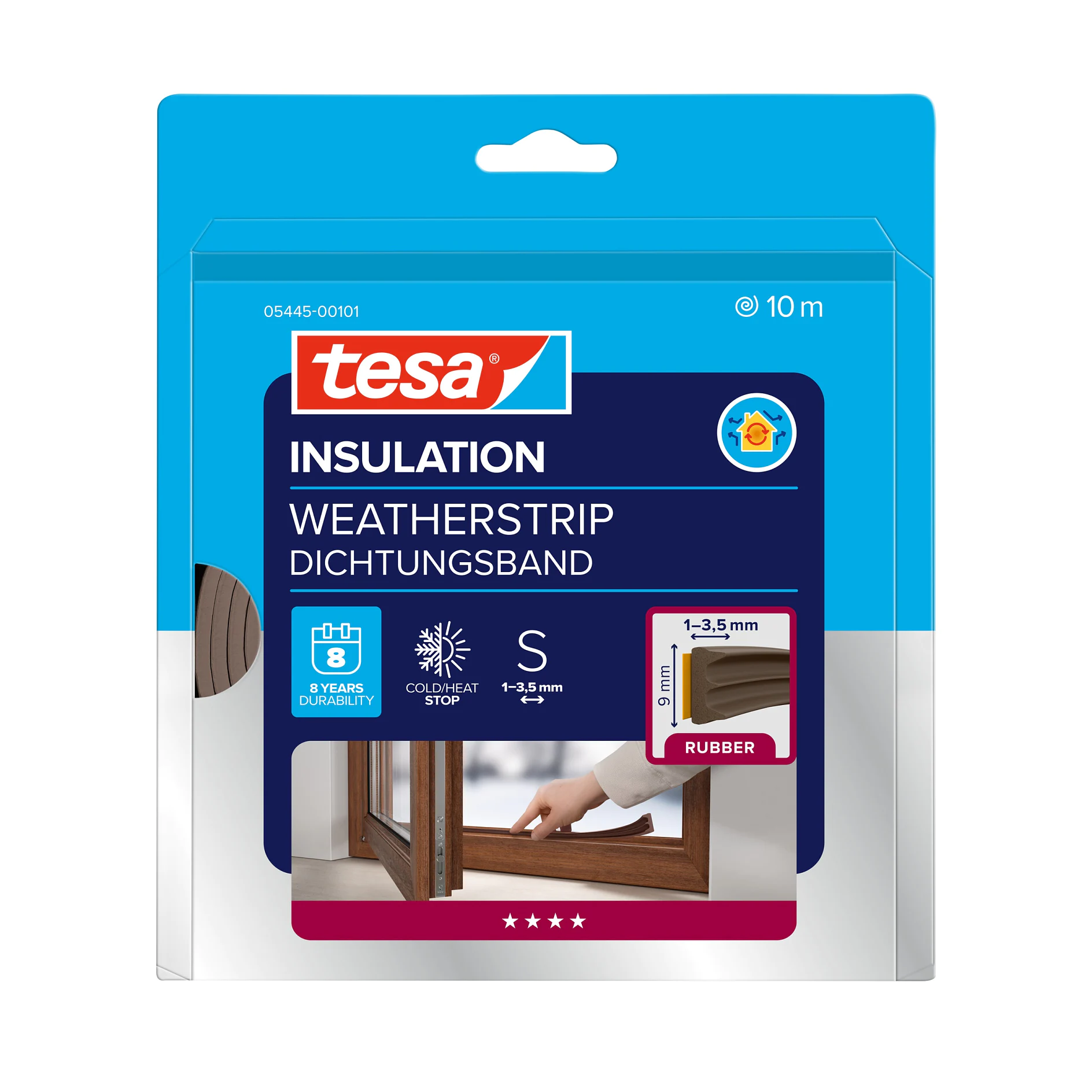
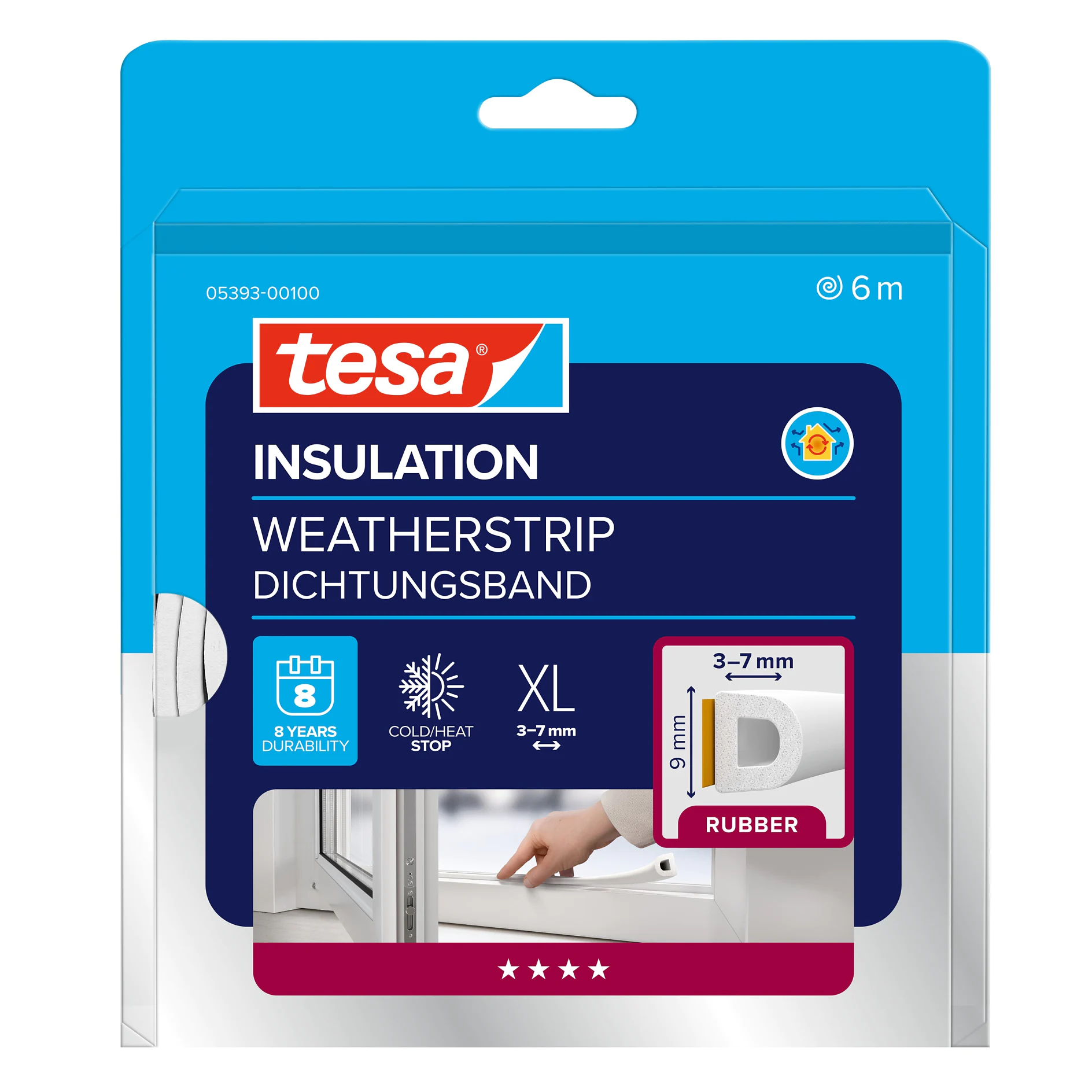
Rubber-based tesamoll® a sealing profiles are weather resistant and water repellant. They are backed by an 8 year limited warranty.
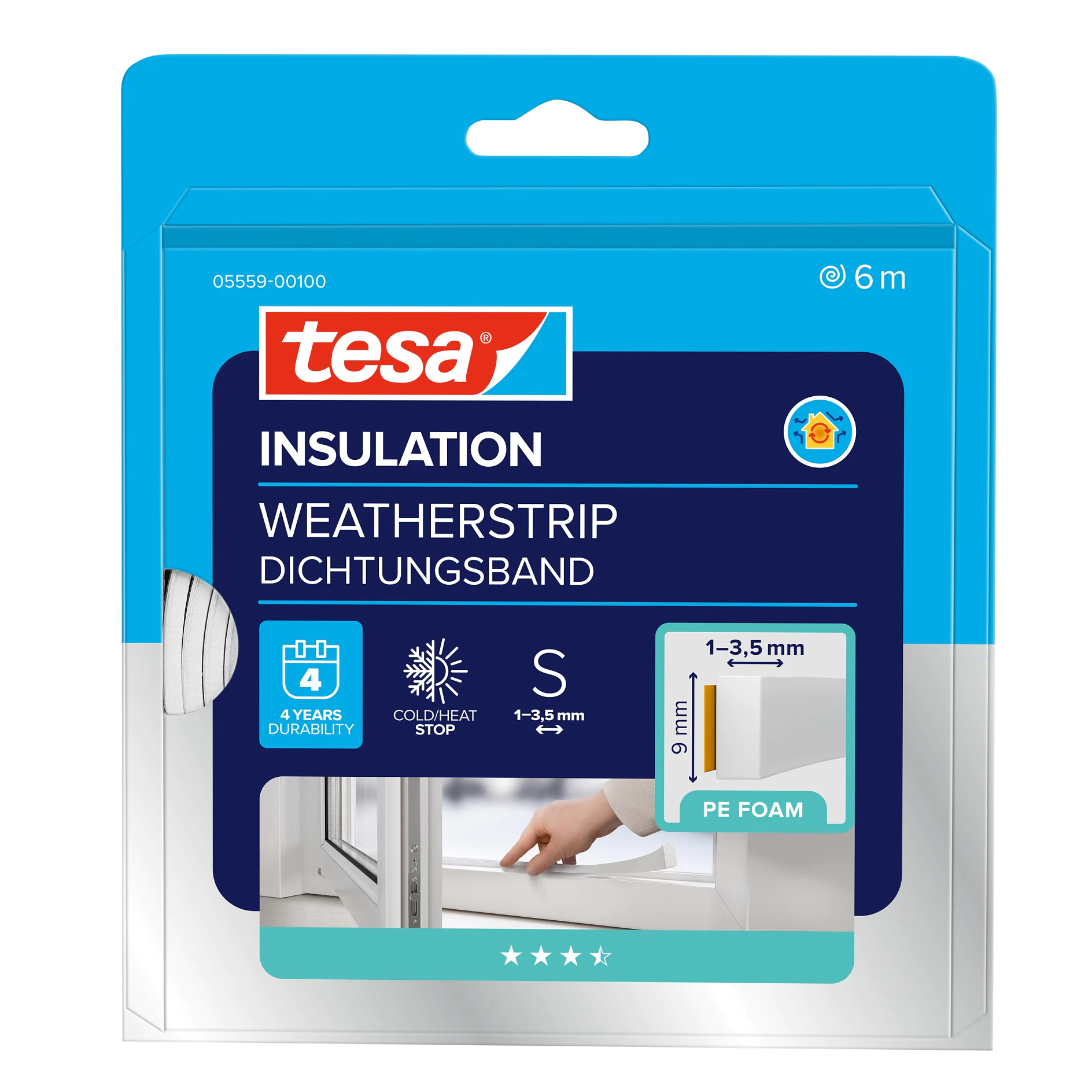
tesamoll® sealing profiles made of closed cell foam are highly flexible and adjust to just about any window gap. Their durability is guaranteed for at least 4 years.
tesamoll® sealing profiles made of open cell foam are the preferred choice for indoor use, since they are not weather resistant. They are highly flexible to match a variety of gaps and offer a durability of at least 2 years.
How can I determine the exact gap size?
A candle will already give you a good idea of the existence of gaps between window and frame. If you want to determine the exact size of the gaps, proceed as follows:
Insert a small strip of plasticine along the window frame. Close the window and open it again. The thickness of the plasticine will show you exactly how wide the gap is at various positions.
tesamoll® sealing profiles are placed inside the window frame and do not have any visual effect on the windows appearance. However, you should select the right type of profile. If the sealing profile is too wide, you will not be able to close the window.
Why should I seal my windows?
Leaky windows push up energy bills and increase the risk of mould. A high‑quality, intact window seal keeps your home warmer and helps cut heating costs. Plus, many seals also offer extra protection against noise and dust.
What temperature resistance do tesamoll® sealing profiles offer?
All tesamoll® sealing profiles are resistant against temperatures between -50°C and +60°C. This makes them an ideal sealing solution for extremely hot days as well as extremely cold winter nights.
What is the basic purpose of tesamoll® sealing profiles?
tesamoll® sealing profiles in different profiles and materials. The flexible and self-adhesive strips are designed to seal gaps of various sizes in windows and doors.
During hot weather, tesamoll® sealing profiles prevent hot outside air from coming in and keeps cool air inside the house. During cold and stormy weather, tesamoll® avoids any cold drafts and keeps heated air inside the house. Doing so, tesamoll® helps to save energy and can reduce energy costs by up to 40%.
What if the window is already equipped with a rubber seal?
If the window frame already features an adhesive sealing, it needs to be removed before attaching any tesamoll® sealing profile. If the window has a window sash with featuring a trapped rubber sealing, the tesamoll® sealing profile should be attached to the window frame in a way that it gets in direct contact with this rubber sealing.
When should I seal my windows?
If rooms stay cold even with the heating on, or you feel a draught, seal your windows as soon as possible. Condensation on the glass is another sign of leaky windows—add draught‑proof window seals to improve energy efficiency and prevent mould.
How can remaining adhesives be removed after removing worn tesamoll® sealing profiles?
After pulling off a worn tesamoll® sealing profile, any remaining residues of the adhesive material can be removed with a standard household cleaning detergent.
How and where must I attach any tesamoll® sealing profile?
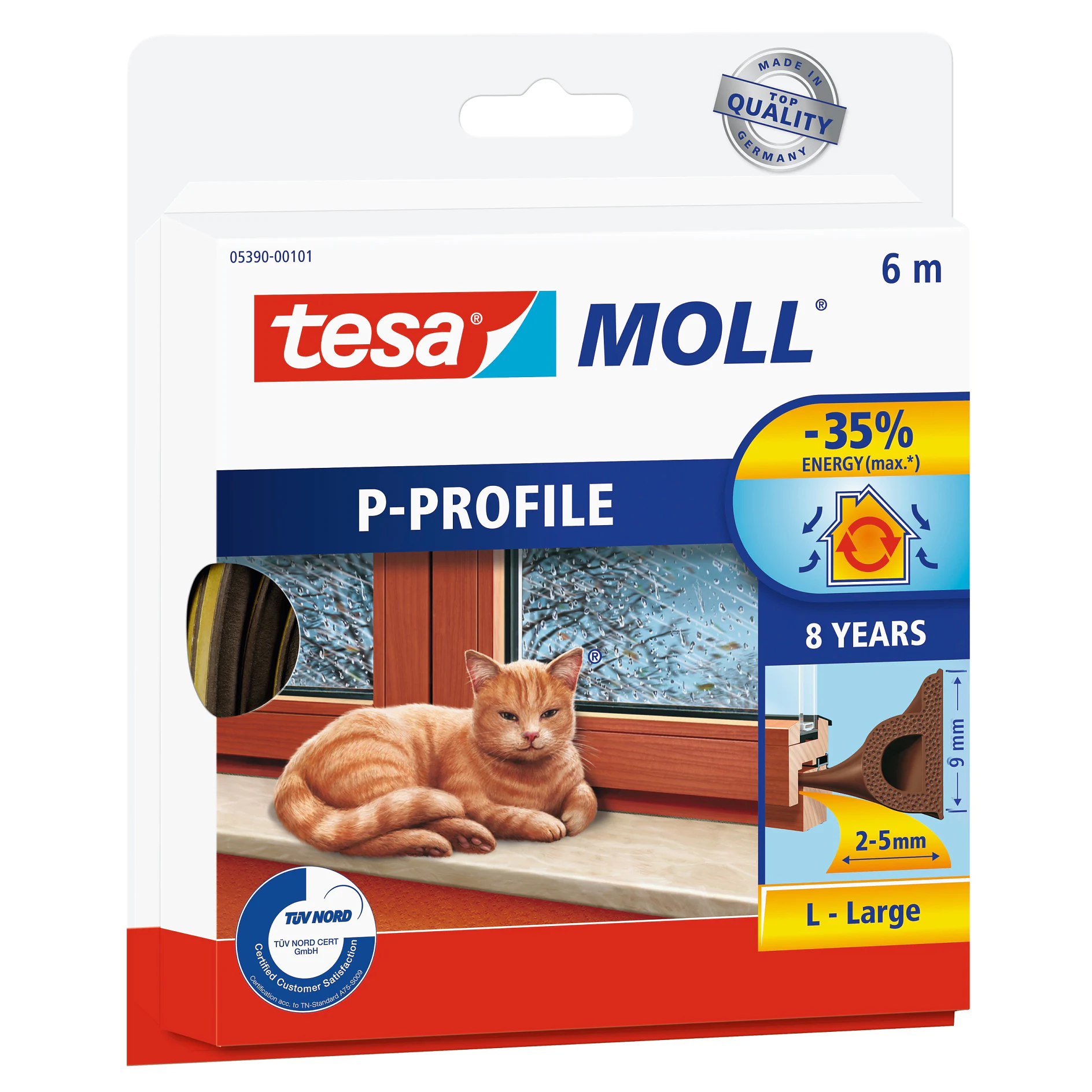
Hidden gaps between window frame and window sash will prevent the window from effectively serving its function to separate the inside air from the outside air. Especially larger gaps will considerably drive up the costs for heating in the winter and air conditioning in the summer. The tesamoll® P-Profile rubber seal was developed to seal such gaps in order to prevent any exchange of air. They feature a special hollow profile and are designed to reliably fill gaps between 2 and 5 mm. The benefits are obvious: no uncomfortable cold draft, no loss of heat, no excessive energy costs. Experience shows that the resulting energy savings can be up to 35%.
WHAT YOU NEED:
- Household detergent
- Tape measure
- Scissors
- tesamoll® CLASSIC P-Profile rubber seal
CAUTION! Detergents with beading effect may limit the performance of the adhesive coating.
How do I determine the right type of tesamoll® sealing profile?
Please use our product advisor (opens in a new window or tab) to find out which of the tesamoll® sealing profiles perfectly suits your situation.
Who pays for window maintenance?
In most cases, the homeowner or the freeholder/management company is responsible for window maintenance. If you’re a tenant, speak to your landlord. Act quickly with leaking or draughty windows—every day without properly sealed windows raises heating bills and increases the risk of damp and mould.
Condensation on windows – what should you do?
Condensation on windows is a warning sign for mould and damp. The most common cause is leaks or gaps in the window frame letting in cold air and moisture. In this case, seal your windows promptly with quality draught‑proofing and weatherproof window seals to prevent mould growth and improve energy efficiency.
How do I determine whether my windows and doors have undesirable gaps?
If it takes very long to heat up a room, chances are that the doors and/or windows are not sufficiently tight. Another indicator are uncomfortably cold areas in front of doors or windows. If the room is equipped with an air condition, gaps in the windows and/or doors will allow cool air to escape and it will take more time to cool down the room.
There is a simple way to discover undesirable gaps between window and window frame: Hold a lit candle at various positions close to the window frame. If the flame of the candle flutters a lot, there are definitely wide gaps that allow an exchange of air. If it flutters just a little, the gaps are still wide enough to affect the room temperature. If it flutters only slightly, but it feels considerably cooler close to the window, there are at least small gaps to prevent economic heating or air conditioning.
Try to test the situation at different positions of the window frame. In this way you get a good idea of where the trouble spots are and are able to address it with a suitable self-adhesive tesamoll® sealing profile. If you discover different gap sizes, use tesamoll® STANDARD or tesamoll® Premium flexible. These products are able to adapt to a wide range of gap sizes.
Is it possible to attach tesamoll® sealing profiles outside the window?
tesamoll® sealing profiles are designed to seal gaps between window frame and window sash. For this purpose they need to be attached inside the profile of the window frame.
How do I seal my windows?
You can quickly and easily apply our self‑adhesive window seals. The strong adhesive backing on the sealing strips creates a reliable, long‑lasting, draught‑proof seal in minutes—ideal for DIY weatherproofing and improved energy efficiency.
Are the tesamoll® sealing profiles removable?
tesamoll® sealing profiles made of either silicone or rubber can be removed anytime by simply pulling them off the window frame. Any remaining residues of the adhesive material can be removed with a standard household cleaning detergent.
How do I repair a window seal?
Replacing a window seal is quick and easy. Don’t cover worn seals; remove them first. Then simply apply our self‑adhesive window seals for reliable draught‑proofing and weather protection.
For what kind of windows can tesamoll® sealing profiles be used?
tesamoll® sealing profiles match nearly all types of windows, as well as room doors or cabinet doors. They are not suitable for sliding doors or windows. tesamoll® sealing profiles designed for small gap sizes are generally used for aluminum or plastic windows, while those designed for bigger gap sizes usually match wooden windows.