Reduce emissions
Read more

Sustainability
For global companies, traceability is the hardest part. That’s why tesa doubled down on responsible sourcing in 2025, mapping its natural rubber supply chain end to end and expanding the share sourced from PEFC-certified partners.
With more than 800 suppliers worldwide across all materials and components, tesa operates within a complex international network that connects raw material producers, processors and manufacturers. This scale offers both challenges and opportunities: tracking how materials are sourced and processed across regions and regulations can be difficult, yet it also allows us to drive higher sustainability standards across the industries we operate in. In 2025, we took decisive steps to strengthen the supply of sustainable natural rubber for our tapes.
Natural rubber has clear advantages. It is renewable, flexible, and strong thanks to its long polymer chains. However, its cultivation and processing is also associated with risks such as deforestation, biodiversity loss, greenhouse gas emissions, and poor labor conditions.
At tesa, responsible sourcing is a key priority across all raw materials. Our goal is clear: we aim to achieve 100 percent responsible and sustainable sourcing. To achieve this, our teams work closely with suppliers around the world to ensure fair working conditions, human rights and environmental protection.
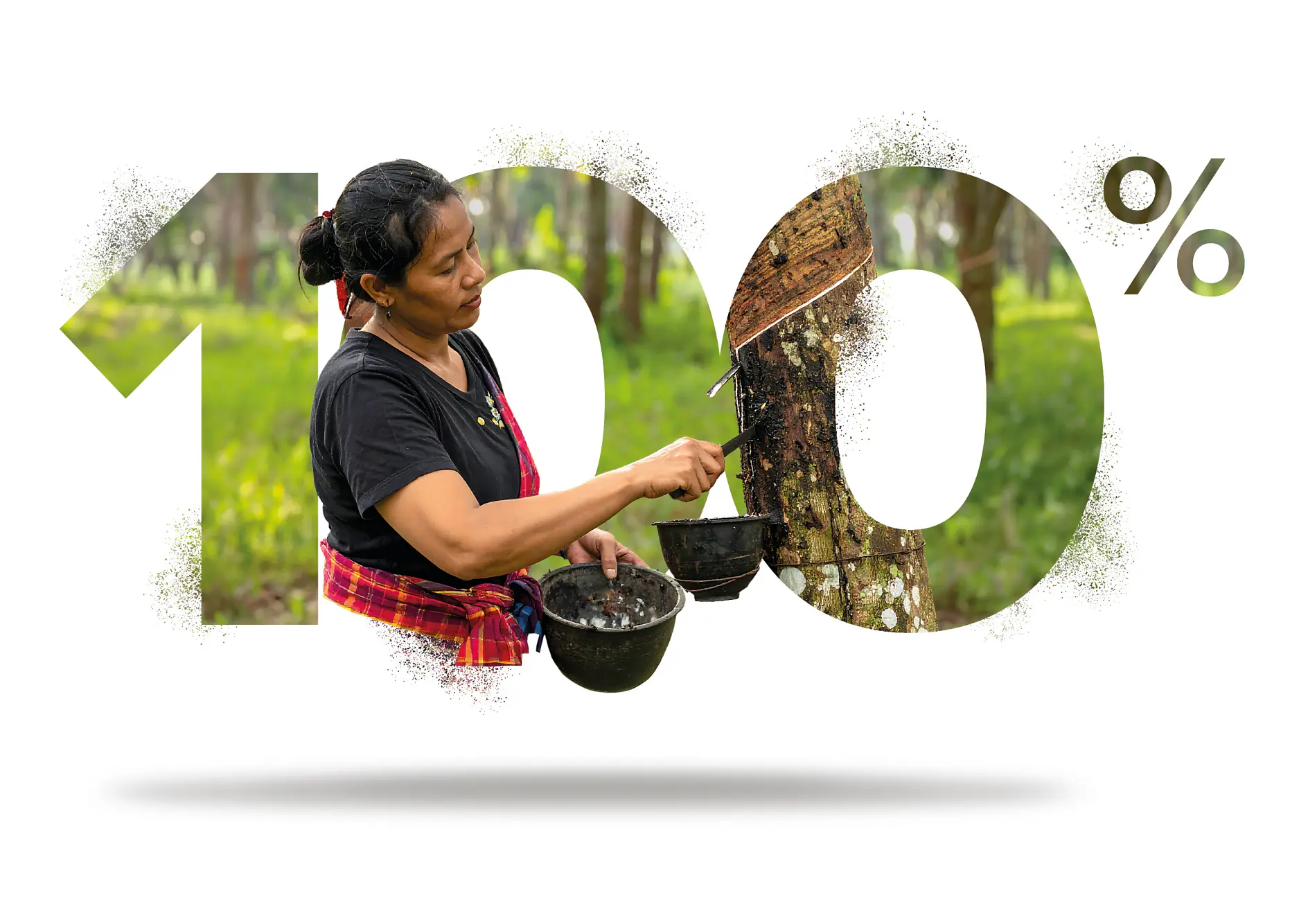
of our direct natural rubber supply chain were successfully mapped by our teams last year.
Certifications play an important role in making these efforts measurable. They help create transparency and identify suppliers who share our commitment to responsible business practices.
Natural rubber is one example where this approach is already delivering tangible results. By the end of 2025, our teams had successfully mapped 100 percent of our direct supply chain for this material - and more than 95 percent of the natural rubber we buy now comes from PEFC-certified partners.
PEFC (the Programme for the Endorsement of Forest Certification) is one of the world’s leading systems for verifying responsible forestry and supply practices. Its criteria cover traceability, social responsibility, working conditions, human rights, environmental protection and sustainable forest management. To gain certification, suppliers must provide transparent documentation and undergo audits by accredited, independent third-party organizations.
To accelerate progress toward more sustainable natural rubber, tesa has built strong partnerships with suppliers. Close exchange and regular contact with our partners help create transparency along the supply chain and address challenges early on. This approach also helps us monitor compliance on site and strengthen cooperation with farmers and processors. Working toward a shared goal creates a win-win situation: ensuring responsible sourcing while supporting continuous improvement throughout the industry.
Working closely with our suppliers is key to ensuring that responsible sourcing becomes the standard across our entire value chain.
Team Lead Sustainable Procurement
These collaborative efforts are central to our approach to supply chain responsibility – across all raw materials, products, and services we purchase worldwide. In fact, tesa has set the long-term strategic goal for all suppliers to comply with its sustainability standards. The progress made for natural rubber in 2025 will now serve as a blueprint for our approach to other material categories.
tesa® NRE is our patented natural rubber extrusion technology that allows us to produce high performance natural rubber adhesive tapes without using solvents in the coating process. Compared to conventional solvent based technologies, NRE can reduce energy consumption by up to 55 percent in production.
We don’t just source renewable, responsibly cultivated natural rubber – we also innovate how we process it to further lower our environmental footprint. Learn more about tesa® NRE and its benefits here.
We want to ensure that fair working conditions, human rights and environmental protection are upheld along the supply chain. To this end, we plan to use certifications, get involved in associations and assess suppliers. In the long term, we aim to achieve 100% responsible and sustainable sourcing for all of our raw materials. We want to ensure that fair working conditions, human rights and environmental protection are upheld along the supply chain. To this end, we plan to use certifications, get involved in associations and assess suppliers. In the long term, we aim to achieve 100% responsible and sustainable sourcing for all of our raw materials.