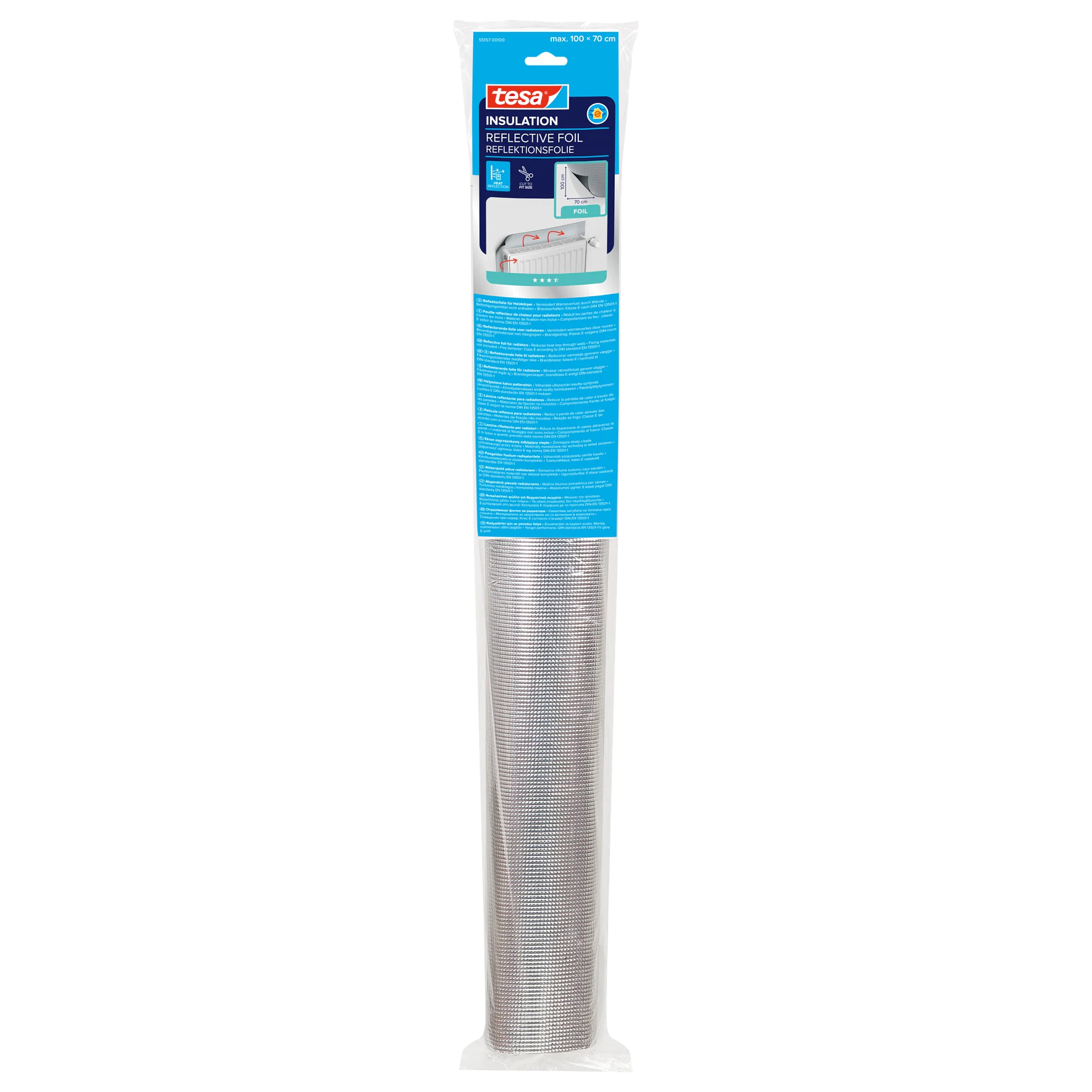
There are many areas in a home where heat can be lost due to poor insulation. One of the most common is the wall directly behind the radiator. With our insulation radiator reflection foil, you can effectively insulate this area. The foil reflects heat back into the room, helping to maintain a comfortable indoor temperature.
The tesa® INSULATION reflective foil is an efficient solution for insulating the wall behind your radiator. It reduces heat loss, thereby improving your living environment. Easy installation.
Aluminum-coated heating foil made of polyethylene foam
Efficiently utilizes radiator heat
Easy installation behind the radiator
Efficient Radiator Insulation – with Reflective Foil from tesa®
If rooms don’t warm up properly despite the heating being on, it’s often due to heat loss through the wall behind the radiator. This is especially noticeable in older buildings or poorly insulated walls. A simple and effective solution: the insulation reflective foil for radiators.
The aluminum-coated surface reflects the heat back into the room, while the polyethylene foam provides additional insulation. The foil is installed behind the radiator – with no major effort or structural changes required. This keeps the warmth inside and the cold air out. Ideal for a comfortable indoor climate.
Note the total width of the radiator and the position of the brackets. Often, you can simply measure the width of the bracket. Then, you only need to mark the distance from the top of the radiator to the bracket.
02Cut Reflector Foil
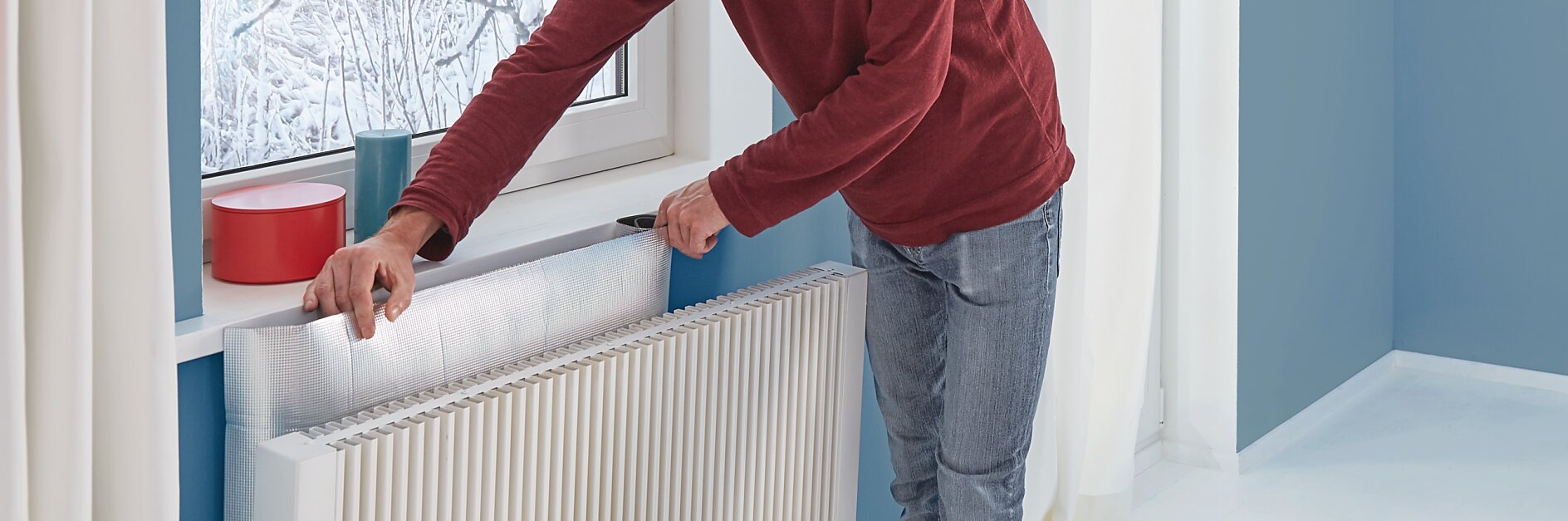
You can easily cut the reflector foil. This allows you to customize the insulation to your radiators so that nothing protrudes behind the radiator.
03Apply Reflector Foil
Now you can slide the reflector foil behind your radiator. This quickly you have more time to enjoy a pleasantly warm apartment. To avoid mold, the reflector foil should not lie directly against the wall.
Advantages of Our Radiator Reflector Foil:
High-quality and effective materials ensure
Customizable
Easy installation (no fasteners required)
Safe (suitable for temperatures up to 70 ºC)
Unobtrusive (only 3 mm thick)
An effective alternative to expensive wall renovation
A radiator reflector foil is the practical, cheaper, and equally effective alternative to expensive renovation. You can simply cut the reflector foil and slide it behind the radiator. In just two steps, you can already prevent the greatest heat loss directly at the radiator.
The reason for its effectiveness is the high-quality materials. These act both as insulation and as a barrier. This keeps the warm air inside and the cold air outside. The room becomes and stays warm.
The only danger with reflector foils is mold formation. However, you don't need to worry about this with our insulation radiator reflector foil. We have deliberately avoided any fasteners, such as glue. This ensures that the reflector foil does not lie directly against the wall. This allows for important air circulation and prevents mold.
Frequently Asked Questions and Answers about Radiator Reflector Foil
When is insulation of the radiator niche useful?
Especially in radiator niches, as found mainly in old buildings, a reflection foil can be useful. Often the outer wall is poorly insulated here, and much of the heat is lost directly. A reflection foil reflects the heat into the room and prevents cold air from entering through the wall.
How does a reflection foil work?
On one side, the aluminum coating of the reflection foil ensures that the heat from the radiator is reflected into the room. On the other side, the polyethylene foam prevents cold air from entering the room. The reflection foil acts both as insulation and as a barrier. Heat often escapes through the wall directly behind the radiator. Here, the radiator reflection foil offers an effective and simple alternative to extensive renovation.
How to install radiator reflection foil?
You can easily install your radiator reflection foil in just three steps. First, measure the width of the radiator and the position of the brackets. Then you can cut the reflection foil to size and slide it behind the radiator. This way, heating costs can be reduced quickly.
When does mold form behind the radiator reflection foil?
Mold can form if the radiator reflection foil is directly against the wall. Then the air behind it cannot circulate properly, and mold appears. For this reason, you do not need any fastening materials for our radiator reflection foil.