te23_1112_CC_Debonding_on_demand_Long_V4_231211

Debonding on Demand

Black lowercase letter "i" centered inside two concentric black circles on a white background, symbolizing information. (This text has been generated by AI)

Quick overview

  • Debonding on Demand technologies enable bonded components to be separated cleanly, efficiently, and on demand to support product design, rework, repair, and recycling. 
  • The technologies are designed to support separation by design, efficient rework during assembly, damage-free repairs, and easier disassembly for recycling. 
  • Debonding mechanisms include electrical debonding, laser debonding, stretching and debonding, and thermal debonding. 
  • These technologies help support material recovery, reuse, extended product lifetimes, and reduced waste throughout product lifecycles.

Introducing tesa's Debonding on Demand technologies

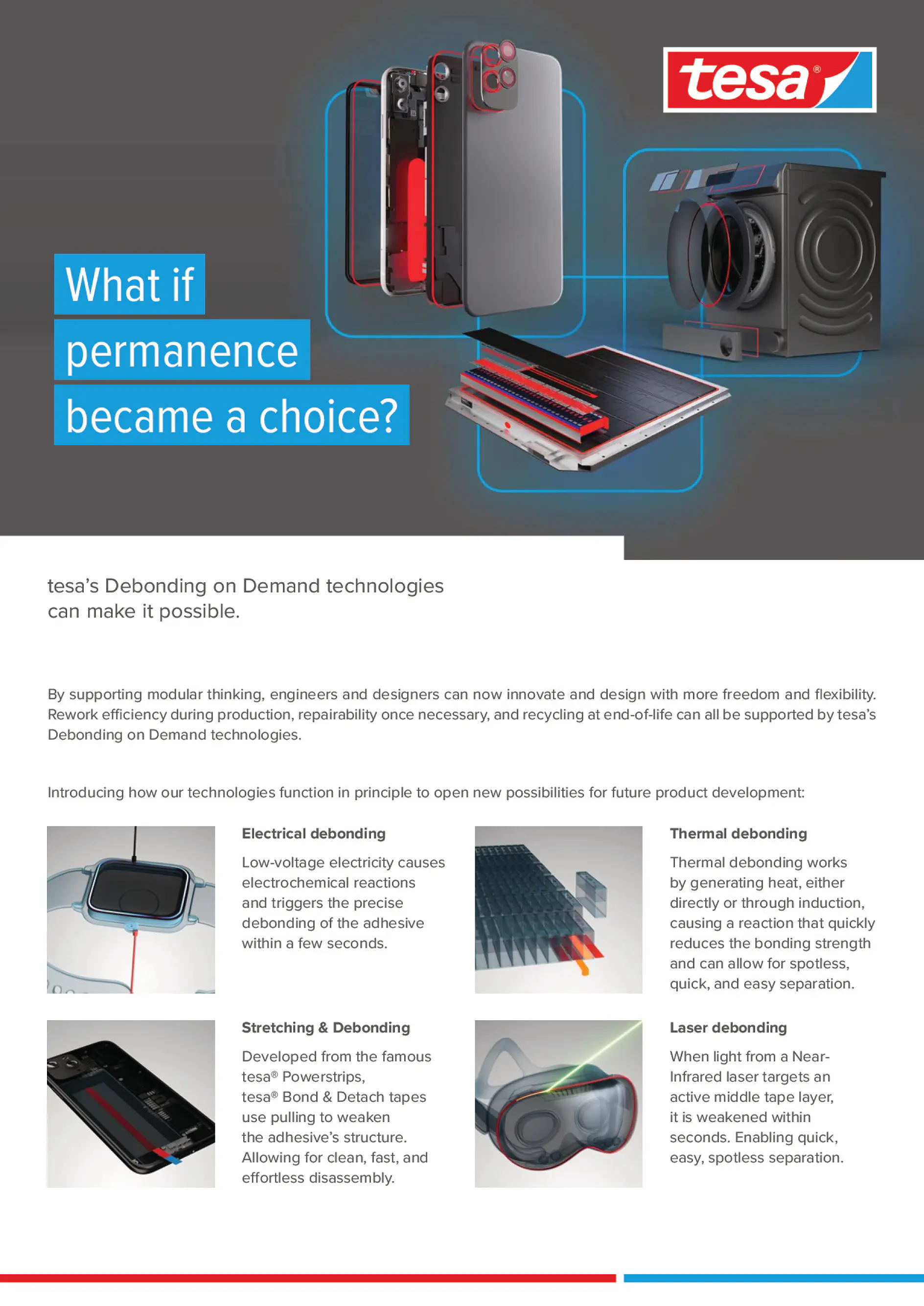
In a circular economy, it’s not enough to build things to last. They also need to come apart cleanly, efficiently, on demand. tesa’s Debonding on Demand technologies can enable smarter separation so that in the future you can design, rework, repair, and recycle without compromise. 
Bond with confidence. Release with control.

tesa_debonding_manifesto_FINAL_w_SUBS

Benefits at a glance

Learn how our technologies were designed to support your targets:

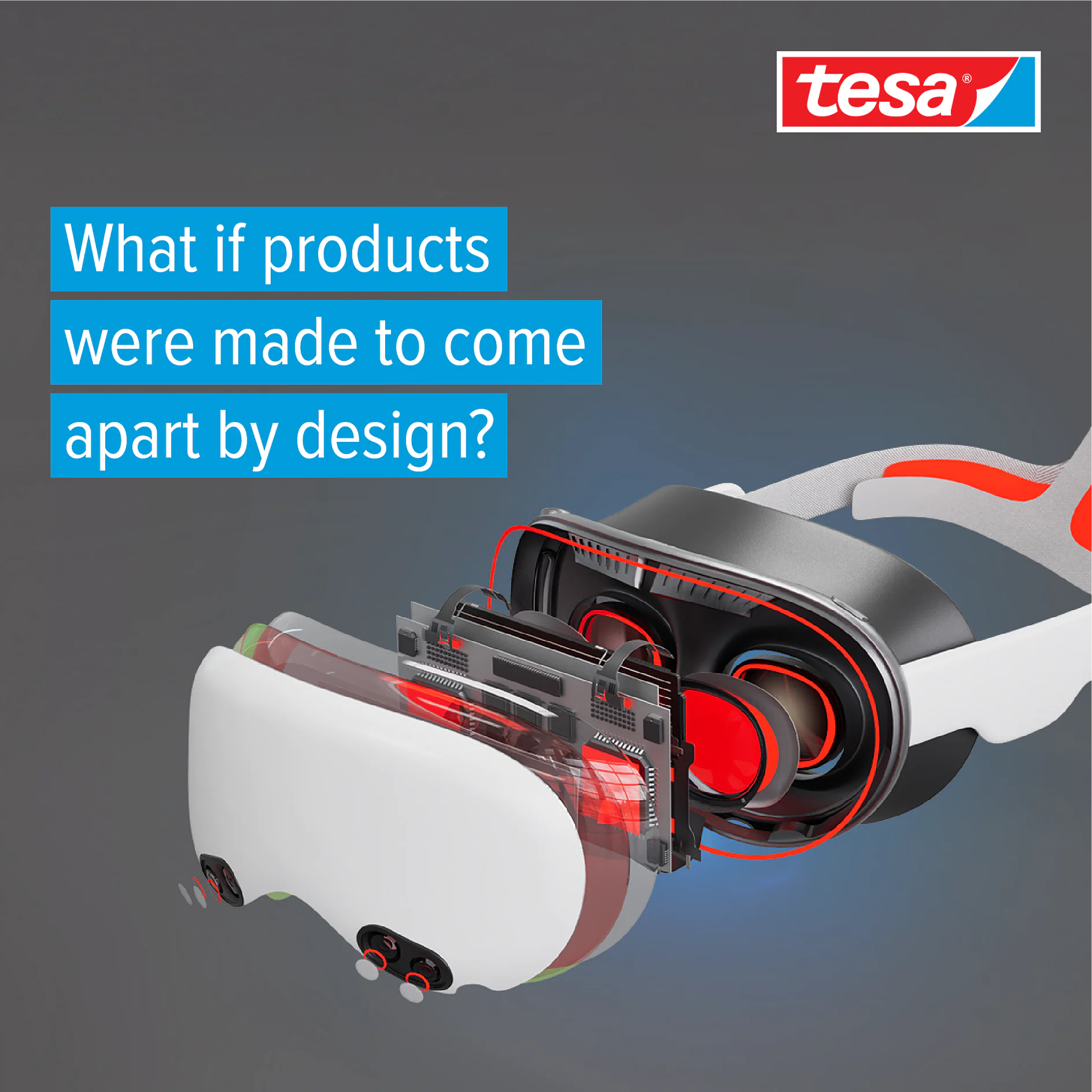
A VR headset’s parts float separated. Blue text: What if products were made to come apart by design? tesa tape logo at top right. (This text has been generated by AI)

01Separation by design

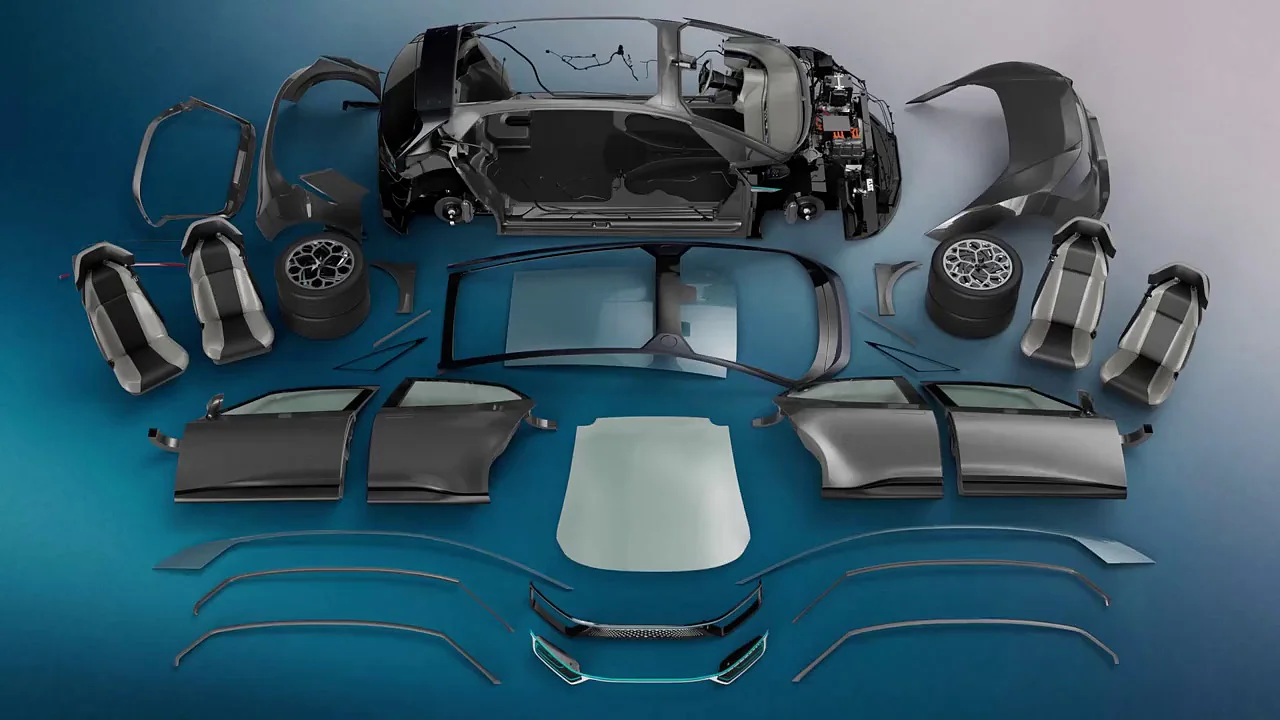
Designing for separation is a smarter, more future-ready approach. Our innovative adhesive technologies can empower engineers and designers to rethink the entire product lifecycle from assembly to end of life, enhancing both design flexibility and circularity.

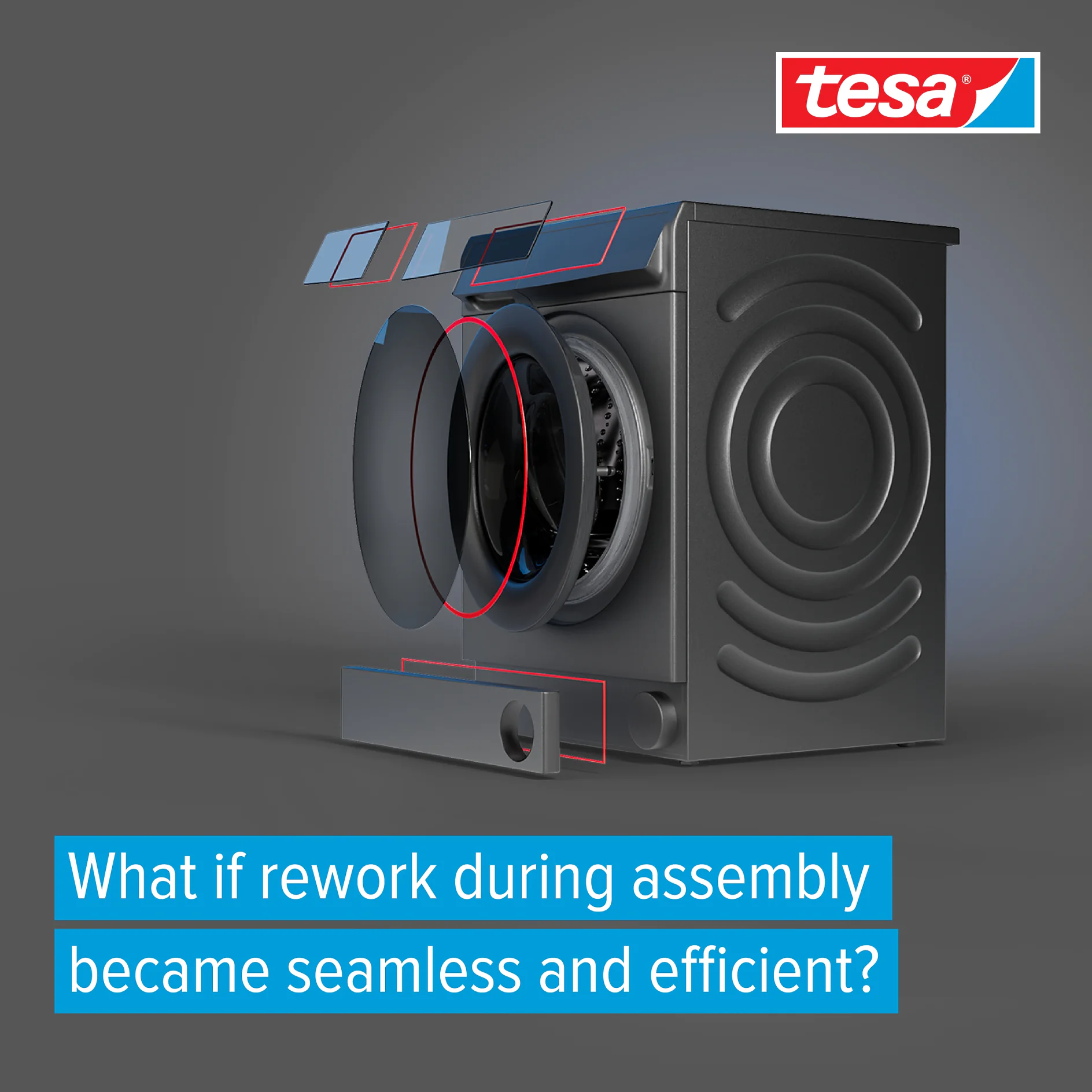
A washing machine partly disassembled, with tesa tape highlighted in red and blue, tesa logo top right, and text below. (This text has been generated by AI)

02Rework during assembly

Quick corrections can become necessary in any industrial production line. Our innovative adhesive technologies can enable easy, efficient disassembly and rework of components to help reduce downtime and maintain cost-effectiveness and high standards in manufacturing.

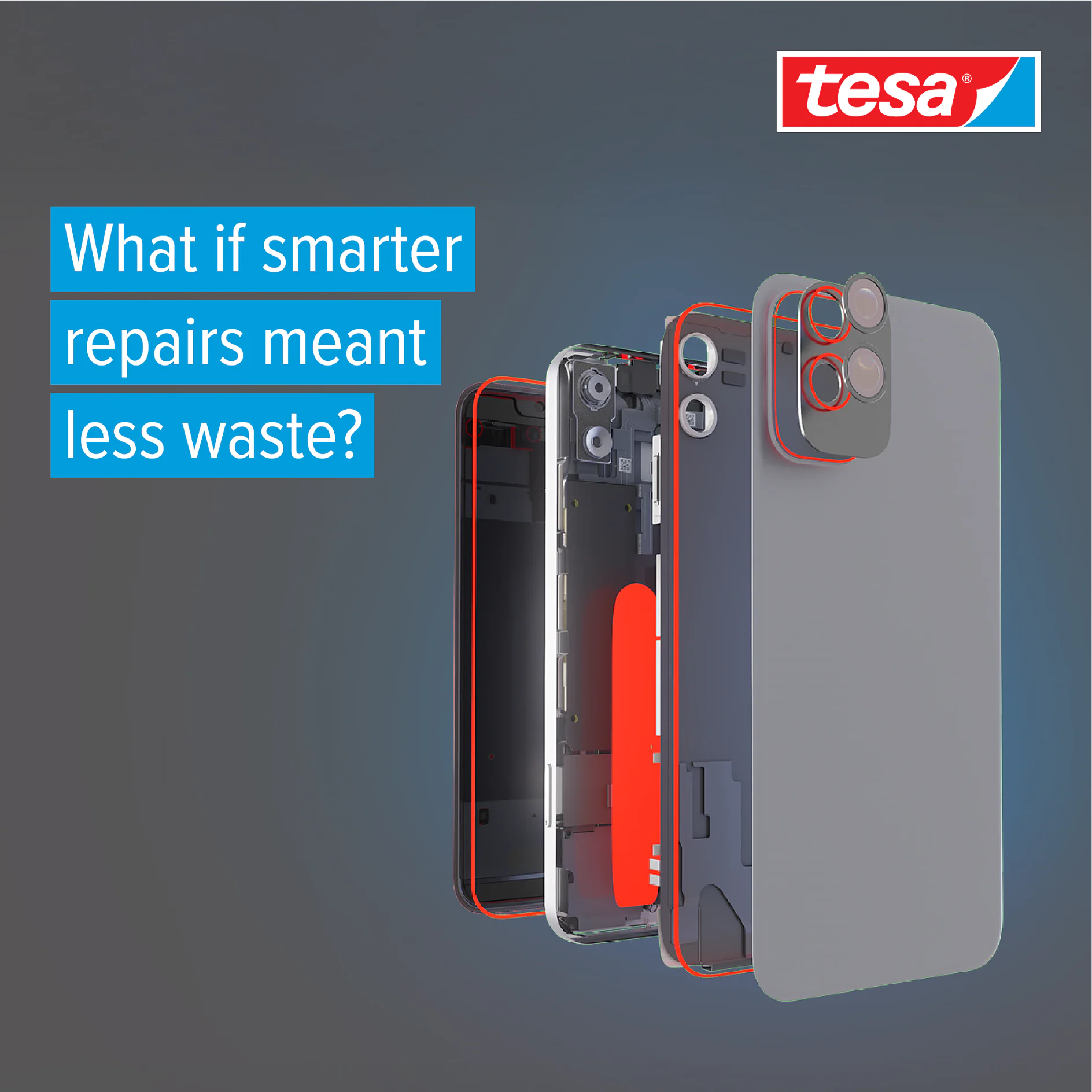
Exploded smartphone view reveals internal parts with red highlights; text reads What if smarter repairs meant less waste? beside tesa logo. (This text has been generated by AI)

03Smart repairs

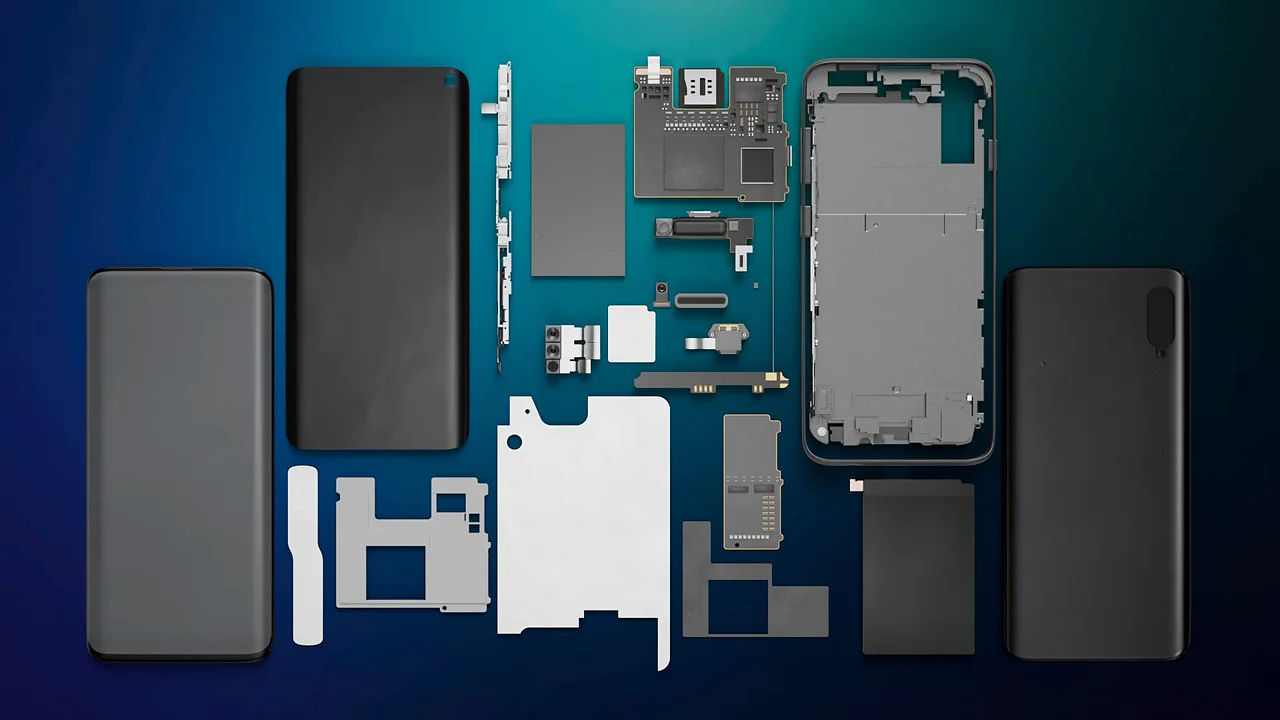
Our innovative adhesive technologies can support clean, damage-free separation of bonded components. This can help make product repair faster, more precise, and less wasteful across industries such as automotive and electronics, where repairability is essential.

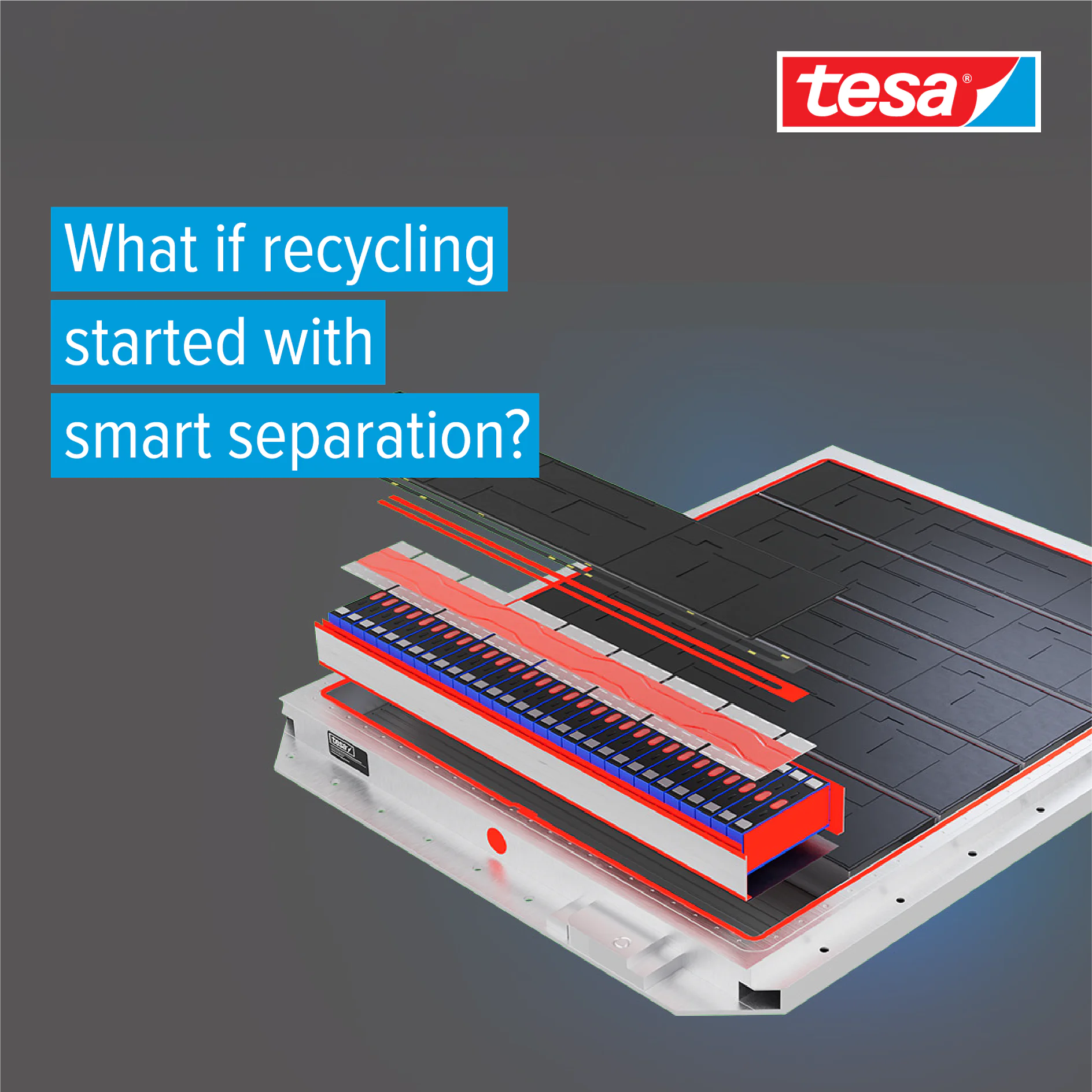
A cross-section battery pack diagram showing highlighted layers, text reading What if recycling used smart tesa tape separation?, and the tesa logo in the top right corner. (This text has been generated by AI)

04Disassembly for recycling

Clean separation is essential for circular design. Our innovative adhesive technologies can enable products to be easily disassembled, which supports material recovery and improves recyclability, enabling manufacturers to reduce waste throughout product lifecycles.

document icon with bulleted list and folded corner on white background, representing text or notes tesa (This text has been generated by AI)

Debonding on Demand technologies for repair, rework, and recycling

Best for: Debonding on Demand technologies are designed for applications that require clean separation of bonded components during assembly, repair, or end-of-life processing. They support product lifecycle strategies focused on rework, repairability, and recyclability. 

Why they perform

  • Enable clean and efficient separation
  • Support rework during assembly
  • Enable damage-free component repairs
  • Improve disassembly for recycling
  • Support material recovery and reuse
  • Available with multiple debonding mechanisms

Typical applications

  • Separation by design in product development
  • Rework during industrial assembly processes
  • Repair of bonded components
  • Disassembly for recycling
  • Material recovery and reuse initiatives

Performance takeaway: Debonding on Demand technologies support clean separation throughout the product lifecycle, helping enable rework, repair, and recycling without compromise.

Technology overview

Learn how our debonding mechanisms work in theory to redefine what's possible with future product developments:
 

Debonding on Demand_Electrical Release

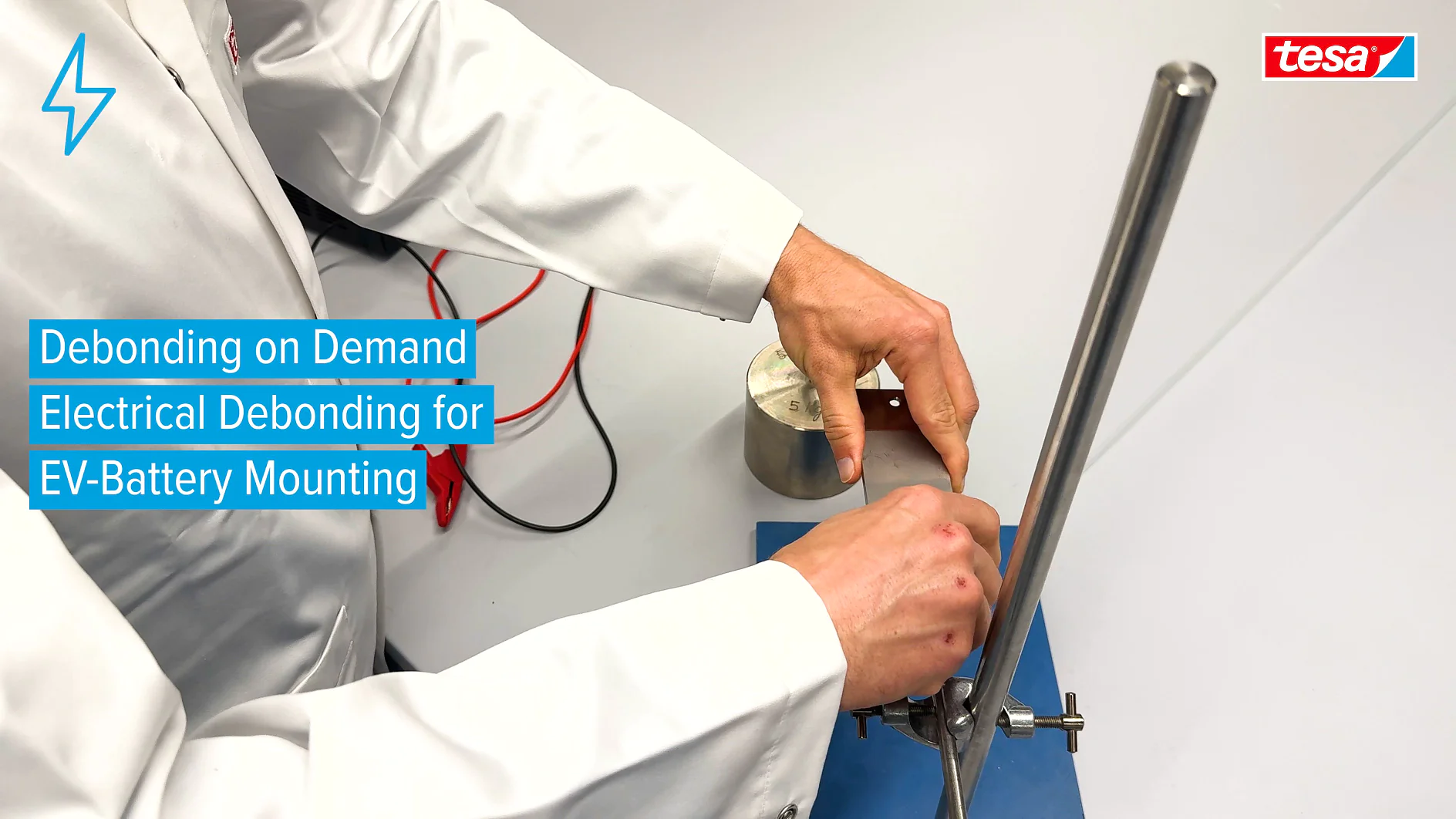
Electrical debonding

Low-voltage electricity causes electrochemical reactions and allows debonding of the adhesive within a few seconds. 

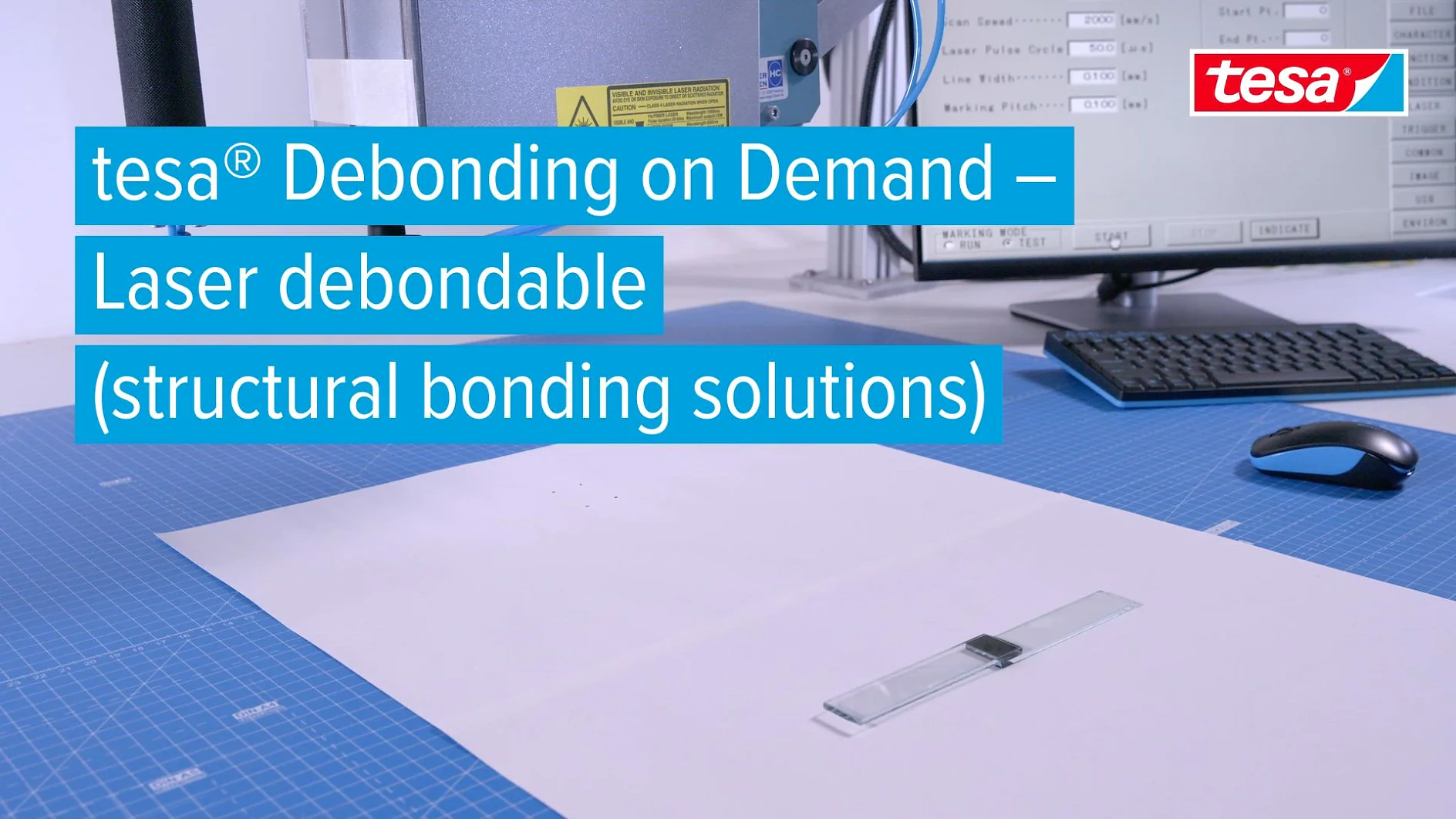
Laser debonding

In just a few seconds, light from a Near Infrared (NIR) laser weakens the tape structure – causing it to debond.

Laser debonding - LTC 1 (1)
automotive-bond-detach-display-sm

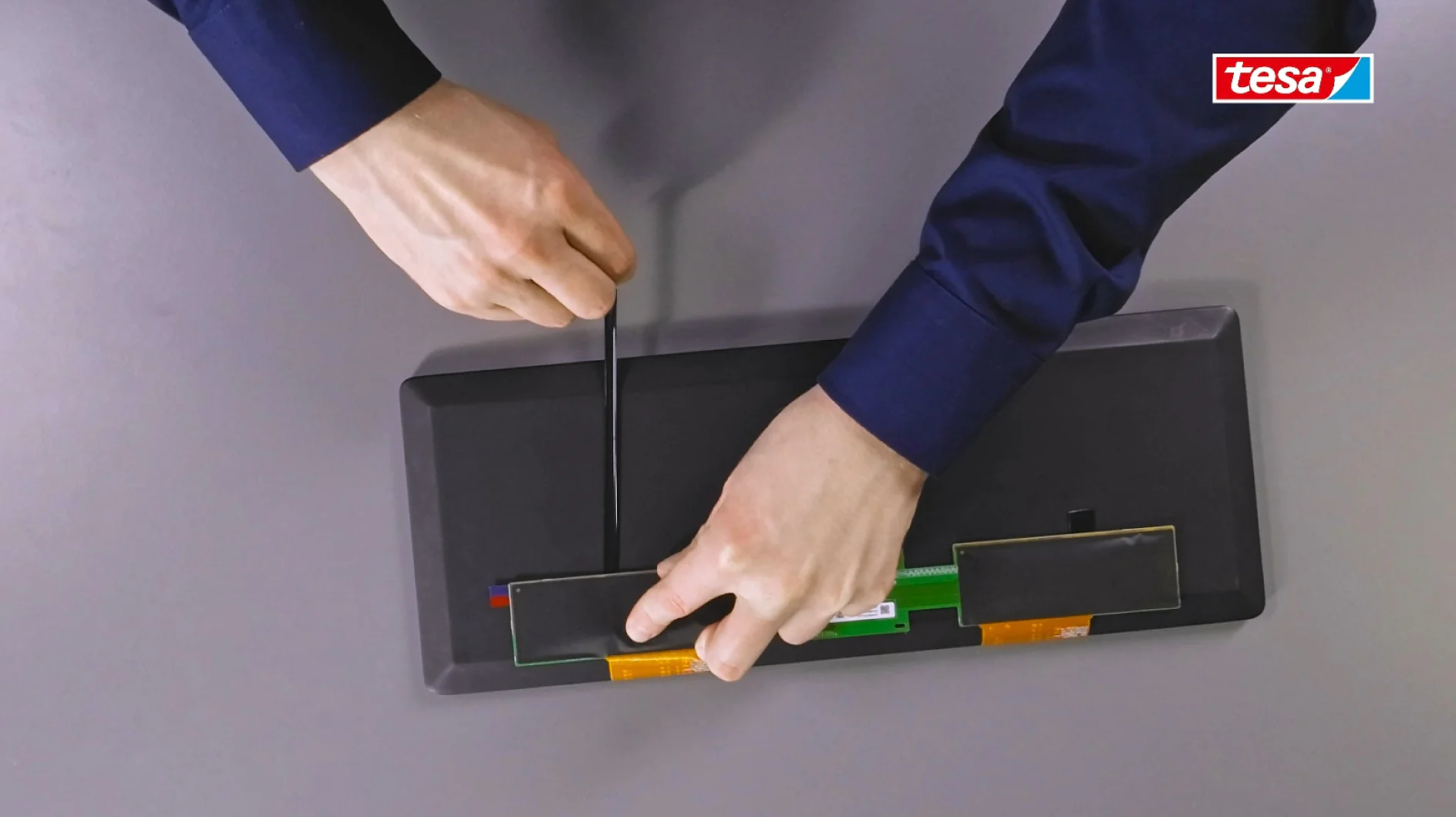
Stretching & Debonding

Developed from the famous tesa® Powerstrips, tesa® Bond & Detach tapes feature a tab that users can pull to remove the tape by reducing the bonding strength via stretching.

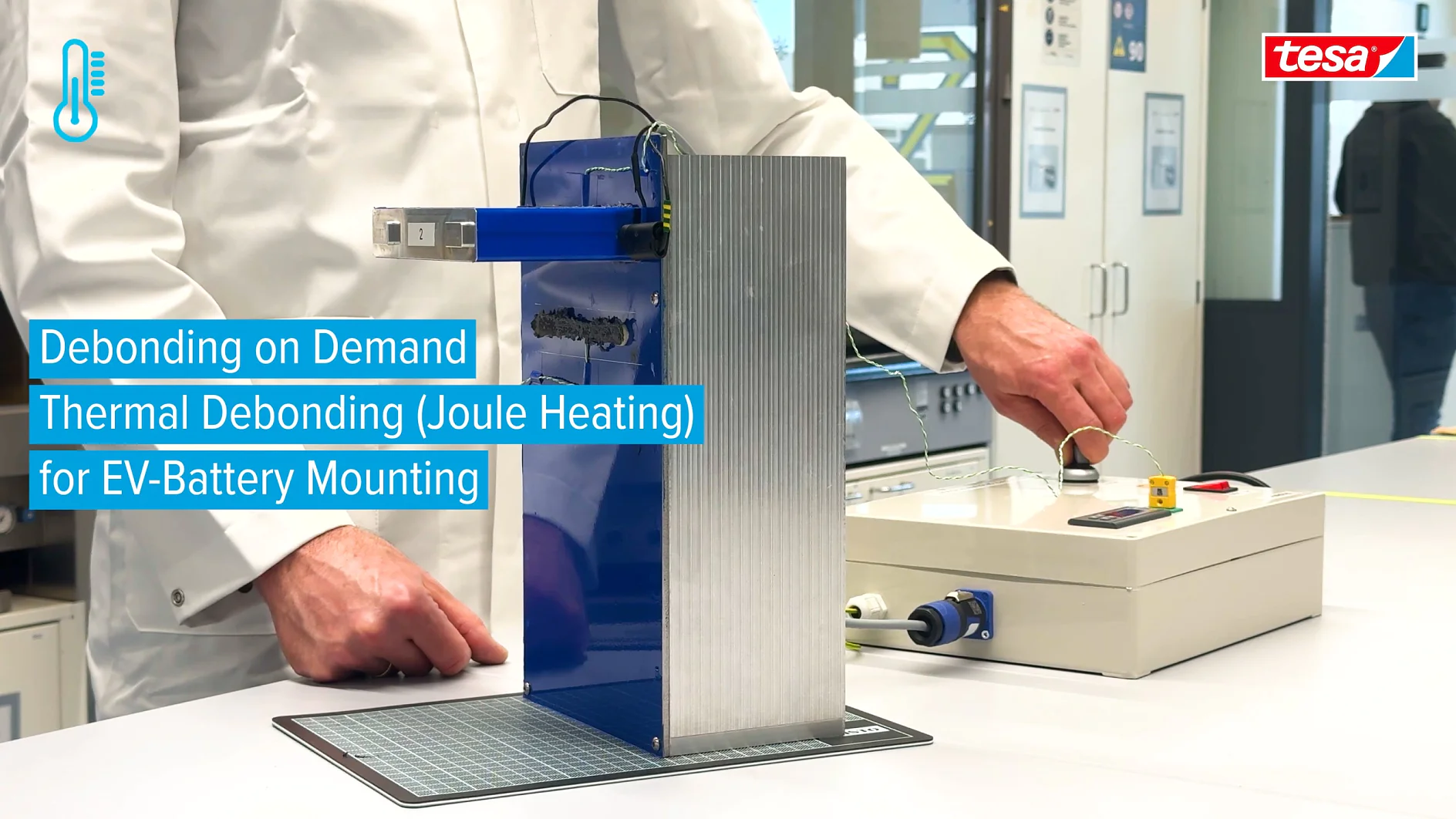
Thermal debonding

Thermal release works by generating heat, either directly or through induction, which causes the adhesive to expand or break down and enables clean separation.


Debonding on Demand_Thermal Debonding Joule Heating

Technological breakthroughs. Endless future possibilities.

Designed to meet the real-world pressures of modern manufacturing, tesa’s Debonding on Demand technologies can help manufacturers build with the future in mind. They can enable clean separation, material recovery and reuse, extending product lifetimes, reducing waste and supporting compliance with evolving repair and recycling targets.
Let's talk about your specific requirements so we can develop products that match!

From idea to implementation - let's go together!

Contact us now to learn how tesa's Debonding on Demand technologies can help you design without constraint, rework to avoid waste, and repair & recycle without compromise - and how we can develop products collaboratively. One of our dedicated tesa experts will be in touch shortly.

Thank you for your message.

We will contact you as soon as possible.

Something went wrong. Please try again later.

Debonding on demand FAQs

tesa Debonding on Demand uses different mechanisms to weaken or release the adhesive when separation is required. Depending on the technology, debonding can be triggered by low-voltage electricity, a Near Infrared laser, stretching the tape, or heat generated directly or through induction.

Debonding tape can enable clean and efficient separation of bonded components, allowing manufacturers to correct assembly errors, rework components, and support product repairs without damaging the bonded parts. This can help reduce downtime and waste while maintaining efficient manufacturing processes.

tesa Debonding on Demand technologies can enable clean separation of bonded components, making products easier to disassemble for material recovery. This can support improved recyclability, material reuse, and reduced waste across the product lifecycle.

Last updated on Sep 16, 2026