
Sustainability remains our driving force - forward-looking, innovative, and without alternative
Sustainability
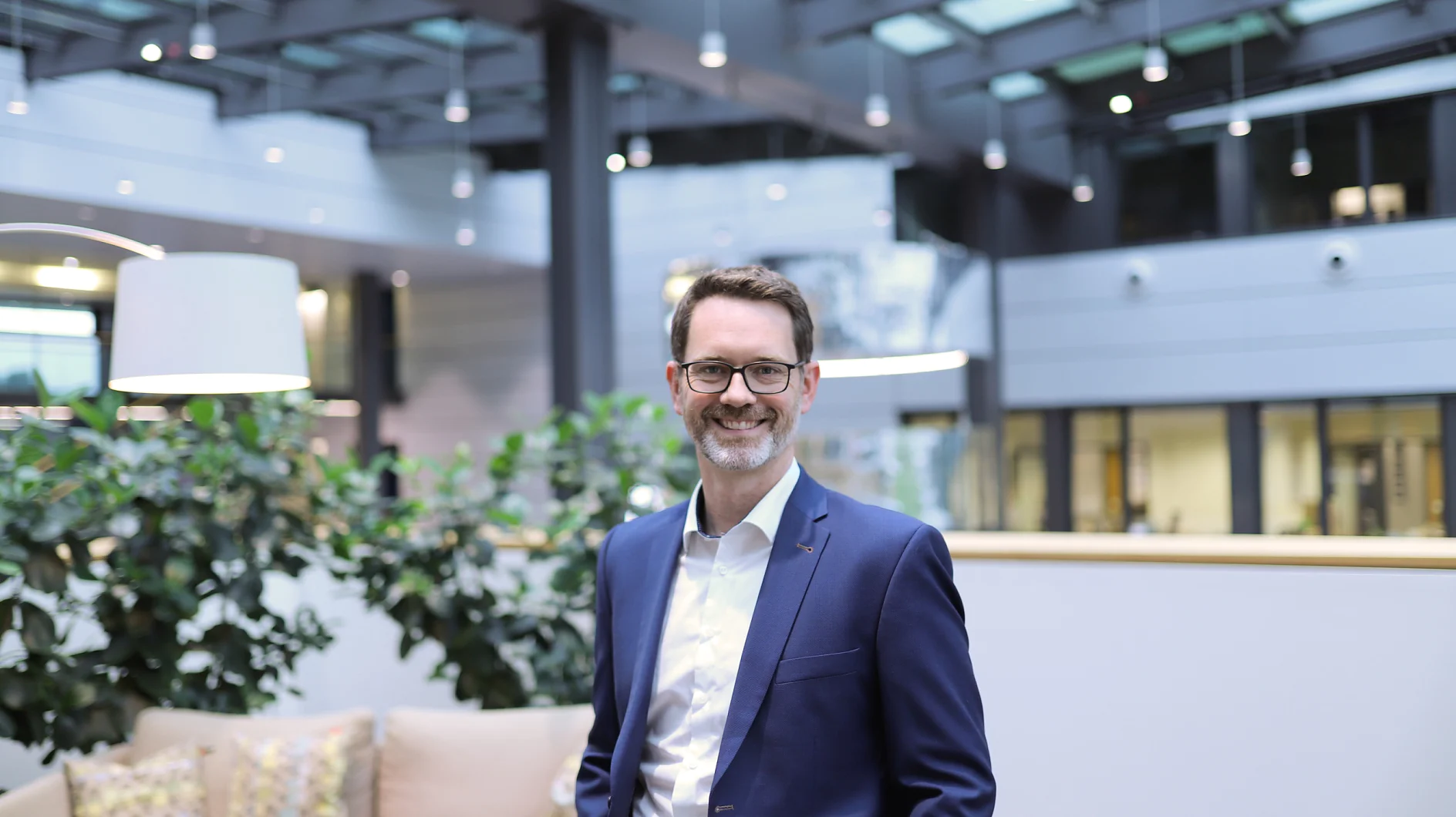
In this conversation, Thomas Schubert, Head of Sustainability at tesa, provides insights into how tesa understands sustainability as an engine for innovation and long-term business success.
What challenges and opportunities has tesa faced on the path to greater sustainability in 2025?
2025 was a year of noticeable changes for us. Many low-hanging fruits have been harvested - now we're transitioning from a sprint to a marathon. A decisive process. Our commitment to greater sustainability remains unbroken; it continues to be the crucial driver for innovation and transformation. In many areas, we have now reached a high level of maturity, for example in supply chain transparency and risk assessment. Resilience and risk management are increasingly becoming central elements of the sustainability transformation. For instance, insurers are intensively dealing with climate risks and reassessing many areas - what is economically viable is changing. You could say: Sustainable action is increasingly becoming insurance itself.
At the same time, we have continued to launch more sustainable products and are growing with already established more sustainable products. The foundation we already have gives us momentum, their success is our confirmation and our license to play.
Sustainability is the prerequisite for future viability and therefore without alternative.
Head of Sustainability at tesa
What were the most important milestones of the year regarding tesa's sustainability goals?
A central theme of 2025 was digitalization. We have made enormous progress in data transparency and digital tools for sustainability. Complex Scope 3 calculations, which previously took weeks with accounting and manual error correction, are now completed in 20 minutes thanks to our GHG Management Dashboard.
tesa sets a good example and receives the gold medal for the third time in 2025.
We've also made great strides in the area of more sustainable supply chains: In 2025, we converted almost all of our natural rubber to sustainable certification. For paper and paper products, we have further increased the proportion of FSC®-certified materials and significantly increased the number of suppliers evaluated according to EcoVadis. Our efforts have also paid off in the area of packaging: We expect to achieve well over 50 percent recycled content in our plastic packaging.
The final data analysis is not yet complete, but with regard to our own emissions, we expect to achieve our 2025 goals: In Scope 1 & 2, we are aiming for a 50 percent reduction compared to the base year 2018. Our investments in renewable energies and energy-efficient and solvent-free production technologies continue at high pressure in all plants. For example, an AI-powered energy platform now optimizes our energy consumption, helping to reduce emissions and control our energy costs. And a newly installed heat pump on the roof of our headquarters will save around 1,000 tons of CO₂ per year in the future.
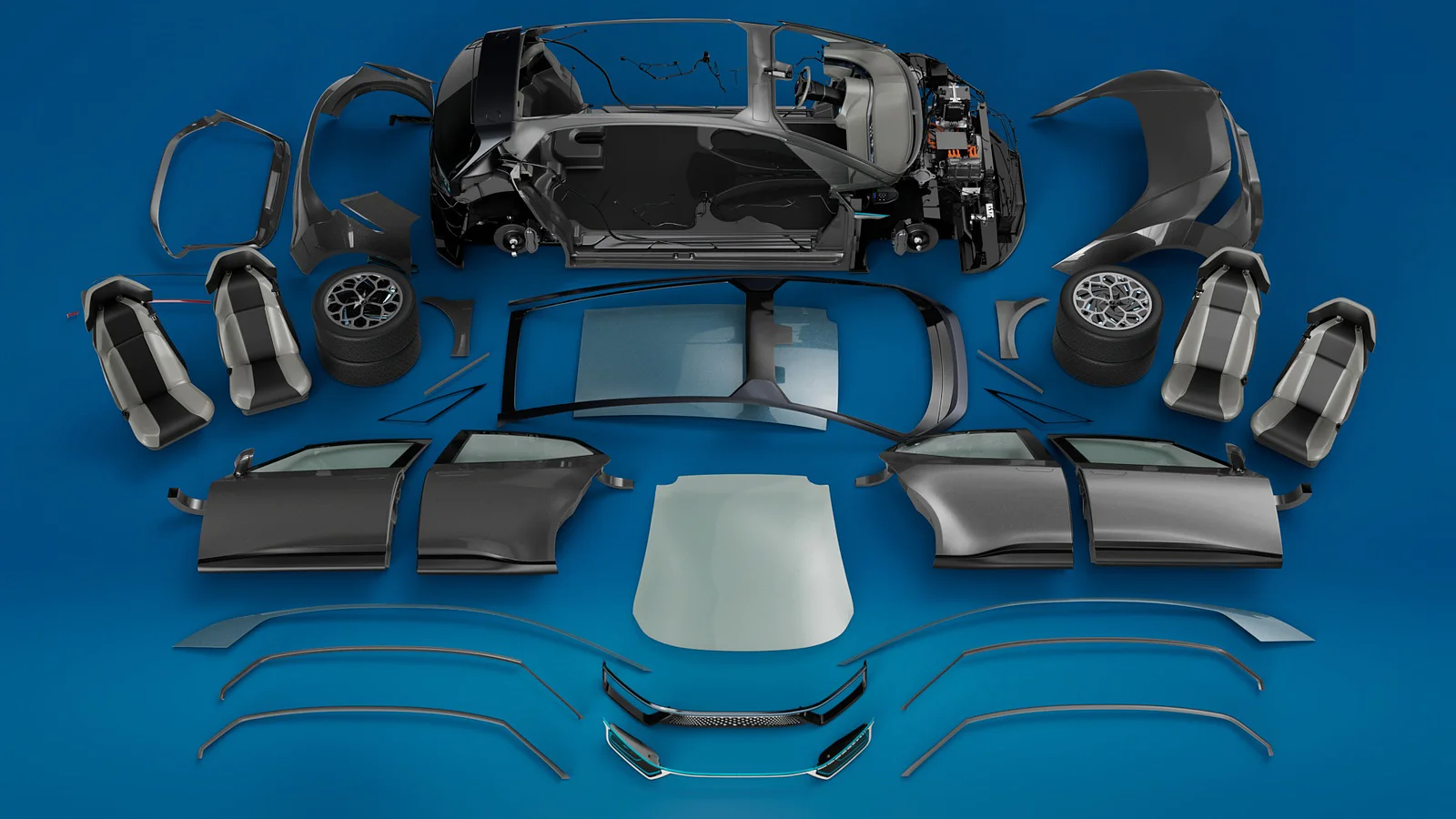
Debonding on Demand technologies promote sustainability through repairability, recycling, and flexible manufacturing.
Of course, we have also continued to work on products with increased recycled or biobased material content - with a focus on new product solutions that offer high customer benefits. An absolutely central topic in the past year was debonding on demand - both with regard to our own goals in the action area "Push Circularity" and for our customers. Recyclable system solutions are a decisive topic that we are successfully addressing with our debonding-on-demand portfolio. This is a forward-looking area on which we will also place a major focus in 2026.
How does tesa compare externally in terms of sustainable transformation?
The transition from sprint to marathon is taking place not only at tesa, but basically everywhere where sustainability strategies have been implemented in recent years. All companies face similar challenges: raw material prices, scalability, and economic efficiency. We need to continue driving our transformation while ensuring our competitiveness at every step.
At the same time, sustainability is not losing relevance anywhere - quite the opposite. The consensus is: adaptation instead of regression, resilience ensures future viability.
Digitalization and data transparency in particular are understood as opportunities across industries and are being massively advanced, increasingly in combination with AI.
How have customer requirements evolved over the past year?
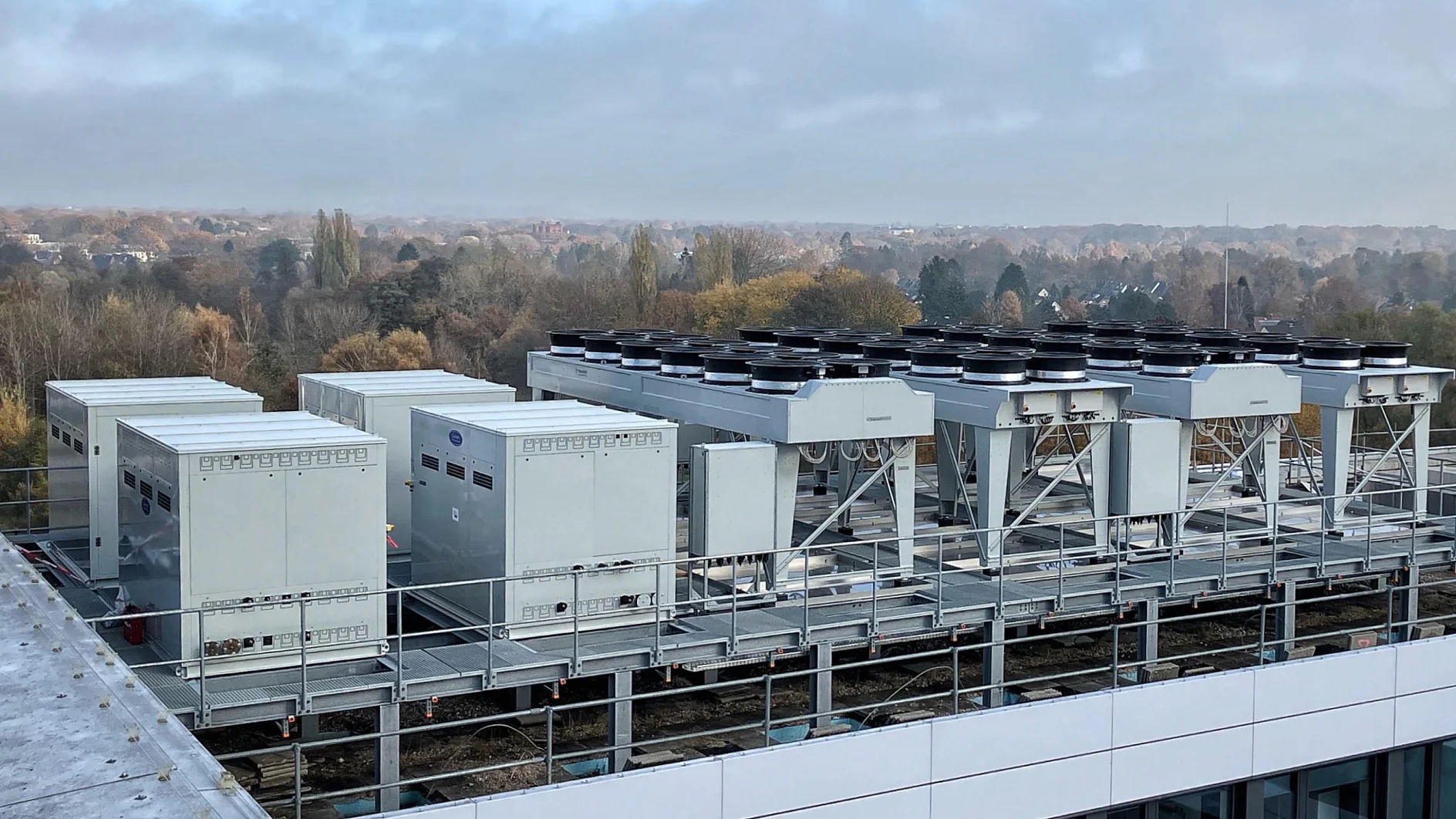
Modern heat pumps are installed on the HQ roof to reduce CO₂ emissions and cut costs.
Automation, efficiency, circularity, and debondable adhesion were at the top of our customers' agendas in 2025. For us, this means: We are making proven tesa solutions more sustainable, strengthening system solutions, and thus promoting efficiency and automation. This opens up opportunities to rethink innovation together with our customers. Many of their products should become more circular - our task is to provide system solutions with high customer benefits early on. Thus, sustainability becomes a source of innovation - disruptive in the best sense. In 2025, we continued to build strong foundations to turn visions into reality and deliver accordingly to customers.
What is the main focus for the coming year?

Our sustainability strategy has set ambitious and correct frameworks and goals. The main focus in 2026, in my view, is on our own commitment - now it's important not to let up. The transformation was, is, and remains a holistic organizational task. For this, we continue to need the contribution from everyone.
On the other hand, major investment projects for further transformation in the areas of energy and machinery are pending. Our focus remains on the added value we create for our customers - through technological development, innovation focus, and as a result, energy-efficient, solvent-free, and low-CO₂ product solutions. At the same time, we continue to advance debondable adhesive bonds - a decisive field for the future, in which circularity becomes the new norm.