tesa® IZOLÁCIA Tesnenie z peny M
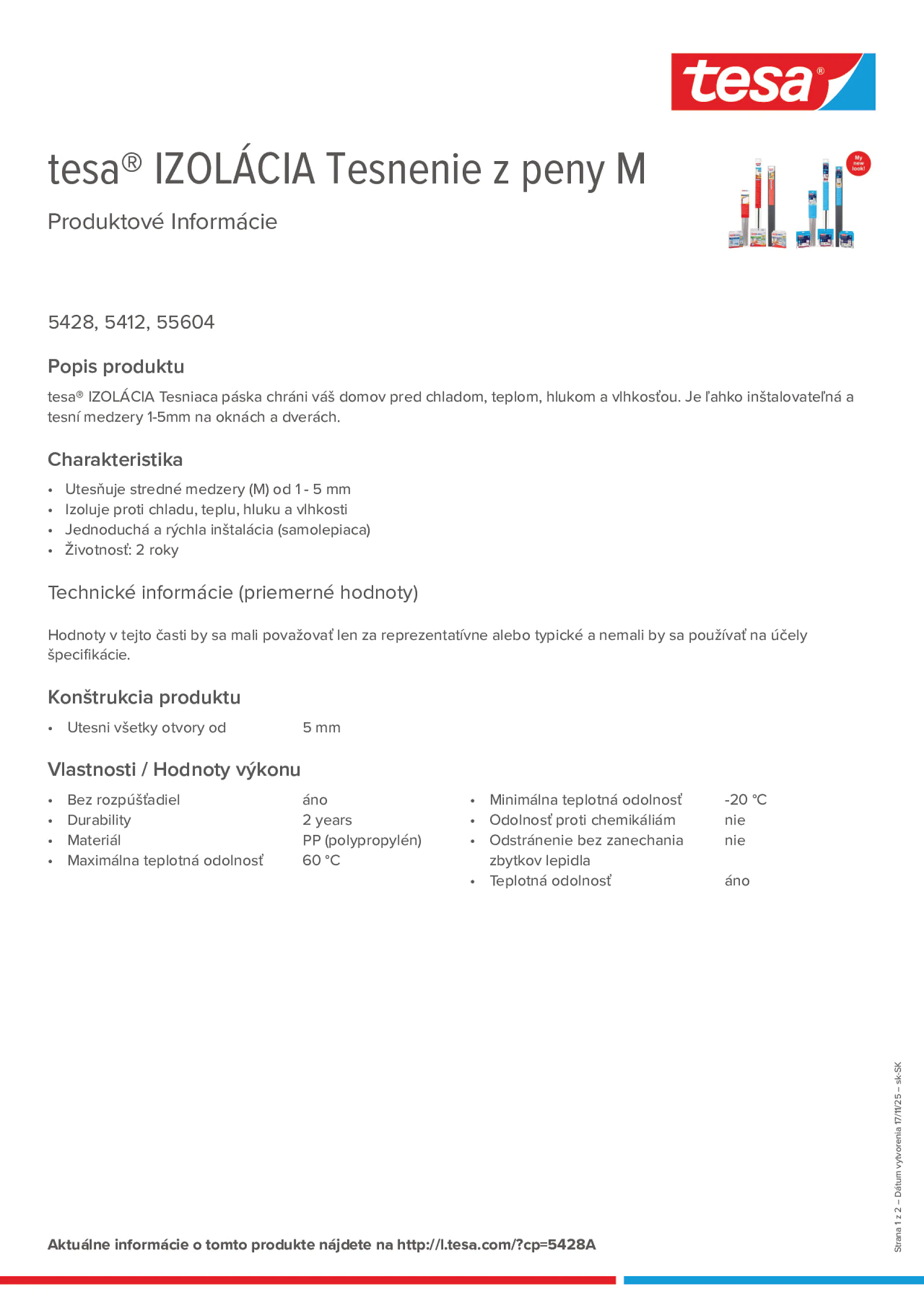
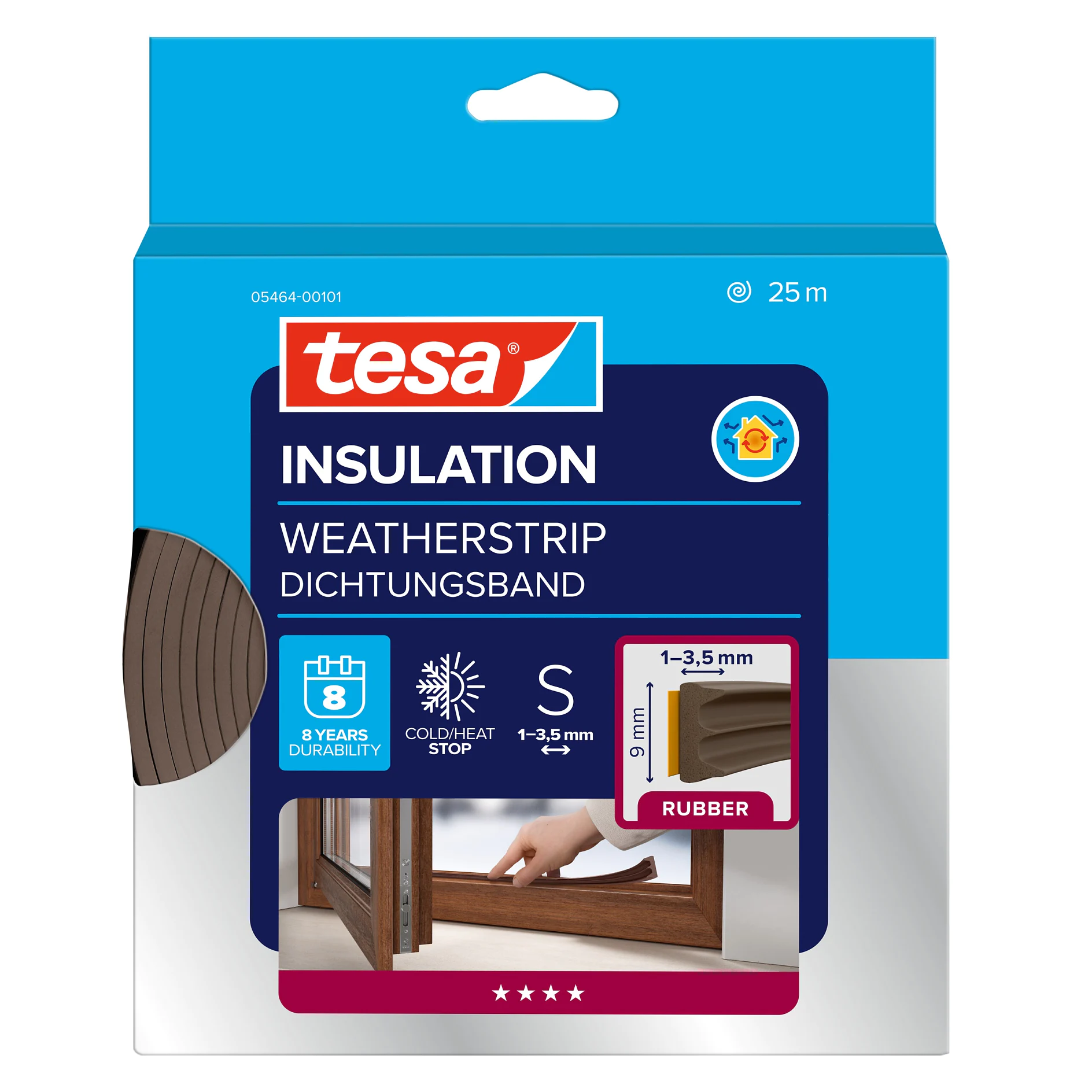
tesa® IZOLÁCIA Tesniaca páska chráni váš domov pred chladom, teplom, hlukom a vlhkosťou. Je ľahko inštalovateľná a tesní medzery 1-5mm na oknách a dverách.
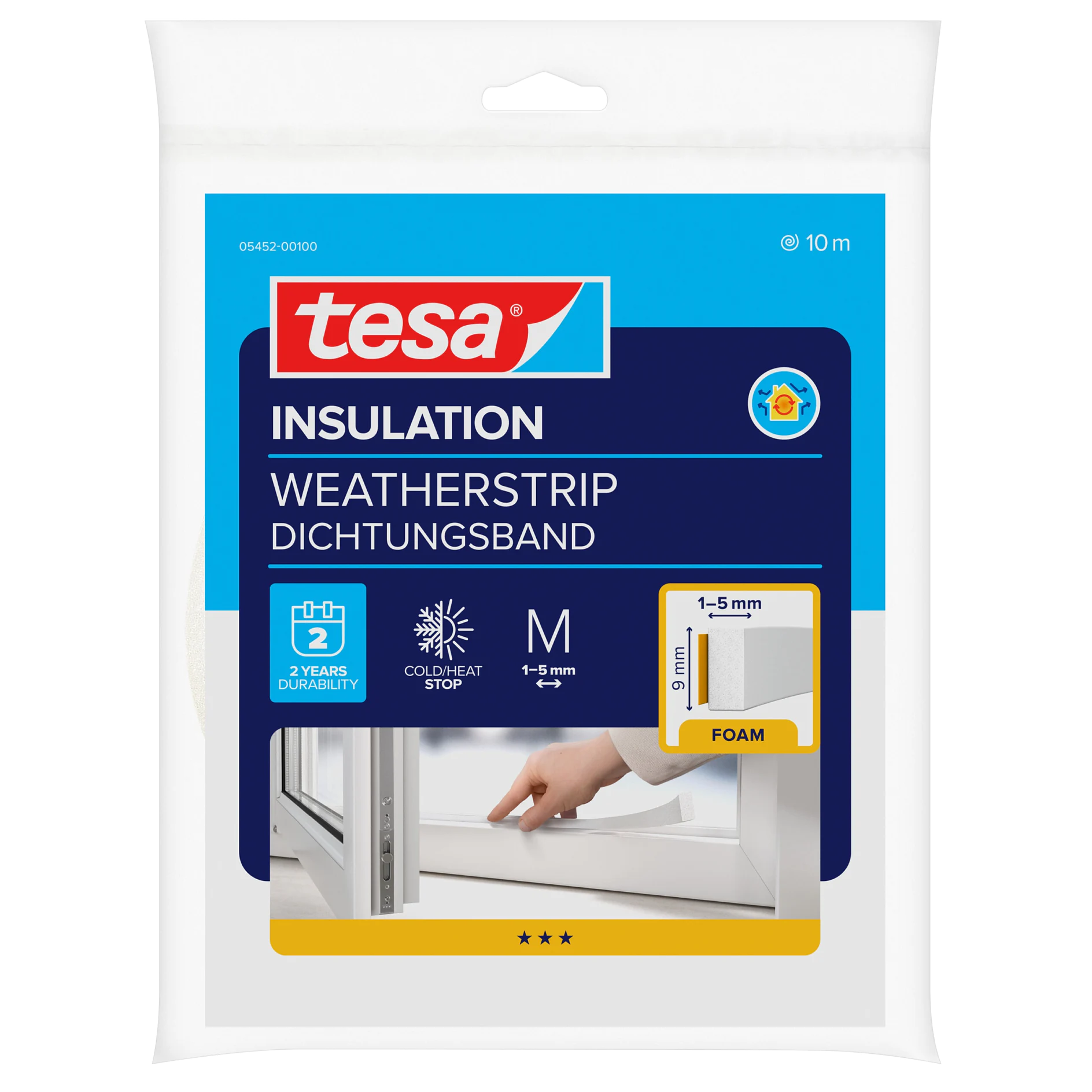
- Utesňuje stredné medzery (M) od 1 - 5 mm
- Izoluje proti chladu, teplu, hluku a vlhkosti
- Jednoduchá a rýchla inštalácia (samolepiaca)
Podrobnosti o produkte
Opis produktu
Opis produktu
tesa® IZOLÁCIA Tesnenie - Vaše riešenie pre netesné okná a dvere. Chráni pred chladom, teplom, hlukom a vlhkosťou. Jednoduchá inštalácia, stačí len nožnice. Ideálne pre medzery 1-5 mm. Hodí sa takmer na všetky typy okien a dverí. Jednoduché riešenie pre teplý dom počas chladných mesiacov.
Ďalšie informácie o produkte
- Utesňuje stredné medzery (M) od 1 - 5 mm
- Izoluje proti chladu, teplu, hluku a vlhkosti
- Jednoduchá a rýchla inštalácia (samolepiaca)
- Životnosť: 2 roky
Súvisiace výrobky
FAQs
How and where must I attach any tesamoll® sealing profile?
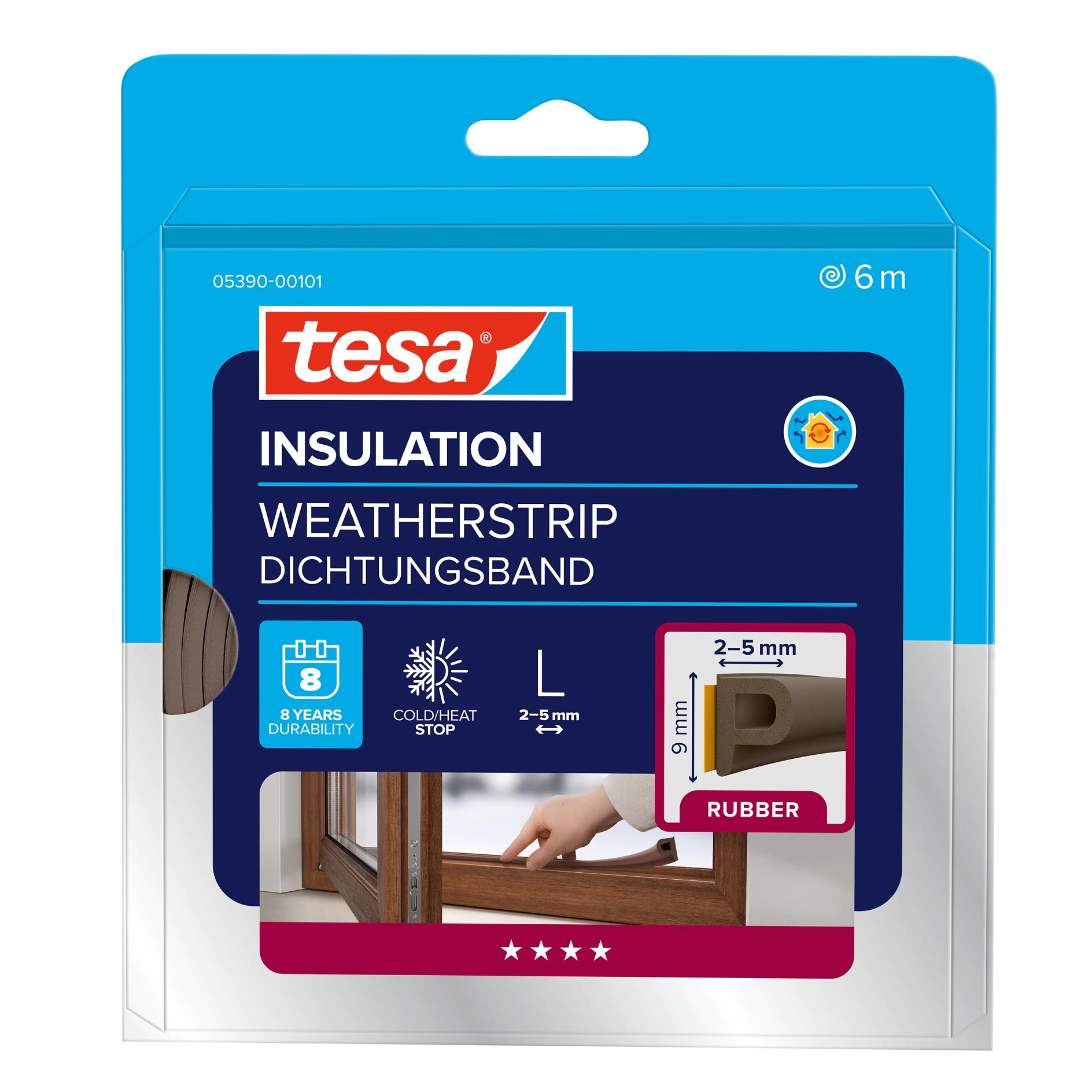
Hidden gaps between window frame and window sash will prevent the window from effectively serving its function to separate the inside air from the outside air. Especially larger gaps will considerably drive up the costs for heating in the winter and air conditioning in the summer. The tesamoll® P-Profile rubber seal was developed to seal such gaps in order to prevent any exchange of air. They feature a special hollow profile and are designed to reliably fill gaps between 2 and 5 mm. The benefits are obvious: no uncomfortable cold draft, no loss of heat, no excessive energy costs. Experience shows that the resulting energy savings can be up to 35%.
WHAT YOU NEED:
- Household detergent
- Tape measure
- Scissors
- tesamoll® CLASSIC P-Profile rubber seal
CAUTION! Detergents with beading effect may limit the performance of the adhesive coating.
What is the basic purpose of tesamoll® sealing profiles?
tesamoll® sealing profiles in different profiles and materials. The flexible and self-adhesive strips are designed to seal gaps of various sizes in windows and doors.
During hot weather, tesamoll® sealing profiles prevent hot outside air from coming in and keeps cool air inside the house. During cold and stormy weather, tesamoll® avoids any cold drafts and keeps heated air inside the house. Doing so, tesamoll® helps to save energy and can reduce energy costs by up to 40%.
How do I determine whether my windows and doors have undesirable gaps?
If it takes very long to heat up a room, chances are that the doors and/or windows are not sufficiently tight. Another indicator are uncomfortably cold areas in front of doors or windows. If the room is equipped with an air condition, gaps in the windows and/or doors will allow cool air to escape and it will take more time to cool down the room.
There is a simple way to discover undesirable gaps between window and window frame: Hold a lit candle at various positions close to the window frame. If the flame of the candle flutters a lot, there are definitely wide gaps that allow an exchange of air. If it flutters just a little, the gaps are still wide enough to affect the room temperature. If it flutters only slightly, but it feels considerably cooler close to the window, there are at least small gaps to prevent economic heating or air conditioning.
Try to test the situation at different positions of the window frame. In this way you get a good idea of where the trouble spots are and are able to address it with a suitable self-adhesive tesamoll® sealing profile. If you discover different gap sizes, use tesamoll® STANDARD or tesamoll® Premium flexible. These products are able to adapt to a wide range of gap sizes.
Is it possible to attach tesamoll® sealing profiles outside the window?
tesamoll® sealing profiles are designed to seal gaps between window frame and window sash. For this purpose they need to be attached inside the profile of the window frame.
How do I determine the right type of tesamoll® sealing profile?
Please use our product advisor (opens in a new window or tab) to find out which of the tesamoll® sealing profiles perfectly suits your situation.
How long does a window seal last?
Due to the materials, the durability of the respective window seals varies. You will find window seals with us that you should replace after two years and seals that last up to 15 years. Basically, it is perfectly sufficient to replace the window seals every 4 - 8 years.
How do I repair a window seal?
You can easily replace a window seal. You should not cover existing window seals. Instead, you can remove the old seals and simply stick on our self-adhesive seals.
How can remaining adhesives be removed after removing worn tesamoll® sealing profiles?
After pulling off a worn tesamoll® sealing profile, any remaining residues of the adhesive material can be removed with a standard household cleaning detergent.
How to seal windows?
You can quickly and easily stick on our window seals. The self-adhesive side of the sealing tapes ensures perfectly sealed windows reliably and long-term in no time.
What should I do, if there are gaps of various sizes?
If you discover gaps of various sizes, use either tesamoll® PREMIUM FLEXIBLE or tesamoll® UNIVERSAL Foam. These products feature highly flexible foam, which is able to adapt to a wide range of gap sizes.
How can I determine the exact gap size?
A candle will already give you a good idea of the existence of gaps between window and frame. If you want to determine the exact size of the gaps, proceed as follows:
Insert a small strip of plasticine along the window frame. Close the window and open it again. The thickness of the plasticine will show you exactly how wide the gap is at various positions.
tesamoll® sealing profiles are placed inside the window frame and do not have any visual effect on the windows appearance. However, you should select the right type of profile. If the sealing profile is too wide, you will not be able to close the window.
Condensation on the window - what to do?
Condensation on the window is a warning for mold. The most common reason for condensation on the window is leaks in the window frame. In such cases, you should seal your windows as soon as possible.
Who has to pay for window maintenance?
Basically, the owner or the homeowners' association is responsible for the windows. If you are a tenant, you should consult your landlord. In any case, it is important to act quickly with leaking windows. Every day without tight windows increases heating costs and the risk of mold.
What temperature resistance do tesamoll® sealing profiles offer?
All tesamoll® sealing profiles are resistant against temperatures between -50°C and +60°C. This makes them an ideal sealing solution for extremely hot days as well as extremely cold winter nights.
In which qualities are tesamoll® sealing profiles available?
tesamoll® sealing profiles come in four qualities with distinctive advantages:
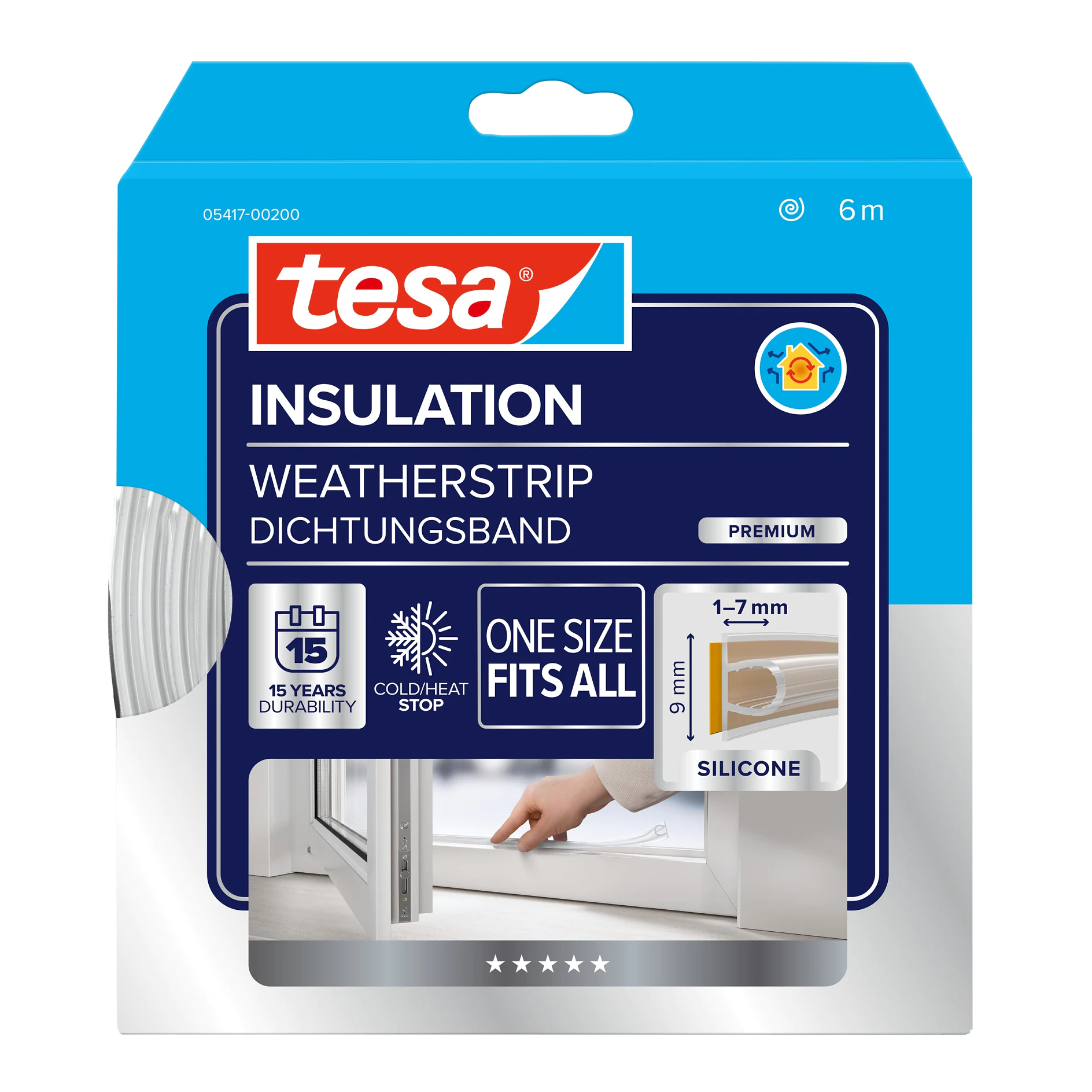
Silicone-based tesamoll® sealing profiles are extremely weather proof and temperature resistant. They come with a 15 year limited guarantee for durability.
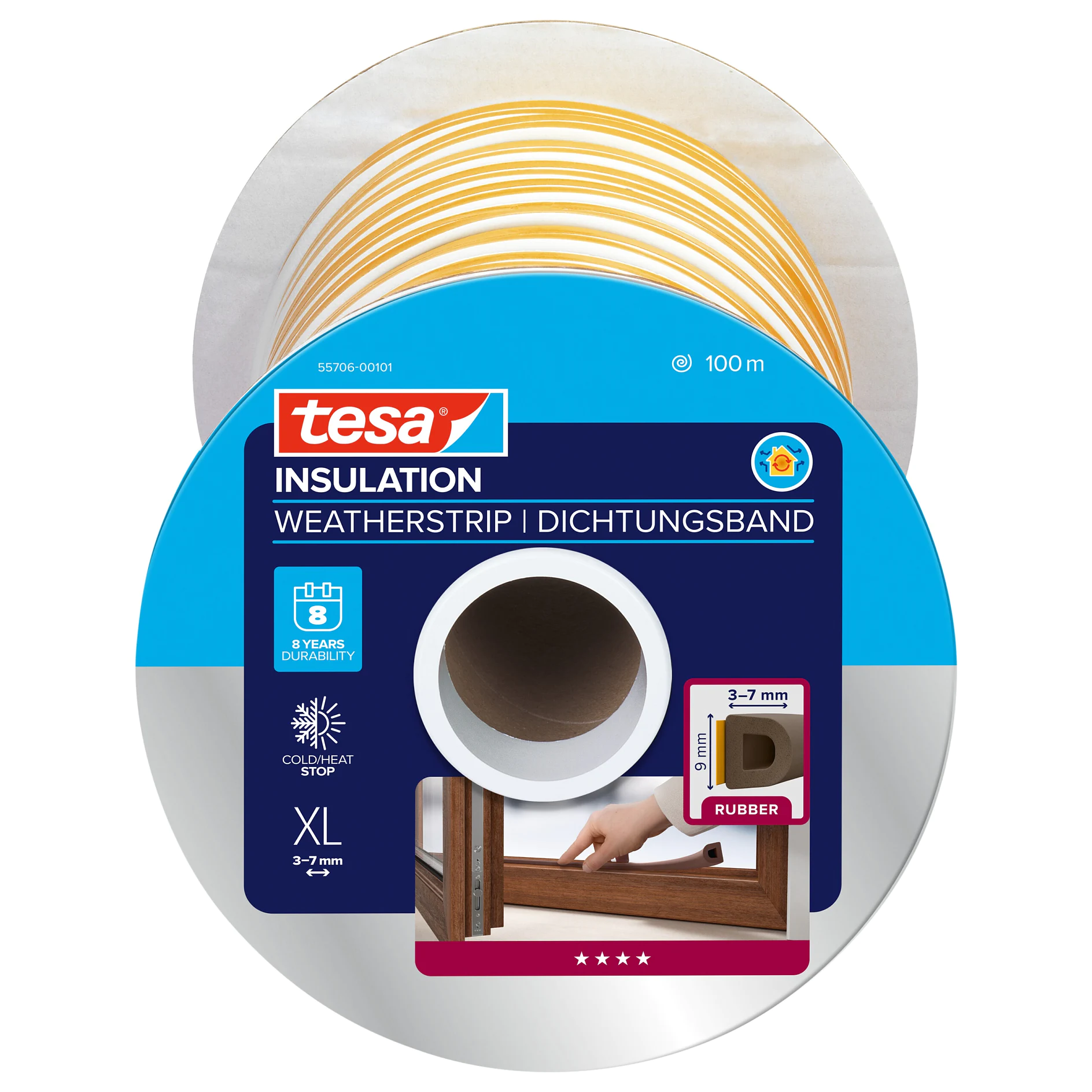
Rubber-based tesamoll® a sealing profiles are weather resistant and water repellant. They are backed by an 8 year limited warranty.
tesamoll® sealing profiles made of closed cell foam are highly flexible and adjust to just about any window gap. Their durability is guaranteed for at least 4 years.
tesamoll® sealing profiles made of open cell foam are the preferred choice for indoor use, since they are not weather resistant. They are highly flexible to match a variety of gaps and offer a durability of at least 2 years.
Why seal windows?
Leaky windows increase energy costs and the risk of mold. A high-quality and undamaged window seal not only makes the apartment warmer but also reduces heating costs by up to 40%. In addition, some seals also protect against noise and dust.
Can windows be sealed with silicone?
Sealing windows with silicone is intended for the outside of the window. For window seals, the inside of the window is sealed at the window sash and window frame. Basically, silicone is suitable for sealing the outside of the window because silicone is water-repellent, weatherproof, and elastic.
Are the tesamoll® sealing profiles removable?
tesamoll® sealing profiles made of either silicone or rubber can be removed anytime by simply pulling them off the window frame. Any remaining residues of the adhesive material can be removed with a standard household cleaning detergent.
What if the window is already equipped with a rubber seal?
If the window frame already features an adhesive sealing, it needs to be removed before attaching any tesamoll® sealing profile. If the window has a window sash with featuring a trapped rubber sealing, the tesamoll® sealing profile should be attached to the window frame in a way that it gets in direct contact with this rubber sealing.
What is the reason if the window does not close after attaching a tesamoll® sealing profile?
If a window does not close anymore after a tesamoll® sealing profile was attached to the window frame, you most likely used a profile which is too wide. The only solution is to remove the seal and replace it by a smaller size.
When should I seal windows?
If temperatures remain consistently low despite the heating being on or if there is a draft, you should seal the windows as soon as possible. Condensation on the window can be another indication of leaky windows.
For what kind of windows can tesamoll® sealing profiles be used?
tesamoll® sealing profiles match nearly all types of windows, as well as room doors or cabinet doors. They are not suitable for sliding doors or windows. tesamoll® sealing profiles designed for small gap sizes are generally used for aluminum or plastic windows, while those designed for bigger gap sizes usually match wooden windows.
Naposledy aktualizované dňa 14. 9. 2026