tesamoll® těsnění Gumové těsnění D profil
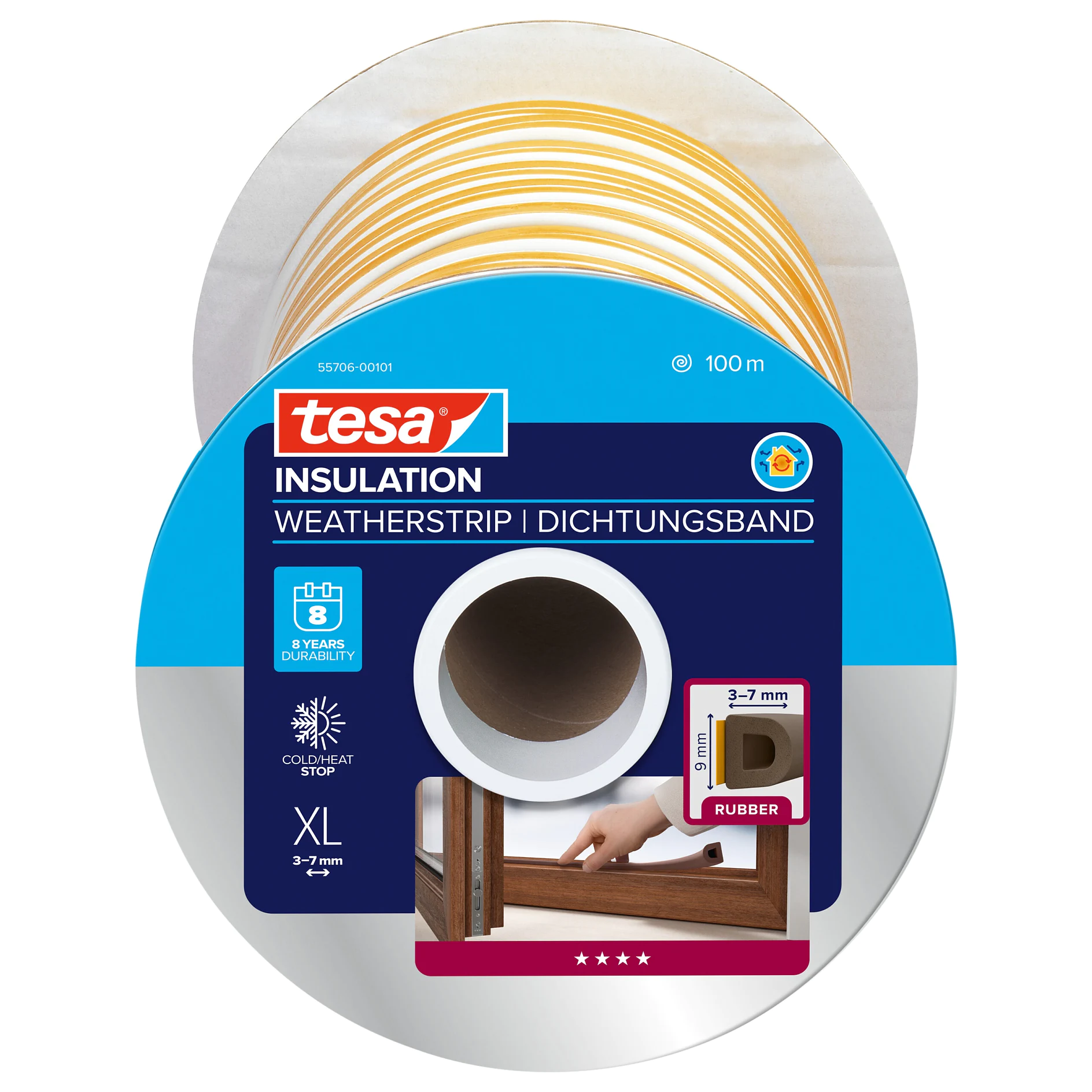
Těsnění tesamoll® D profil je gumové těsnění pro dveře a okna s dlouhou životností. Tato ochrana proti průvanu pro dveře a okna utěsní dokonce i větší mezery.
- Šetří až 40 % nákladů na energii
- Samolepicí, odolné gumové D profily
- Utěsní všechny mezery od 3 do 7 mm
Produktové informace
Popis produktu
Popis produktu
Těsnění tesamoll® D profil je samolepicí gumové těsnění pro dveře a okna. Je odolné vůči povětrnostním vlivům, UV záření, ozonu i teplotám a jeho vlastnosti vydrží minimálně 8 let. Díky speciálnímu profilu ve tvaru písmene D efektivně utěsní mezery o velikosti 3 až 7 mm.
Další podrobnosti o produktu
Po nalepení na rámy oken u vás doma funguje těsnění D profil tesamoll® jako efektivní ochrana proti průvanu, která vám ušetří až 40 % výdajů za topení. S tímto trvanlivým gumovým těsněním spotřebujete méně energie, ušetříte a váš domov bude útulný a v teple. Těsnění navíc upevníte snadno a bez nářadí, šroubů nebo hřebíků.
- Šetří až 40 % nákladů na energii
- Samolepicí, odolné gumové D profily
- Utěsní všechny mezery od 3 do 7 mm
- Odolnost: 8 let
- Odolné vůči počasí, UV záření a ozónu
- Otíratelné hadříkem
- Snadná aplikace a upevnění bez šroubů a hřebíků
- Snadná demontáž
- Odolné teplotám od -50 °C do +60 °C
FAQs
Can windows be sealed with silicone?
Sealing windows with silicone is intended for the outside of the window. For window seals, the inside of the window is sealed at the window sash and window frame. Basically, silicone is suitable for sealing the outside of the window because silicone is water-repellent, weatherproof, and elastic.
Condensation on the window - what to do?
Condensation on the window is a warning for mold. The most common reason for condensation on the window is leaks in the window frame. In such cases, you should seal your windows as soon as possible.
How long does a window seal last?
Due to the materials, the durability of the respective window seals varies. You will find window seals with us that you should replace after two years and seals that last up to 15 years. Basically, it is perfectly sufficient to replace the window seals every 4 - 8 years.
When should I seal windows?
If temperatures remain consistently low despite the heating being on or if there is a draft, you should seal the windows as soon as possible. Condensation on the window can be another indication of leaky windows.
How do I repair a window seal?
You should replace a window seal. Many window seals have a limited lifespan - basically between 1 and 4 years. You should not try to repair a damaged seal. Instead, you should replace the window seal. This way, you can be sure that your windows are tight and insulated and you are not incurring unnecessary energy costs.
Why seal windows?
Leaky windows increase energy costs and the risk of mold. A high-quality and undamaged window seal not only makes the apartment warmer but also reduces heating costs by up to 40%. In addition, some seals also protect against noise and dust.
Who has to pay for window maintenance?
Basically, the owner or the homeowners' association is responsible for the windows. If you are a tenant, you should consult your landlord. In any case, it is important to act quickly with leaking windows. Every day without tight windows increases heating costs and the risk of mold.
How to seal windows?
You can quickly and easily stick on our window seals. The self-adhesive side of the sealing tapes ensures perfectly sealed windows reliably and long-term in no time.
How do I repair a window seal?
You can easily replace a window seal. You should not cover existing window seals. Instead, you can remove the old seals and simply stick on our self-adhesive seals.