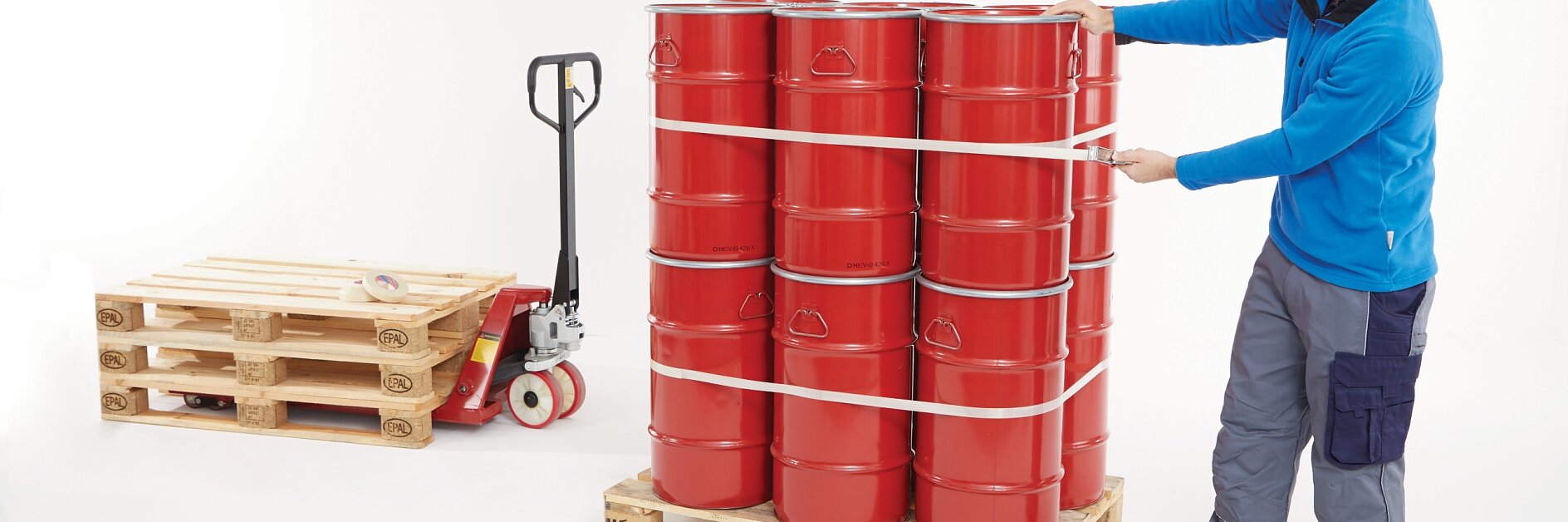
Filament strapping tape for secure bundling and transport

Quick overview
- Filament strapping tapes are designed for bundling, reinforcing, and securing heavy or valuable goods during storage and transport, helping stabilize transport units and protect products throughout the logistics chain.
- Fiberglass-reinforced backings combined with strong adhesive systems provide high tensile strength, tear resistance, abrasion resistance, and reliable holding power under mechanical stress.
- The tapes offer strong adhesion to packaging materials and are suitable for demanding logistics, palletizing, carton reinforcement, and component fixation applications.
- Key performance features include secure transport, heavy-duty performance, durability, clean removal options, and resistance to wear and tearing.
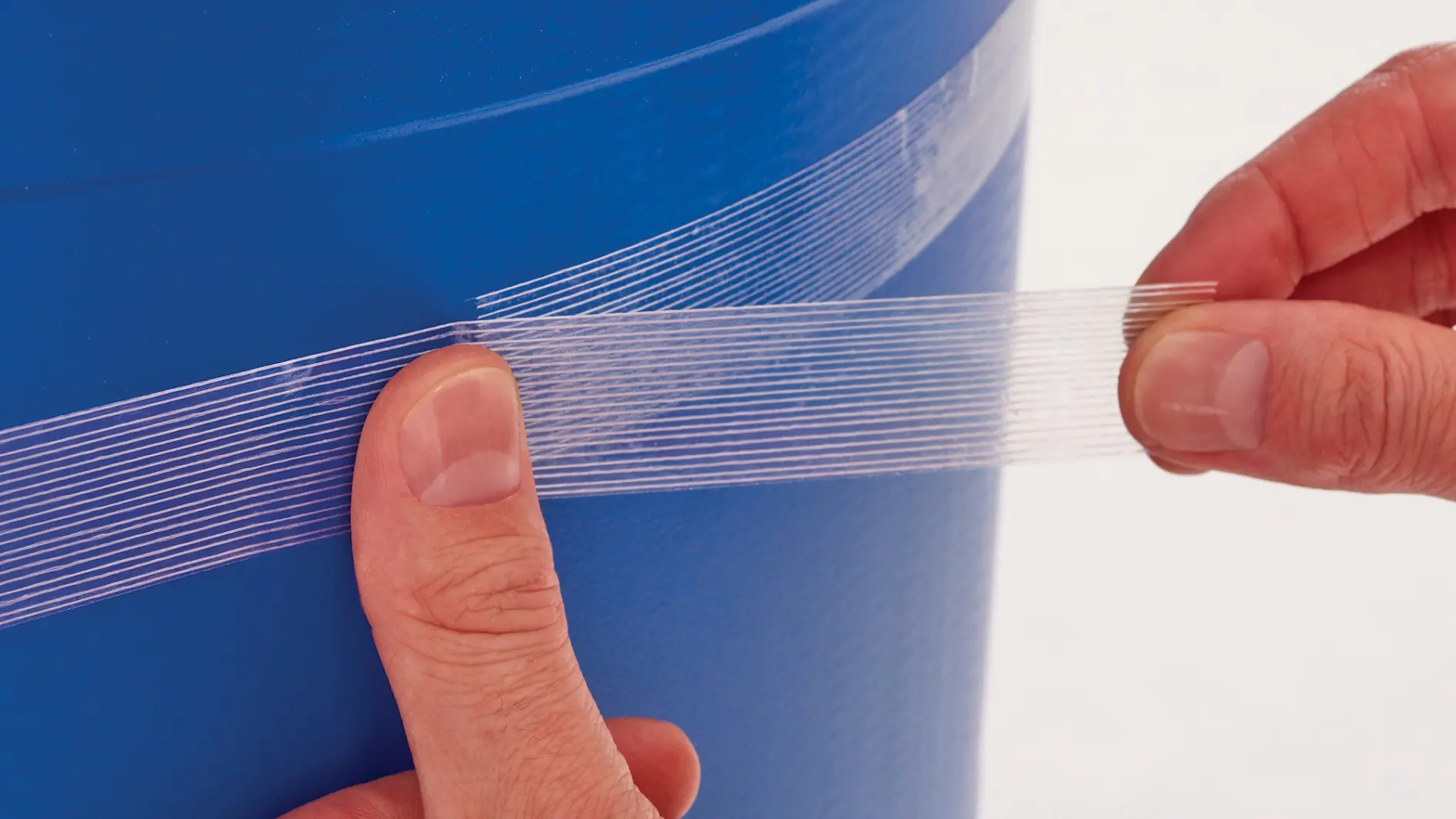
Filament strapping tape is an essential solution for securing and reinforcing heavy or valuable goods during transit and storage, complementing our range of bundling tapes and transportation tapes. Designed with fiberglass-reinforced backings and powerful adhesive systems, our filament strapping tape provides exceptional tensile strength and reliable holding power in demanding logistics and packaging environments.
Whether used for palletizing, reinforcing heavy boxes, or bundling transport units, filament strapping tape ensures that products arrive safely at distribution partners, retailers, and end customers. The combination of strong fiberglass filaments and high-performance adhesive systems makes these tapes ideal for applications where standard packaging tapes cannot withstand heavy loads, mechanical stress, or abrasion.
We offer a comprehensive range of filament strapping tape solutions designed to deliver secure fastening, reliable reinforcement, and efficient handling across various industries and logistics processes.
Key features of filament strapping tape
Filament strapping tapes are engineered to deliver high mechanical strength and dependable bonding performance. Their fiberglass reinforcement provides exceptional durability while the adhesive system ensures strong adhesion to a variety of surfaces.
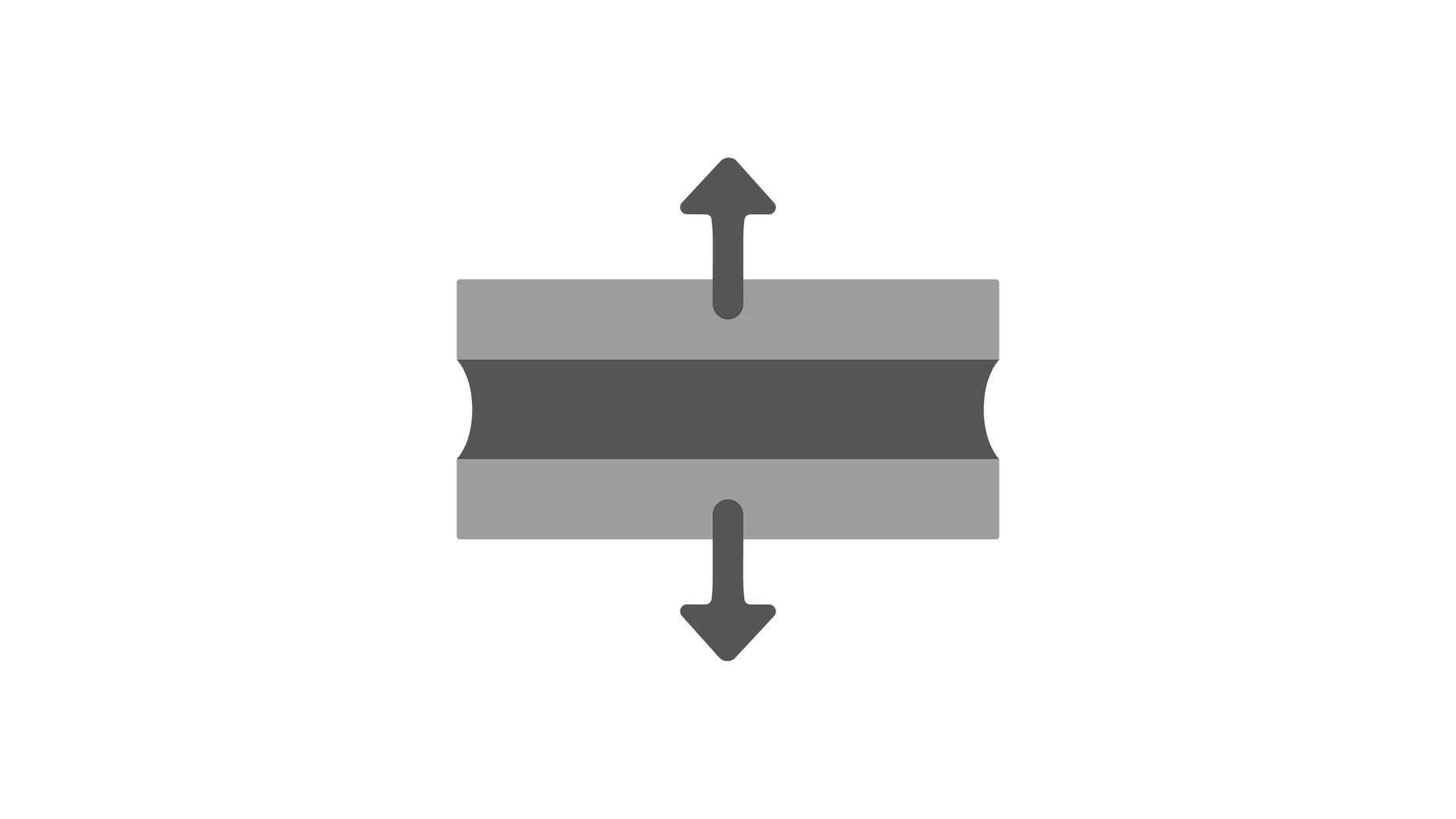
The fiberglass filaments integrated into the backing create a highly tear-resistant structure that allows the tape to withstand strong tension, shock impact, and abrasion. This makes filament strapping tape particularly suitable for demanding packaging and transport applications where safety and reliability are critical.
In addition to high tensile strength, the adhesive systems used in our filament tapes are designed to provide strong initial tack and reliable bonding performance, especially on corrugated board and other packaging materials. Depending on the product type, the tapes may also offer shear resistance to prevent lifting, abrasion resistance, and clean removal from certain surfaces.
Key performance characteristics include strong fiberglass reinforcement, reliable adhesion to many surfaces, and high resistance to wear, tearing, and mechanical stress. These features help ensure that transport units remain stable and secure throughout the logistics chain.



Typical applications for filament strapping tape
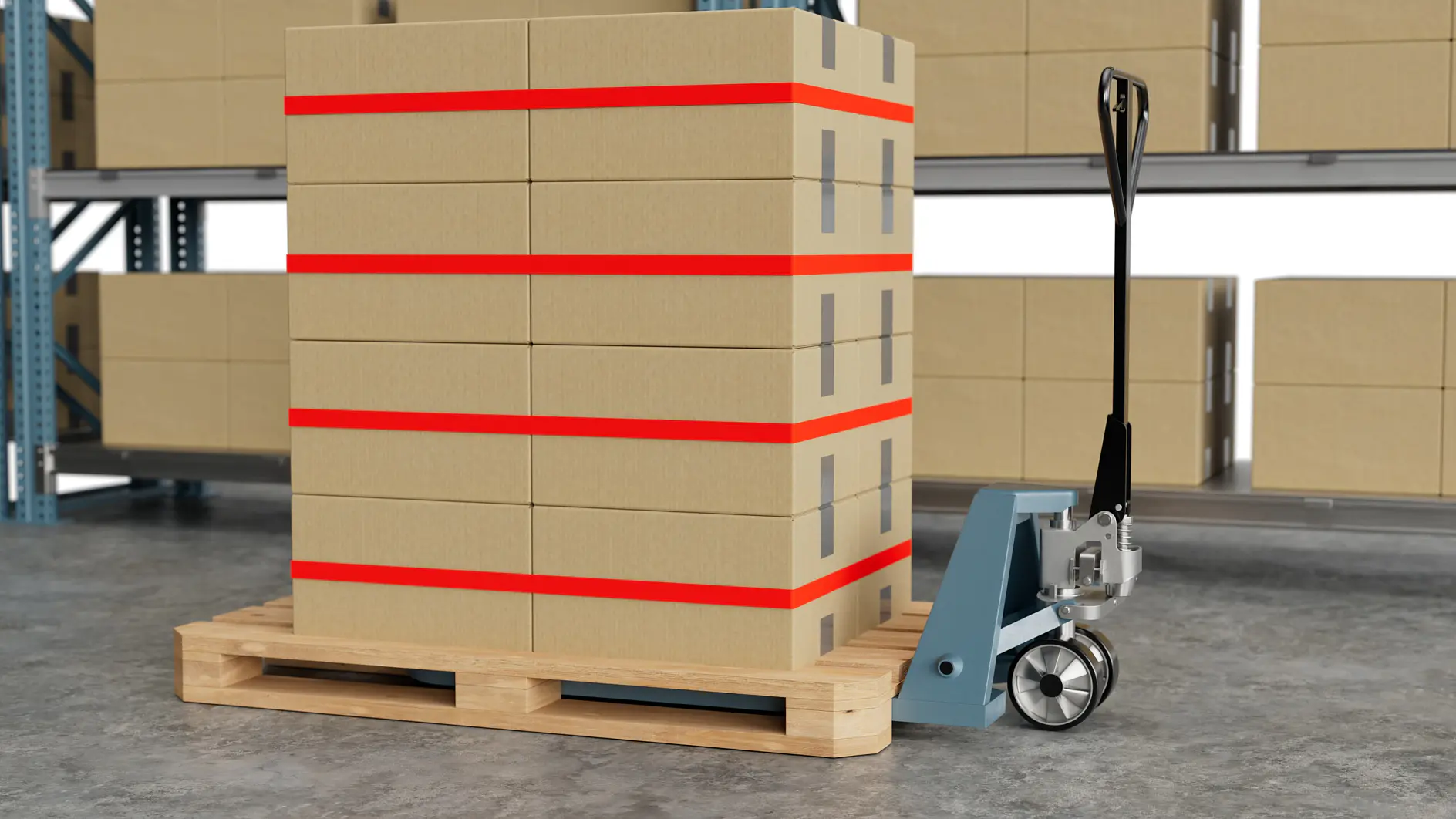
Filament strapping tape is widely used in industries where reliable reinforcement, bundling, and securing of goods are essential. Its fiberglass filaments and strong adhesive provide the strength needed to stabilize transport units and protect products during handling, storage, and shipping. In logistics and packaging, the tape keeps goods securely bundled, withstanding mechanical stress, shocks, and demanding transport conditions.
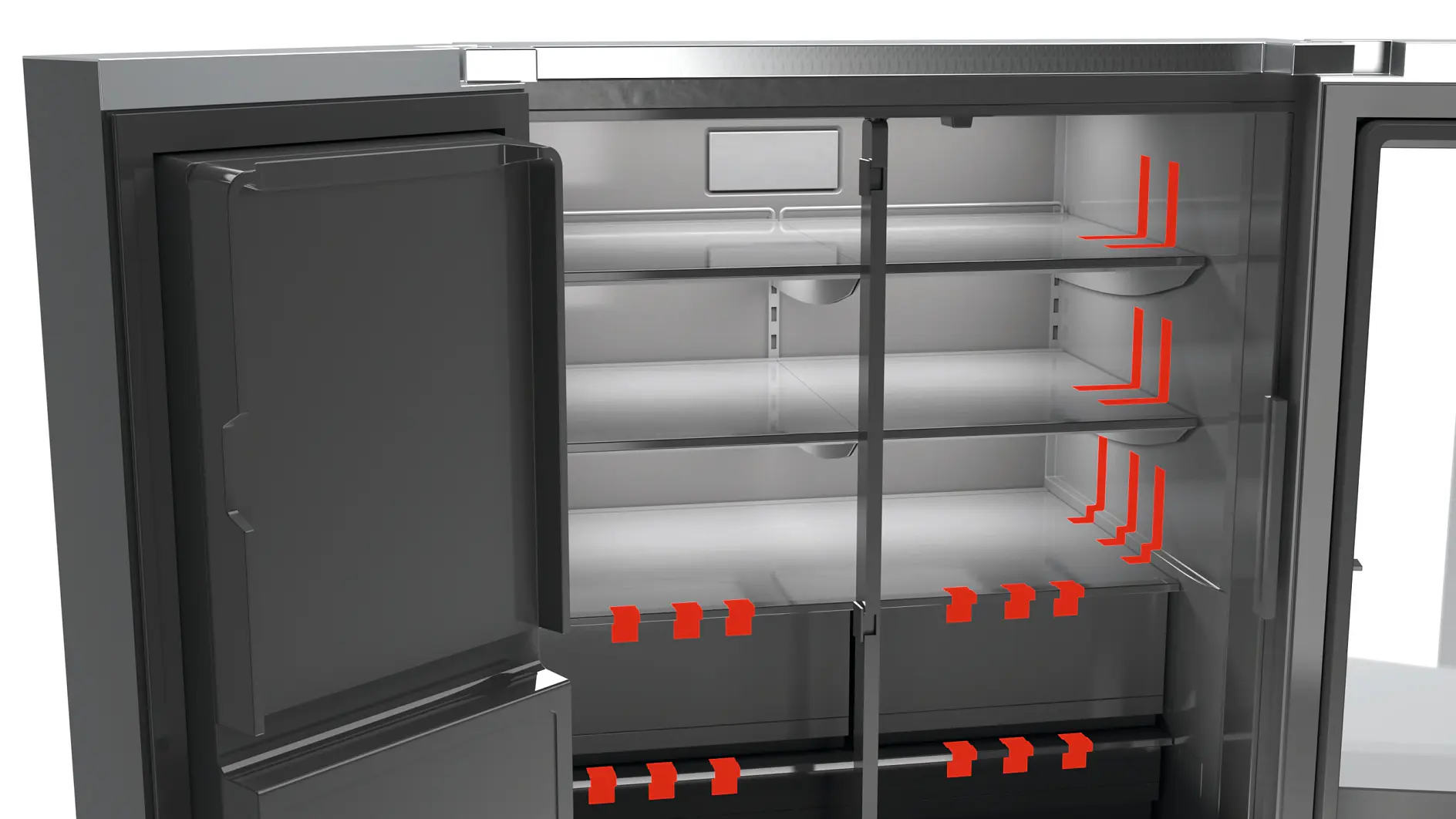
Beyond transport, it is also used in industrial settings to temporarily secure components, reinforce materials, or stabilize products during manufacturing and processing, offering strength that conventional tapes cannot match.

Filament strapping tape for secure bundling and transport
Best for: Filament strapping tapes are designed for securing, reinforcing, and stabilizing goods during storage, handling, and transportation. They are used where high mechanical strength is required to keep transport units intact and protect products from shifting, damage, or packaging failure.
Why they perform
- Fiberglass-reinforced construction
- High tensile strength and tear resistance
- Strong adhesion to packaging materials
- Resistant to abrasion and mechanical stress
- Reliable bonding during transport and storage
- Available with clean removal options
Typical applications
- Securing transport units
- Palletizing products and loads
- Reinforcing heavy cartons and packages
- Bundling goods for shipment
- Fixing components during manufacturing or transport
Performance takeaway: Filament strapping tapes provide durable reinforcement and reliable load stabilization for demanding packaging, transport, and logistics applications.
Our filament strapping tape assortment
We offer a wide assortment of filament strapping tapes designed to meet different performance requirements, from general-purpose bundling to heavy-duty transport reinforcement.
Premium filament tapes, such as tesa® 53398, provide maximum tensile strength, high abrasion resistance, and strong shear performance for demanding logistics operations. These tapes are ideal for heavy packaging, pallet stabilization, and applications where extreme mechanical stress occurs.
Standard filament tapes, such as tesa® 53315, offer a balanced combination of strength and flexibility, making them suitable for a wide range of bundling, reinforcement, and packaging tasks.
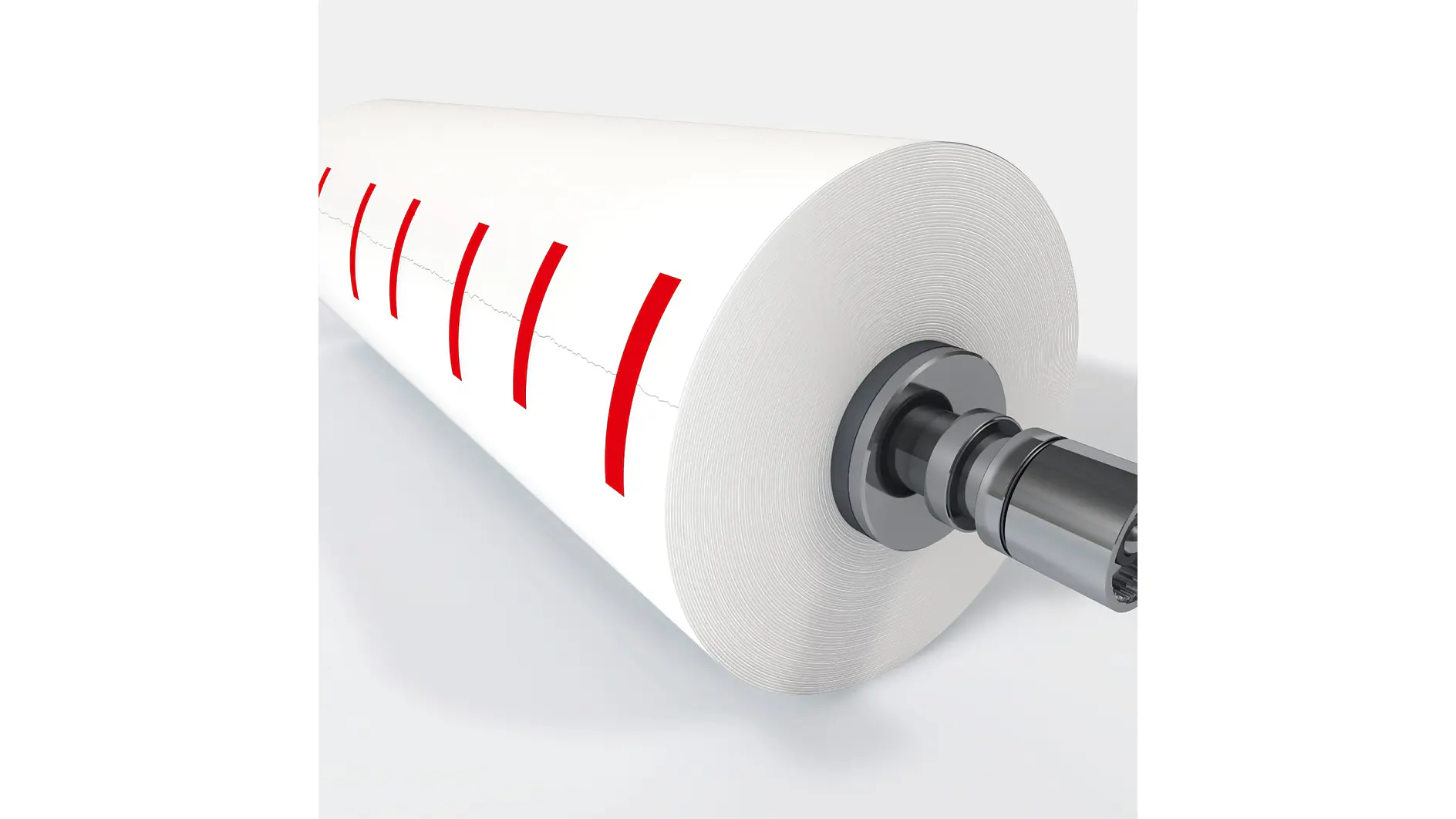
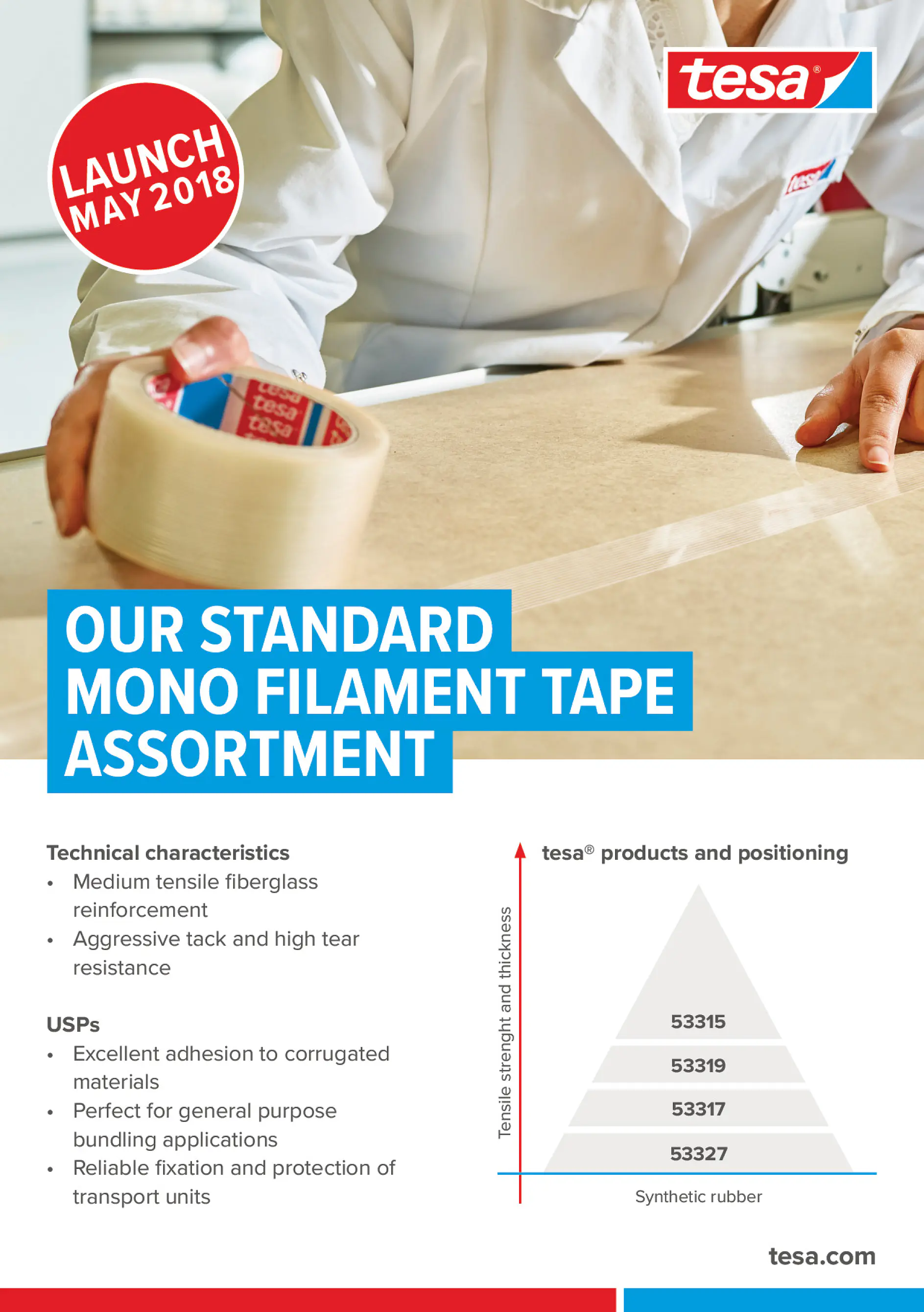
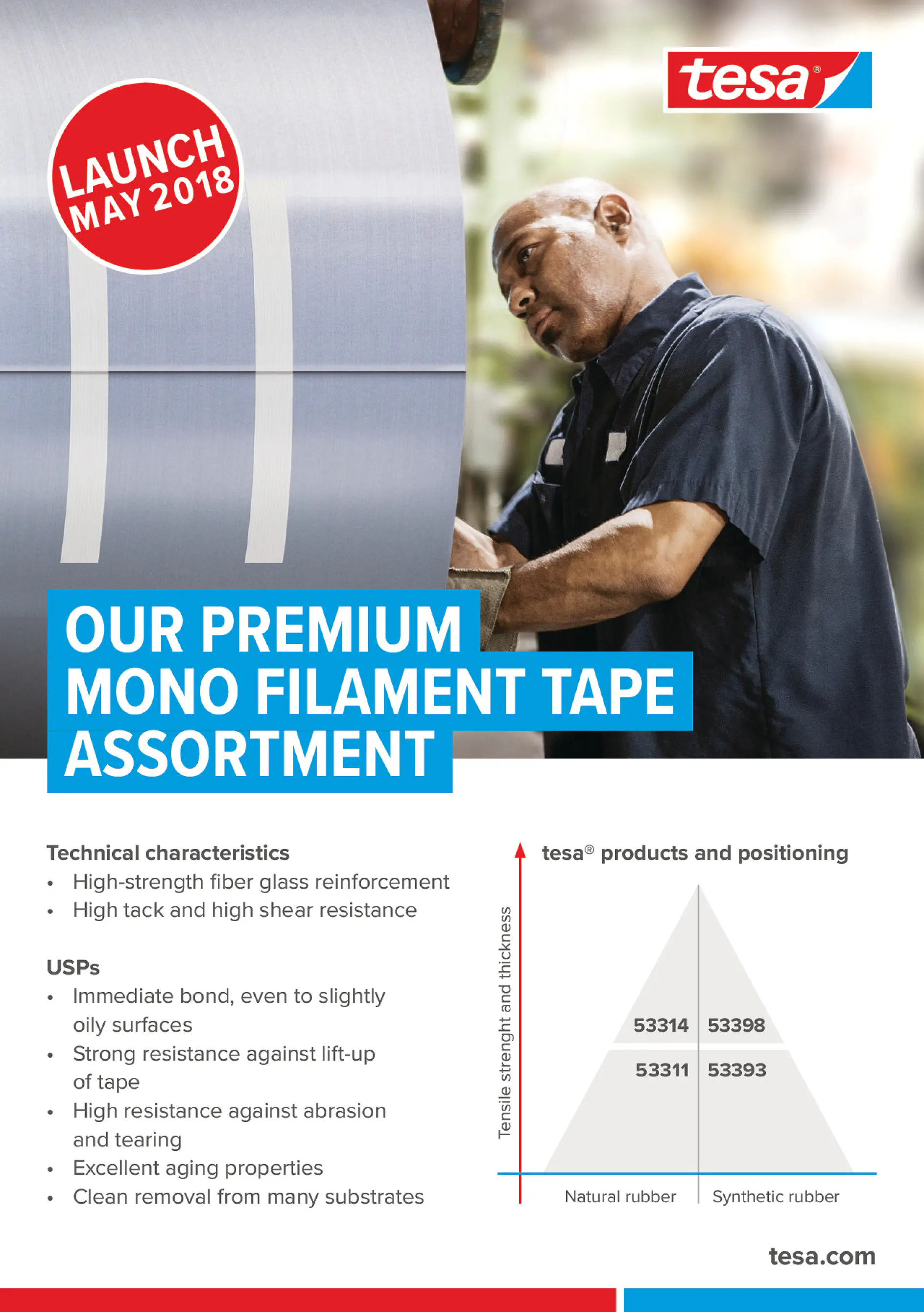
Our portfolio includes mono filament tapes, such as tesa® 4590, which feature fiberglass filaments running in one direction to provide reliable tensile strength and high tear resistance. With strong adhesion — especially to corrugated materials — they are well suited for general-purpose bundling, reliable fixation, and the protection of transport units. Certain mono filament tape solutions also offer high tack, strong shear resistance, and durable performance, including resistance to abrasion and clean removal from many substrates.
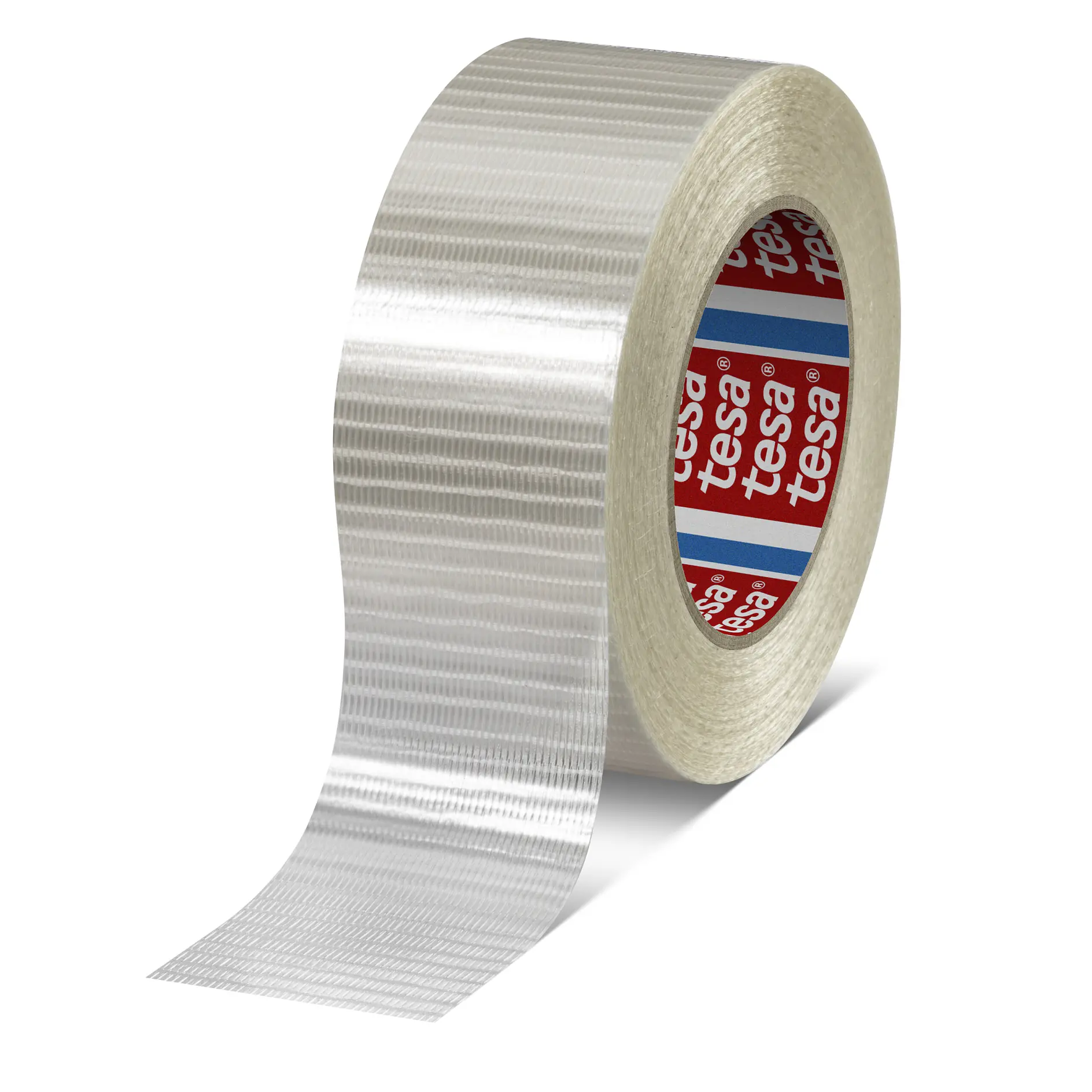
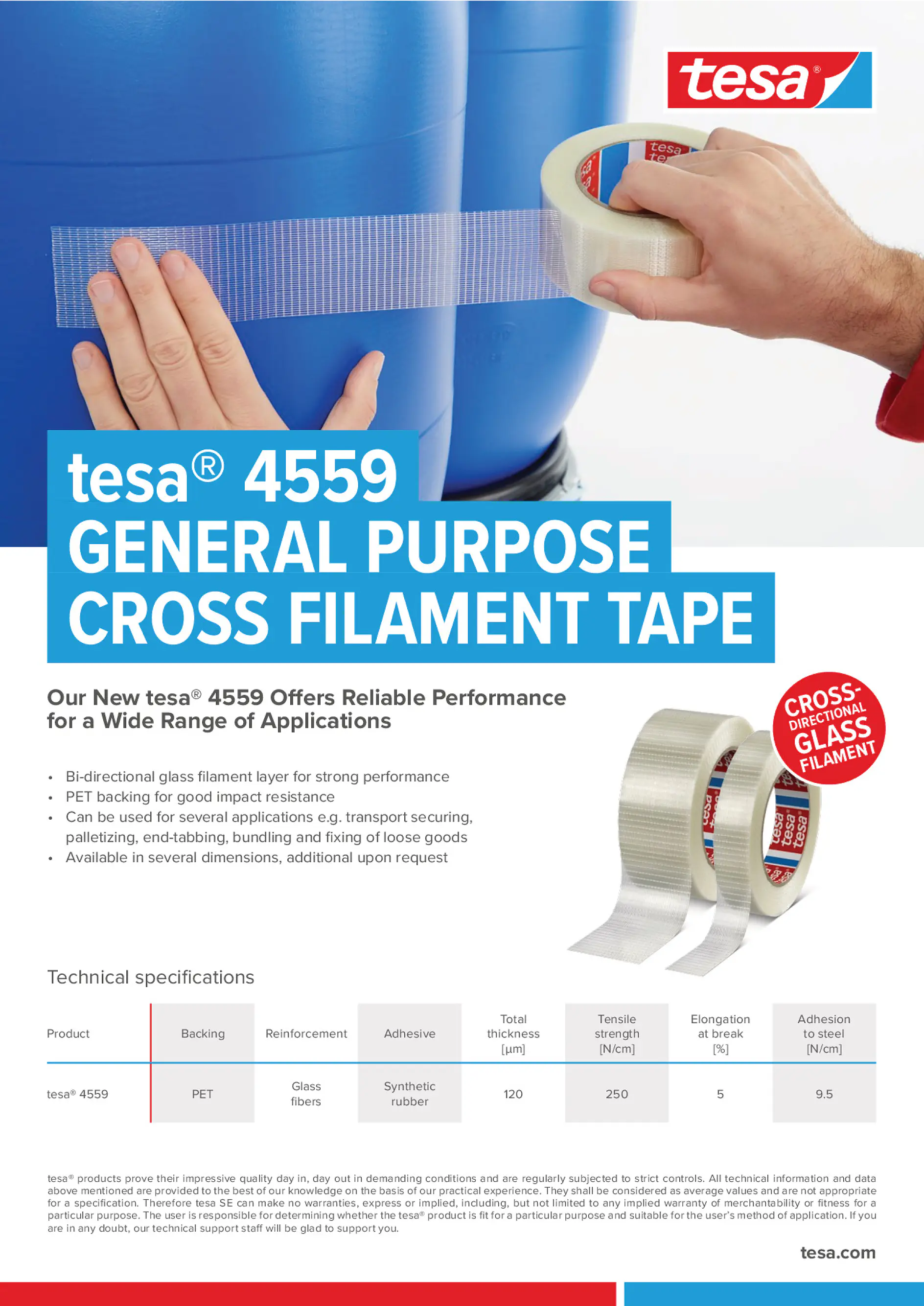
tesa® 4578 is a general-purpose cross filament strapping tape designed for applications that require reinforcement in multiple directions. It is based on a polypropylene film laminated to polyester filaments and features a synthetic rubber adhesive that bonds securely. tesa® 4578 is ideal for heavy-duty carton sealing, bundling and palletising, transport securing, fixing, end-tabbing, and backboard splicing.
Key features
- High tensile strength in longitudinal and transverse directions
- Resistant to tearing and breaking when bent
- Reliable adhesion on corrugated and solid board surfaces
- Secure bonding on various substrates, including PE and PP
The following section provides an overview of all our filament strapping tape products.
FAQs
What is filament strapping tape used for?
Filament strapping tape is primarily used for bundling, reinforcing, and securing heavy or oversized packages and transport units. Thanks to its embedded fiberglass filaments, it provides exceptional tensile strength and tear resistance, making it ideal for demanding packaging, shipping, and logistics applications. It is often applied to secure pallets, reinforce carton edges, fix loose items, and ensure that packages maintain their integrity during transit. In addition, filament tape can serve as a reliable solution for end-tabbing, backboard splicing, or other industrial applications where strong adhesion and mechanical durability are critical.
Why is filament tape stronger than standard packaging tape?
Unlike standard packaging tape, which relies solely on adhesive and backing film for strength, filament strapping tape incorporates fiberglass or polyester filaments running either in one direction (mono) or in both directions (cross). These filaments act like internal reinforcement, providing outstanding tensile strength and tear resistance. As a result, filament strapping tape can handle heavier loads, resist accidental tearing, and endure mechanical stress during handling, stacking, and shipping — performance that ordinary packaging tapes cannot achieve. This makes filament tape particularly suitable for industrial, warehouse, packaging and logistics applications where safety and durability are essential.
On which surfaces can filament strapping tape be applied?
Filament strapping tapes are highly versatile and generally adhere well to corrugated board, cardboard, and other common packaging materials. Depending on the adhesive system, they may also bond effectively to coated or smooth surfaces and some plastics, including non-polar substrates like polyethylene (PE) and polypropylene (PP). This flexibility allows filament tape to be used across a wide range of packaging situations, from heavy-duty carton sealing and palletizing to bundling irregularly shaped or mixed-material items.
Can filament tape be removed without residue?
Certain filament strapping tape products are designed for clean removal from specific substrates, allowing temporary fixation or transport security without leaving adhesive residue behind. This feature is particularly valuable in applications where packages may need to be opened and resealed or where aesthetic considerations and surface protection are important. While high-strength filament tapes intended for permanent reinforcement may leave some residue if removed, products with specialized adhesive systems offer a balance of strong adhesion during use and clean removal afterward.