White paper 2
Executive Summary
Acrylic foam tapes are high-performance, double-sided pressure-sensitive adhesive (PSA) solutions designed for superior bonding. Unlike mechanical fasteners or liquid adhesive, acrylic foam tapes rely on acrylic, viscoelastic core that combines structural strength with stress-relaxation capability. This allows the creation permanent, invisible, and durable bonding while simplifying manufacturing processes and enabling modern, lightweight, and aesthetic designs across multiple industries.
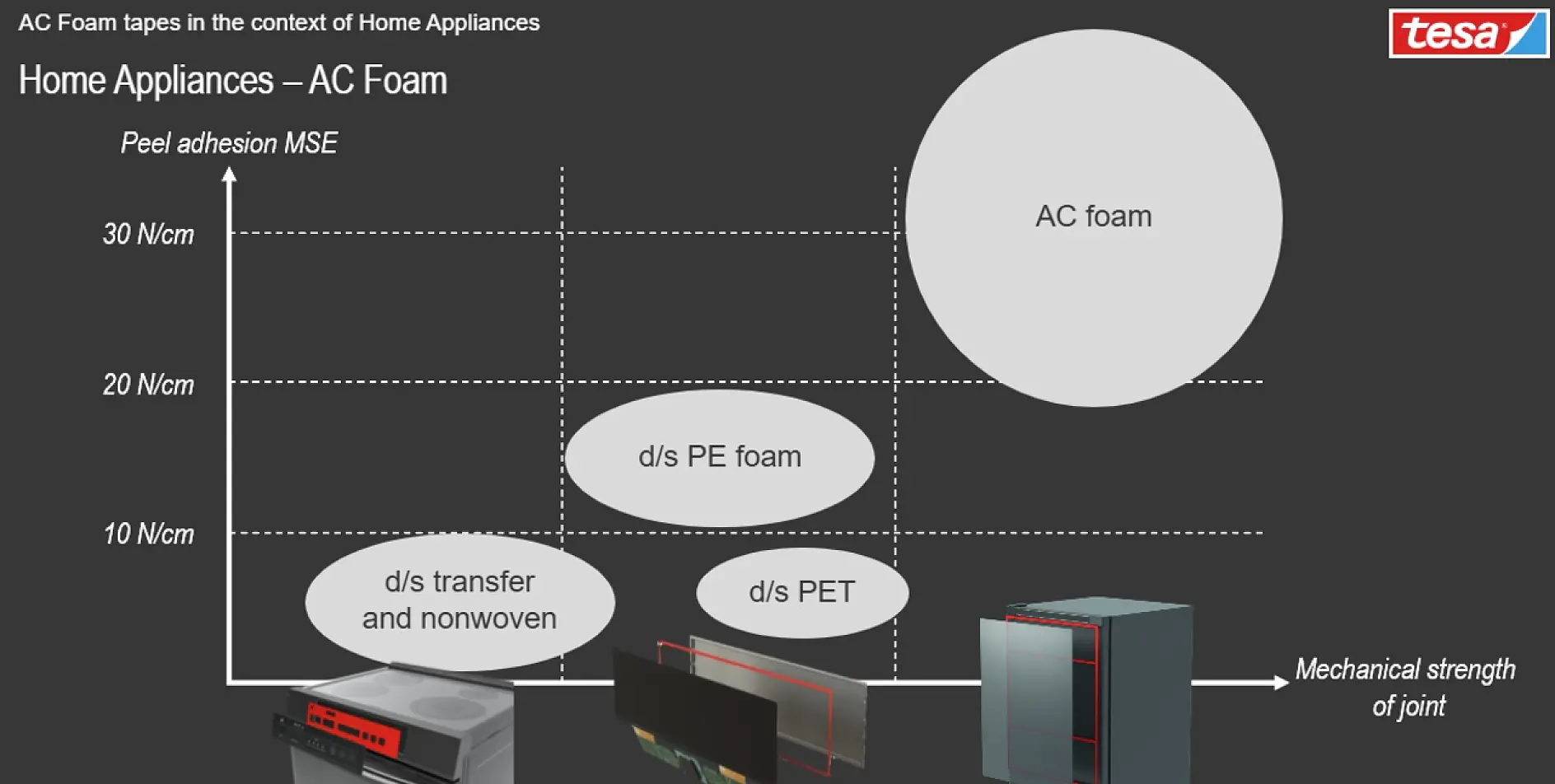
Fig. 1) Peel adhesion comparison of double-sided tape assortments.
1. Fundamental Material Technology of Acrylic Foam Tapes
At the heart of acrylic foam tape performance is the use of acrylic polymer systems. Acrylic polymers are inherently resistant to oxidation, ultraviolet radiation, humidity, and many chemicals, making them particularly suitable for long‑term industrial bonding applications. Unlike most rubber‑based or PE‑foam adhesive systems, acrylic foam tapes maintain their mechanical integrity and adhesion performance over extended service life and under harsh environmental conditions.
Viscoelasticity – The Core Performance Principle
Viscoelasticity describes a material behavior that combines elastic and viscous responses to applied stress. The elastic component provides immediate restoring force and load‑bearing capability, while the viscous component allows time‑dependent deformation and stress relaxation. In acrylic foam tapes, this balance is precisely engineered to ensure that stress generated by static loads, vibration, or thermal movement are dissipated within the foam core rather than concentrated at the adhesive interface.
This viscoelastic behavior is especially critical when bonding dissimilar materials with different coefficients of thermal expansion. Acrylic foam tapes can typically compensate for thermal movement of bonded substrates, preventing crack initiation, cohesive failure, or substrate damage during repeated temperature cycling.
2. Construction of Acrylic Foam Tapes
2.1 Acrylic Closed Cell Foam Core
The foam core of acrylic foam tapes consists of a closed‑cell acrylic polymer. The closed‑cell structure provides controlled compressibility, enabling the tape to fill surface irregularities and compensate for part tolerances without collapsing under load. At the same time, acrylic chemistry ensures excellent dimensional stability over a wide temperature range.
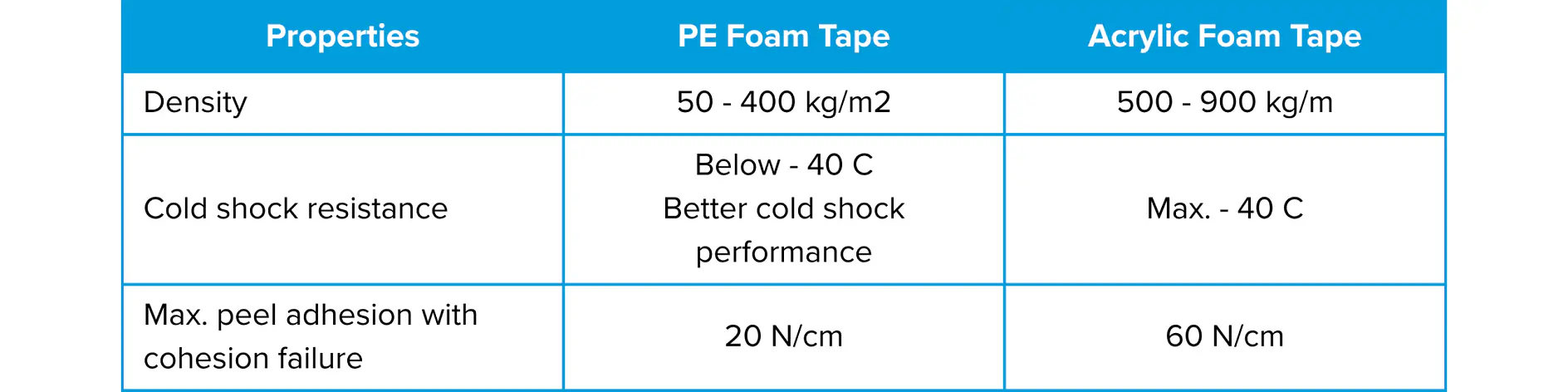
In contrast to conventional foam tapes like PE foam tape where adhesive layers are coated onto a carrier, acrylic foam tapes integrate adhesive functionality directly into the foam matrix. This creates a continuous adhesive network with high internal cohesion. As a result, peel strength, tensile strength, and shear resistance are achieved without weak interlayers, supporting long‑term reliability even under dynamic mechanical stress.
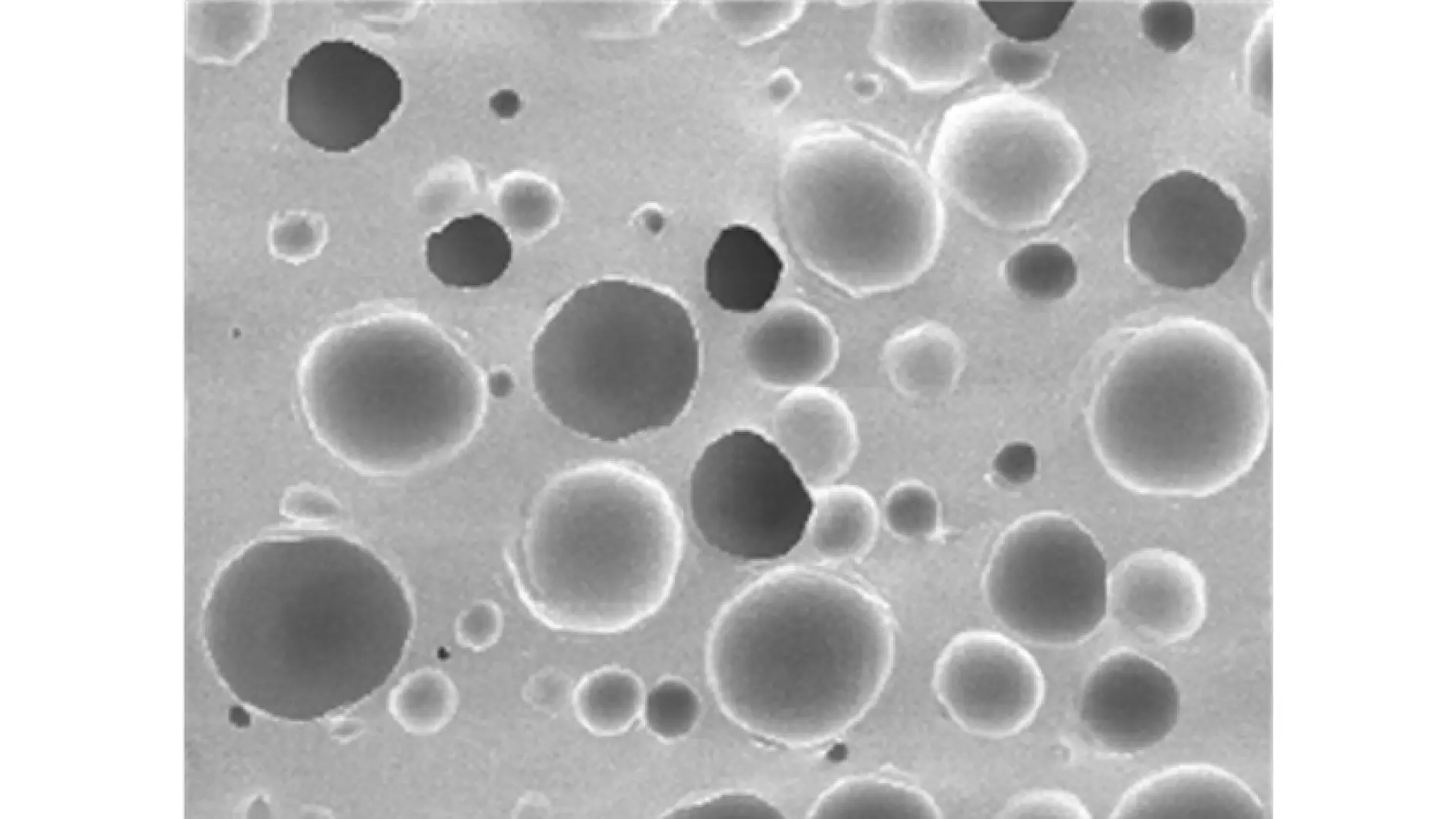
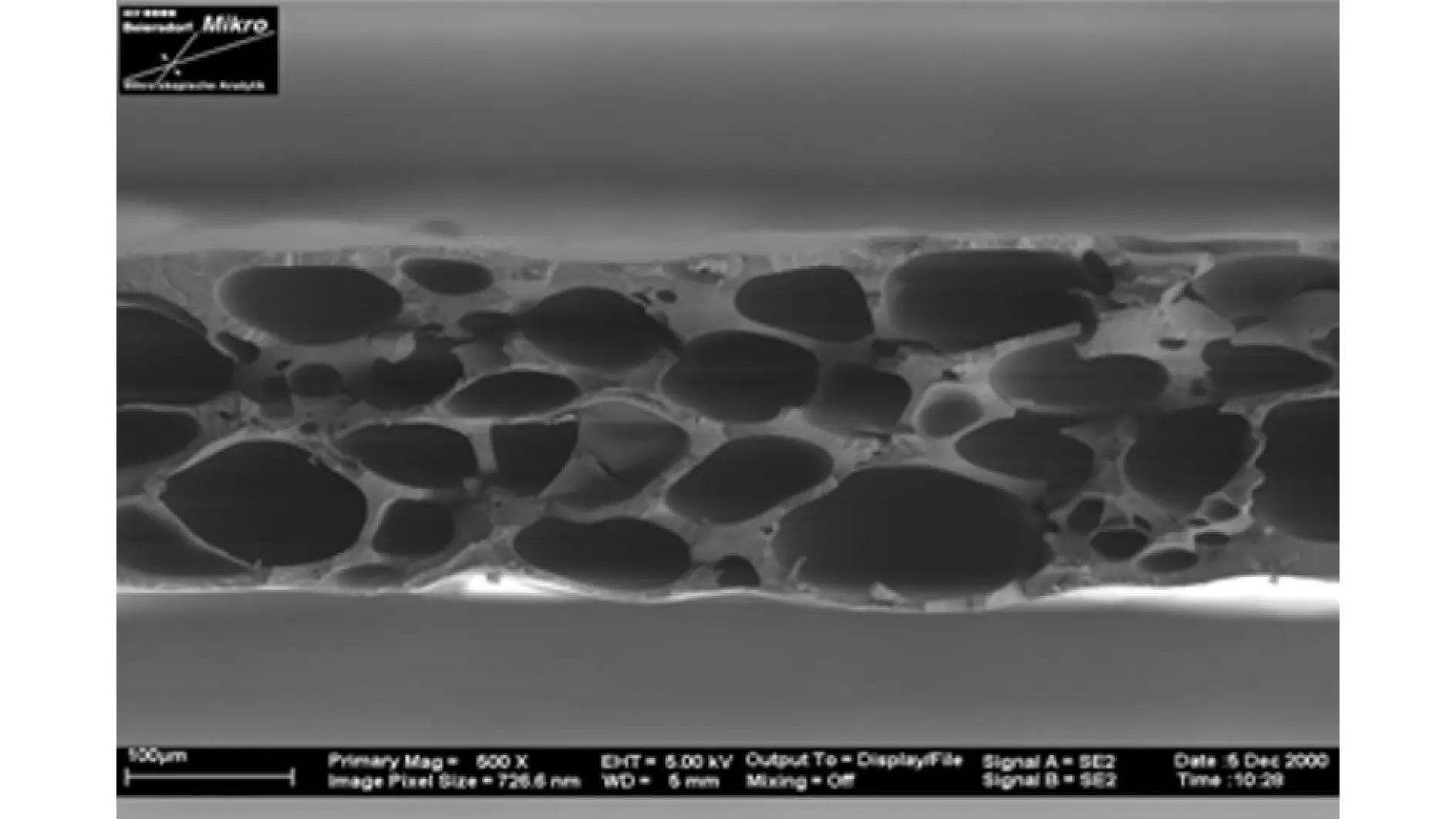
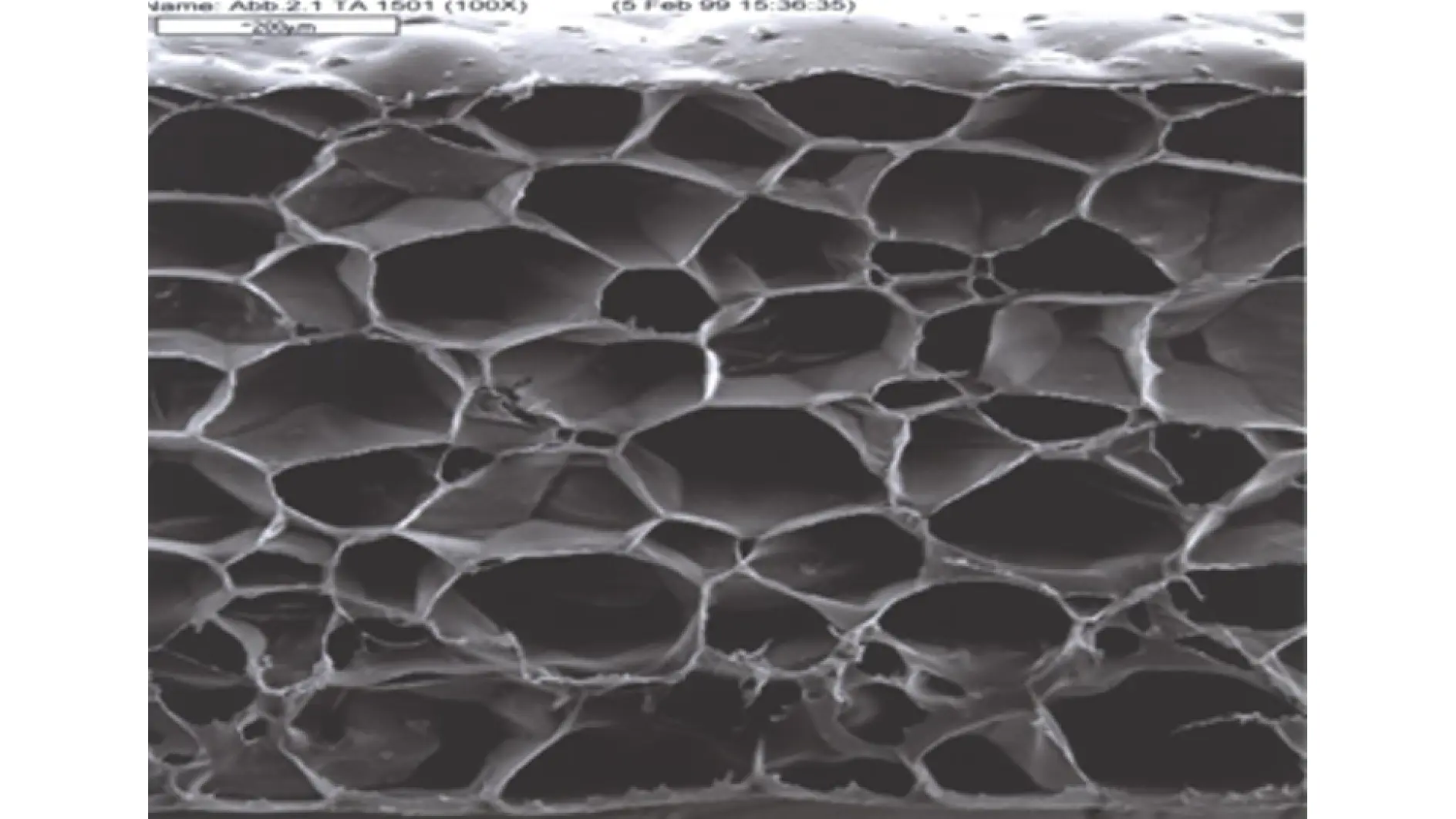
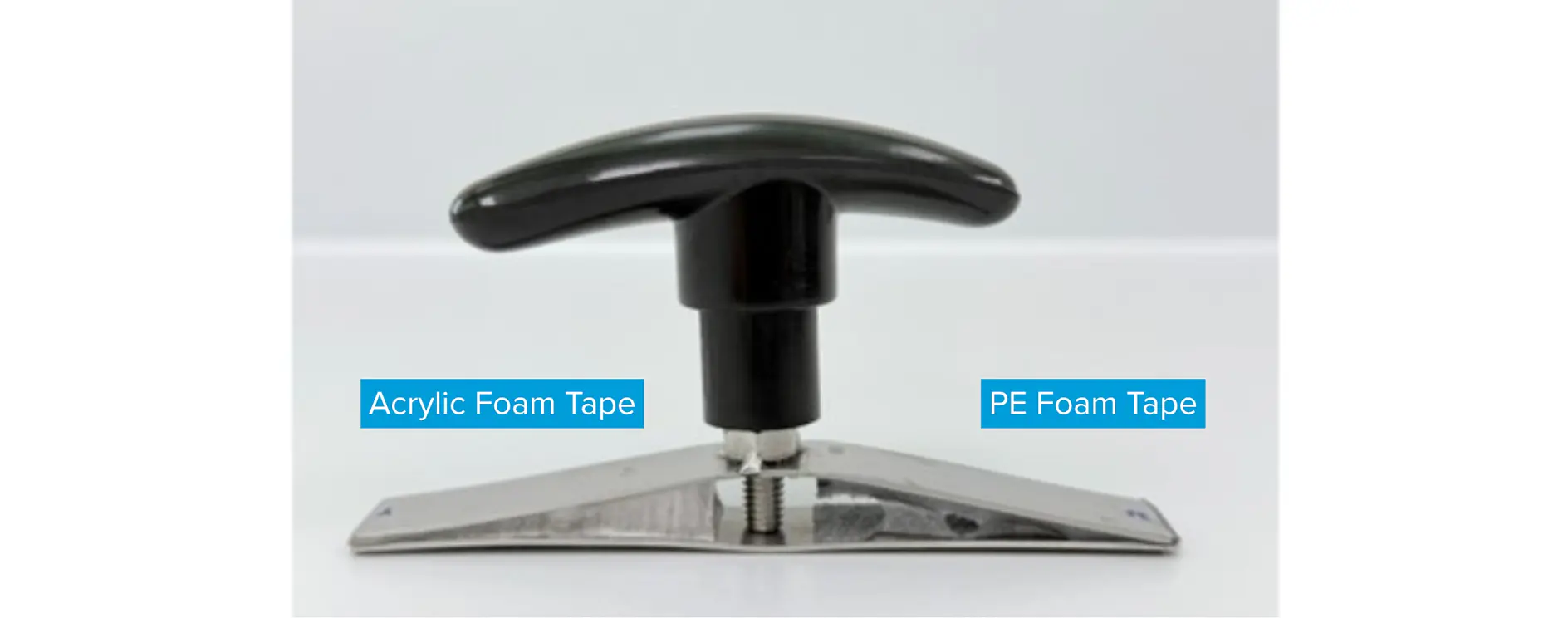
Fig. 2.2) Comparison of internal cohesion acrylic foam tape and double-sided PE foam tape.
2.2 Release Liner
Release liners protect the adhesive surface prior to bonding and play an important role in processing behavior. Filmic liners support conformability and automated application, while paper liners provide dimensional stability for manual or long, straight bonding applications. Liner selection therefore influences both process capability and application quality.
3. Key Mechanical and Environmental Performance Characteristics
3.1 Bonding Power and Wet‑Out Behavior
Acrylic foam tapes achieve high bonding power through excellent surface wet‑out. Under applied pressure, the viscoelastic adhesive system flows into the micro‑roughness of the substrate surface, maximizing real contact area. This results in strong interfacial adhesion on metals, glass, coatings, and many plastics.
A wide thickness range, typically from 500 to nearly 3000 µm, allows compensation of uneven surfaces while maintaining cohesive strength. This ability distinguishes acrylic foam tapes from thinner filmic tapes that require highly controlled, flat substrates.
3.2 Stress Dissipation Under Static and Dynamic Load
During the service life of a bonded assembly, joints are exposed to static loads, dynamic vibration, and shock. The viscoelastic acrylic foam core dissipates these stresses over time, reducing peak stress at the bond line. This property significantly lowers the risk of adhesive failure, damage, particularly in transportation and appliance applications.
3.3 Temperature and Weather Resistance
Thanks to their acrylic chemistry, acrylic foam tapes demonstrate excellent resistance to temperature extremes and weathering. Depending on the product family, short‑term temperature resistance can reach up to 220 °C, while long‑term resistance typically ranges from 70 to 120 °C. Selected grades also exhibit outstanding cold‑shock resistance down to –40 °C, making them suitable for outdoor and automotive environments.
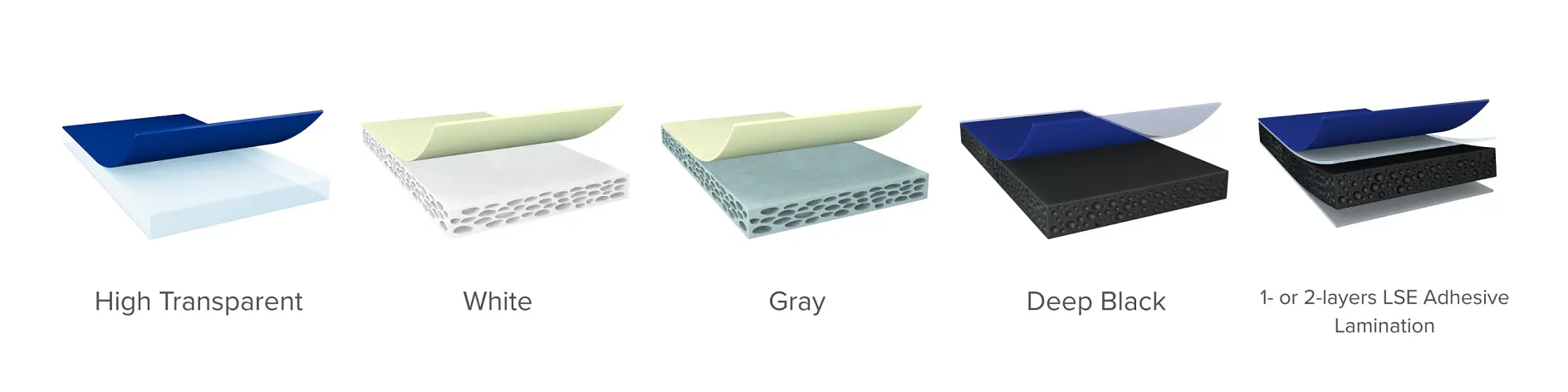
Acrylic Foam Tape Product Families
4. Acrylic Foam Tape Product Families and Functional Differentiation
Acrylic foam tapes are not a single uniform product category but a portfolio of engineered solutions, each optimized for specific application requirements such as transparency, substrate compatibility, mechanical load, and environmental resistance.
Based on functional design and application focus, acrylic foam tapes can be broadly classified into 4 main categories:
4.1 High Transparency
Example: tesa ACXplus 7254, 7255, 705x
High-transparency acrylic foam tapes utilize a solid, pure acrylic core designed for optical clarity. These products enable nearly invisible bonding, making them ideal for applications where aesthetics and visual design are critical.
Key characteristics:
- Transparent, colorless appearance for invisible joints
- Solid acrylic core with high internal cohesion
- Strong adhesion on glass, acrylic, and polished surfaces
- High resistance to UV exposure and weathering
Typical applications:
- Glass panel bonding (e.g., appliance deco glass, display covers)
- Mounting of transparent or translucent components
- Optical bonding in electronics and HMI systems
4.2 Multi-purpose
Example: tesa ACXplus 67xxx
General purpose acrylic foam tapes are designed as versatile, well-balanced solutions suitable for a wide range of bonding applications. They combine good adhesion performance with strong viscoelastic behavior, making them true “all-rounders.”
Key characteristics:
- Balanced performance across adhesion, flexibility, and durability
- Excellent stress dissipation due to viscoelastic properties
- Capability to compensate for thermal elongation of bonded parts
- Suitable for bonding a wide range of substrates
Typical applications:
- Decorative parts and emblems
- Display and signage mounting
- General industrial bonding of mixed-material assemblies
4.3 LSE Adhesive (Low Surface Energy)
Example: tesa ACXplus 63xx, 778xx
An acrylic core with additional LSE adhesive layer, LSE acrylic foam tapes are specifically engineered to bond low surface energy substrates, such as PP (polypropylene), PE (polyethylene), and coated or contaminated plastics, which are traditionally difficult to bond.
Key characteristics:
- Specialized adhesive system with enhanced wet-out behavior on LSE substrates
- High peel adhesion on plastics with low polarity surfaces and coated metal
- Resistance to plasticizer migration and surface contamination effects
Typical applications:
- Automotive exterior plastic trims (PP, TPO parts)
- Home appliance plastic housings and components
- Electronics enclosures using LSE plastics
4.4 High Resistance
Example: tesa ACXplus 707x, 780x,…
High resistance acrylic foam tapes are engineered for demanding mechanical and environmental conditions, providing maximum durability under extreme loads, temperature variations, and outdoor exposure.
Key characteristics:
- Foamed acrylic structure with high cohesive strength
- Excellent resistance to temperature extremes and weathering
- Outstanding performance under dynamic loads, vibration, and fatigue stress
Typical applications:
- Automotive exterior attachments
- Outdoor application and structural bonding
- Applications exposed to high temperature, humidity, and UV radiation
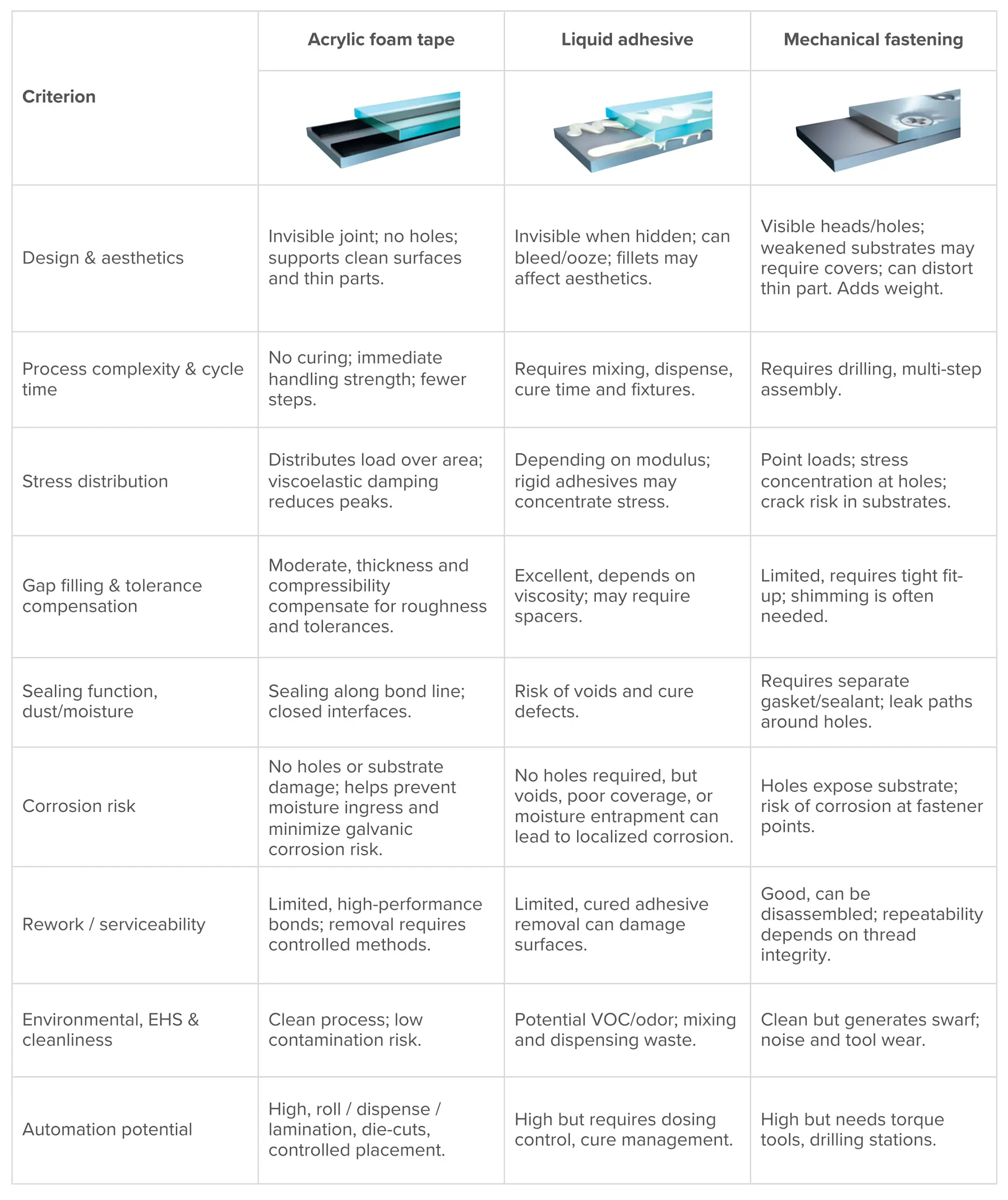
Engineering Comparison
5. Engineering Comparison: Double-sided Tape vs Liquid Adhesive vs Mechanical Fastening
Selection should be based on joint mechanics, process capability, durability requirements, and total cost of ownership.
6. Industry Applications for Acrylic Foam Tapes
Below are key application examples structured by major industries. The focus is on how core material properties – viscoelastic, stress dissipation, gap filling, environmental resistance, and process efficiency—translate into application value.
6.1 Automotive
Typical applications
- Exterior trims and moldings (door edge, body side, rocker panels, window frames)
- Emblems and badge mounting
- Sensors and functional components (e.g., parking sensors)
Engineering value
- Durability under harsh environments: resistance to UV, temperature cycling, and car-wash chemicals
- Stress management: viscoelastic core dissipates vibration and prevents stress concentration at bond interfaces
- CTE compensation accommodates mismatch between plastic trims and painted metal parts
Process & design benefits
- Enables hole-free bonding, improving corrosion resistance and surface integrity
- Supports automated application and consistent bonding quality
- Reduces noise, vibration, and rattle (NVH improvement)
In automotive applications, acrylic foam tapes act as structural bonding elements, replacing mechanical fasteners while ensuring durability under dynamic loads.
6.2 Home Appliances – Structural & Aesthetic Integration
Typical applications
- Deco glass panel bonding (air conditioners, refrigerators, washing machines)
- Glass lids and doors (washing machines, ovens)
- Display and HMI mounting (coffee machines, control panels)
Engineering value
- Gap filling & tolerance compensation accommodates uneven plastic parts and assembly deviations
- Mechanical strength: supports heavy components such as glass panels
- Thermal resistance: withstands heat cycles and appliance operating conditions
Functional benefits
- Vibration damping: reduces rattling and improves perceived product quality
- Seamless design: enables clean, screw-free surfaces and modern glass aesthetics
- Chemical resistance: maintains performance when exposed to detergents and cleaning agents
In appliances, acrylic foam tapes are multi-functional solutions—combining structural bonding, sealing, and design enhancement in a single material.
6.3 Electronics – Precision Bonding & Protection
Typical applications
- HMI and control panel bonding
- Display and cover lens mounting
- Sensor, speaker mesh, and internal component bonding
Engineering value
- Tolerance management: foam thickness compensates for tight assembly gaps and design deviations
- Shock resistance protects devices from dropping impact and mechanical stress
- Sealing performance contributes to protection against dust, moisture, and chemicals
Design & process benefits
- Enables thin, lightweight designs while maintaining durability
- Supports chemical resistance for wearables exposed to sweat, sunscreen, and daily-use chemicals
- Provides high conformability for complex component geometries
In electronics, acrylic foam tapes are used selectively where mechanical robustness, sealing, and tolerance compensation are critical, while thinner filmic tapes are used for ultra-thin assemblies.
7. Conclusion
Acrylic foam tapes are engineered bonding systems that combine acrylic polymer chemistry with viscoelastic mechanical behavior. They provide strong and durable bonds with superior stress dissipation, gap filling, and environmental resistance. When selected with the correct family and applied with controlled process parameters, acrylic foam tapes can reliably replace liquid adhesives and mechanical fasteners while improving aesthetics and manufacturing efficiency.
Last updated on 14 Aug 2026