01Debonding on Demand – Electrical debonding
Low-voltage electricity causes electrochemical reactions and allows debonding of the adhesive within a few seconds.

Technologies
This challenge inspired tesa to develop debonding tapes – an innovative adhesive solution that provides strong bonds when needed while allowing for clean removal when required. These revolutionary tapes help designers and manufacturers reduce waste, simplify product disassembly, and make circular economy principles a practical reality.
Our journey began more than a decade ago with the groundbreaking tesa® Bond & Detach technology, which set a new standard for residue-free tape removal. Building on this breakthrough, we are now exploring even more advanced solutions. Our latest developments include debonding tapes that respond to various triggers such as electricity, induction, infrared light, or heat. This advancement in structural bonding technology promises to transform traditional fastening methods and revolutionize the adhesive industry.
Our debonding tapes provide fast, safe, and reliable bonds with exceptional strength – yet can be completely removed whenever required. This innovative solution enables our customers to conserve resources, promote sustainability, maintain a competitive edge, and confidently adapt to changing regulations.
tesa’s Bond & Detach® solutions are used in more than 1.8 billion smartphones worldwide.
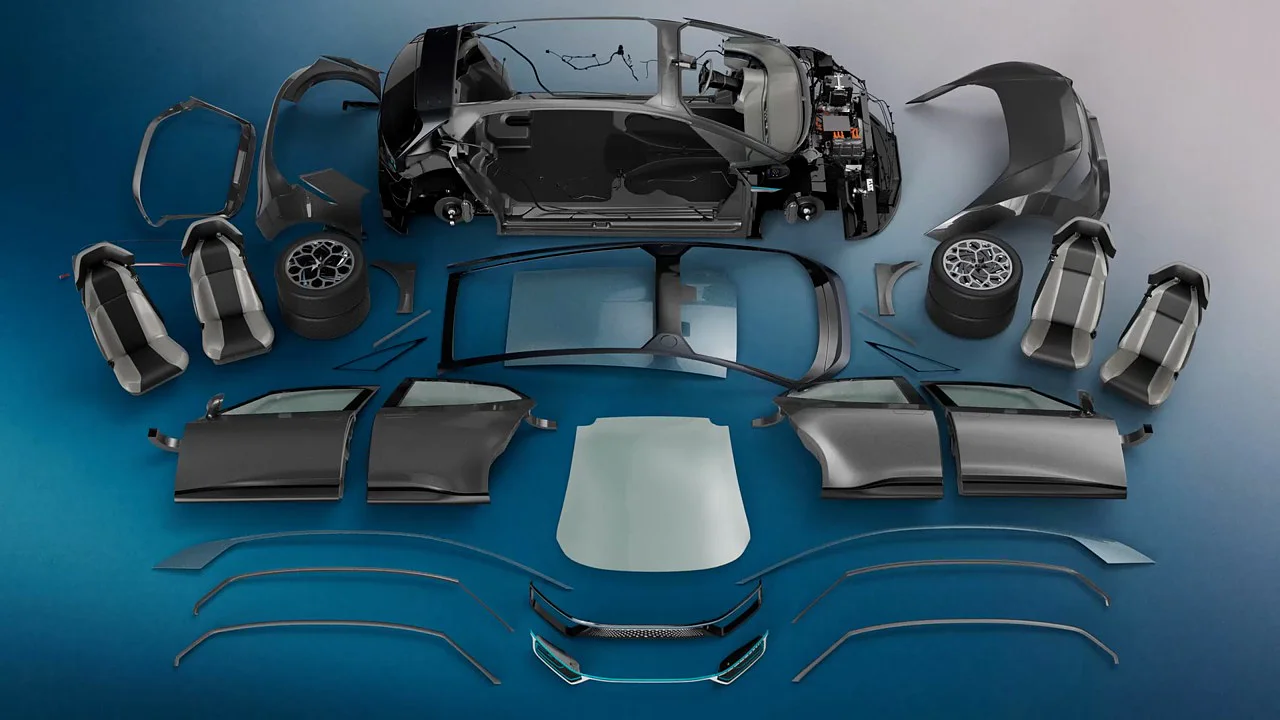
A diverse and growing range of debonding methods is now being integrated into adhesive tapes for a wide variety of products, from cell phones to car displays, Electric Vehicle (EV) batteries and beyond. This makes it possible to rework parts during production, helps save resources and cut waste because errors can be corrected instead of scraping material.
Repairing products extends their life cycle and eliminates the need to manufacture replacements. And enabling recycling of a broader range of products supports the transition to a circular economy, where materials stay in the economic cycle for longer and waste becomes a thing of the past.
We are working hand-in-hand with OEMs to create tapes featuring innovative debonding mechanisms, and our product development is already at an advanced stage. Over the past decade, tesa has introduced the renowned tesa® Bond & Detach tape, which allows for mechanical release without leaving any residue.
50+ the number of patents filed by our scientific experts at tesa for Debonding on Demand adhesive tapes

Looking ahead, structural adhesives will also become debondable on demand through various mechanisms, including temperature, electricity, laser, and electromagnetic induction. Our ambitions in the realm of permanent bonding are high, and we are pioneering efforts to enable non-destructive disassembly for the first time in the future. Early engagement with the customer is key to ensuring that the debonding mechanism can be incorporated into the substrate, material, and overall design.
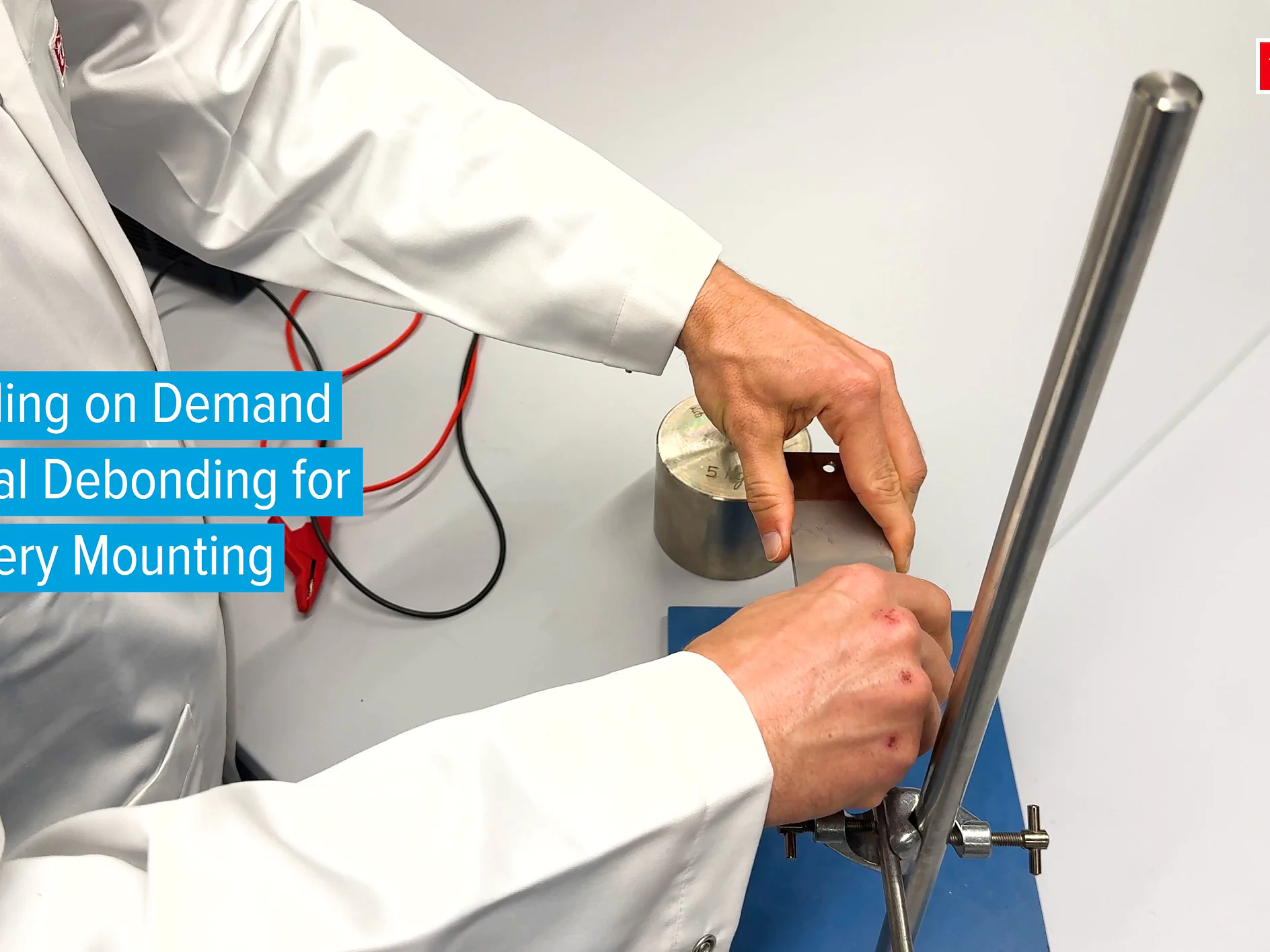
Low-voltage electricity causes electrochemical reactions and allows debonding of the adhesive within a few seconds.
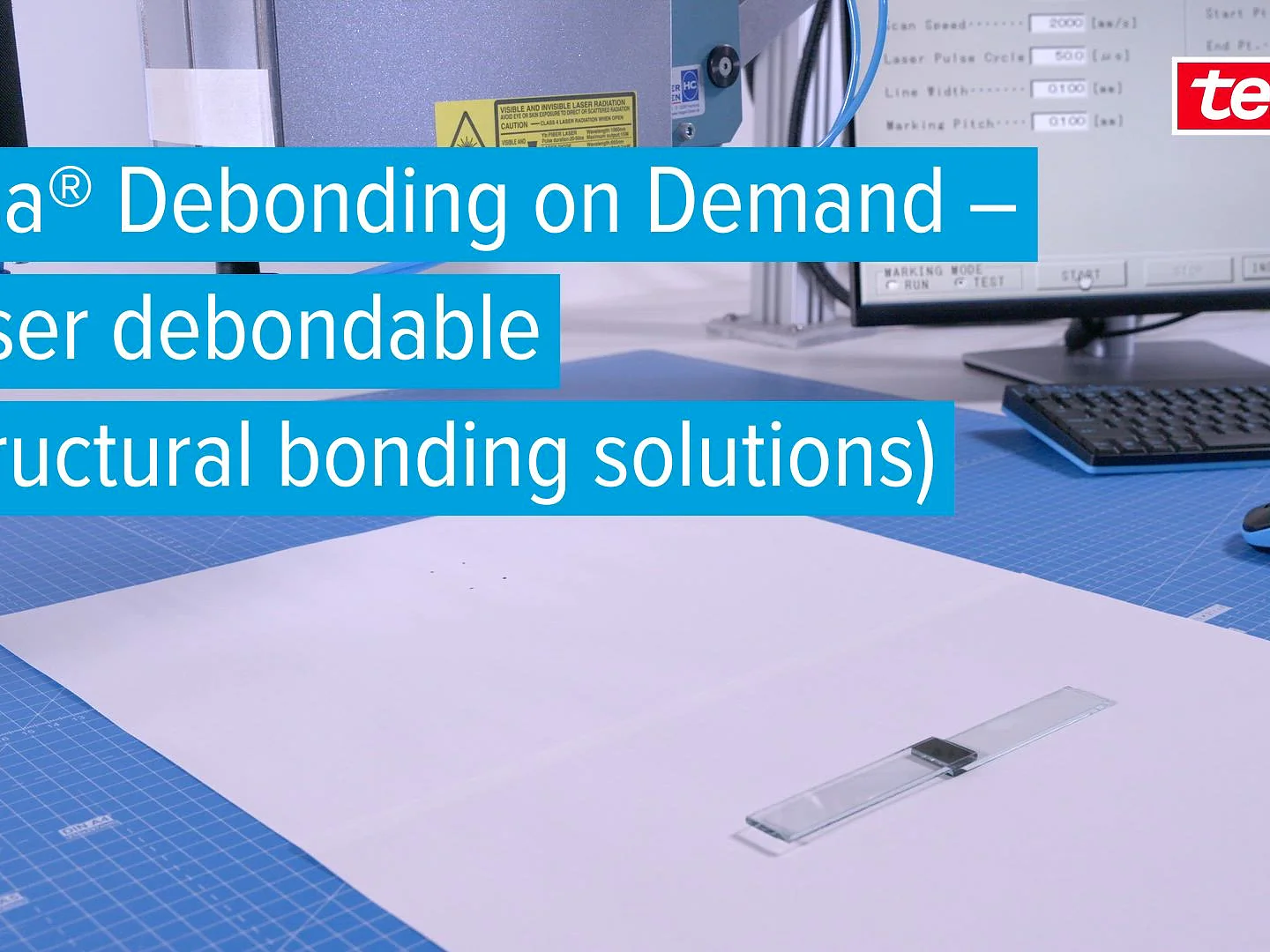
In just a few seconds, light from a Near Infrared (NIR) laser weakens the tape structure – causing it to debond.

Developed from the famous tesa® Powerstrips, tesa® Bond & Detach tapes feature a tab that users can pull to remove the tape by reducing the bonding strength via stretching.

There are several methods that allow for thermal release. For example, heat can be generated conventionally, causing foaming in the adhesive that causes the tape to separate.
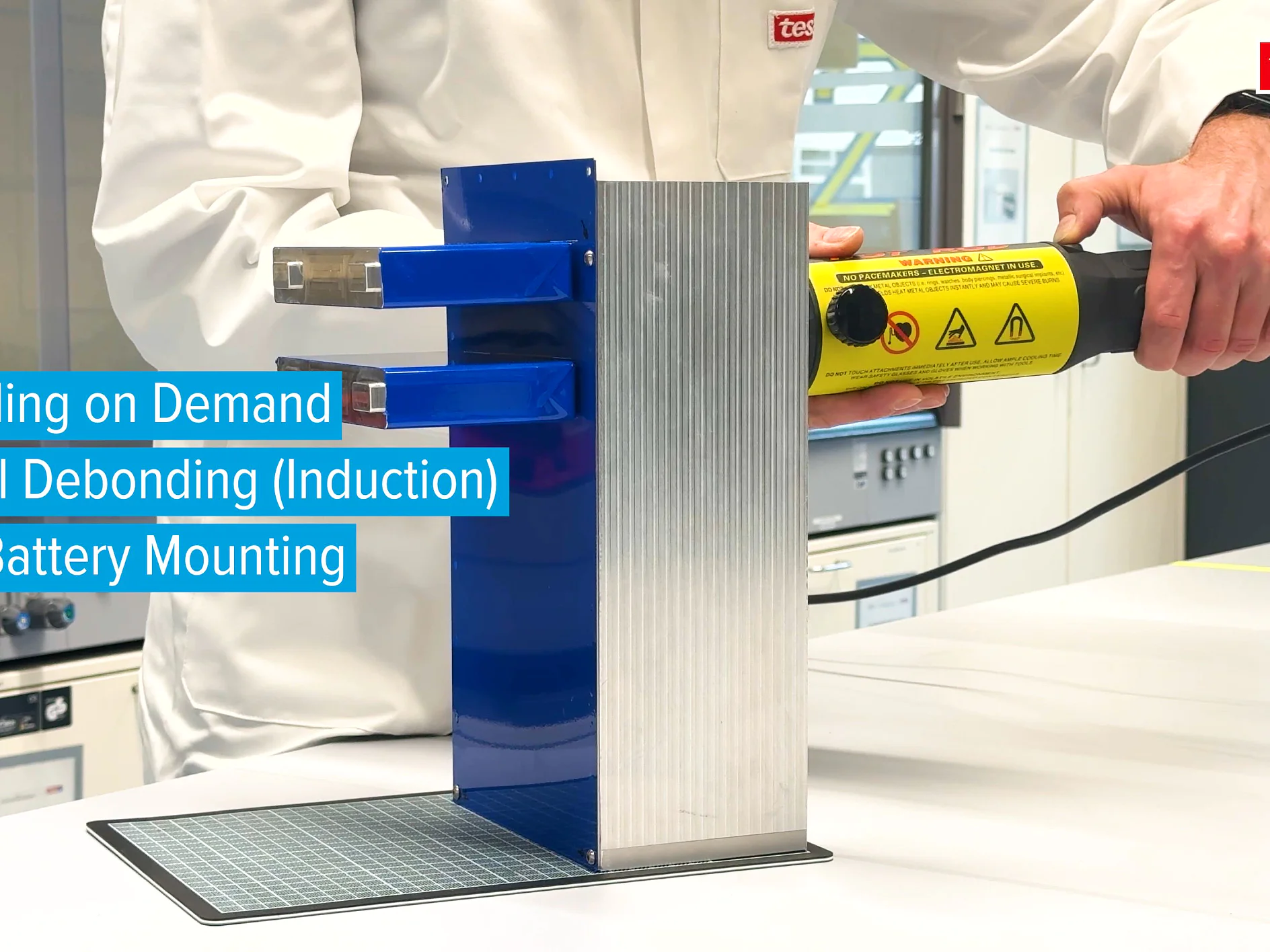
There are several methods that allow for thermal release. For example, heat can be generated locally, as in modern kitchen ovens, electromagnetic fields generate heat through a metal strip built into the tape that causes the bond to separate.
There is already great demand for debonding solutions in the electronics industry. The tesa® Bond & Detach technology with the mechanical separation of adhesive tapes is already in widespread use. Changing regulations in the European Union are also driving popularity for smart debonding on Demand technologies in this fast-moving market. The legislation aims to give consumers the right to repair products by themselves, for example, without special knowledge or tools. That’s a big challenge for device manufacturers. They urgently need solutions that enable them to design next-generation devices that meet this new set of legislative requirements.
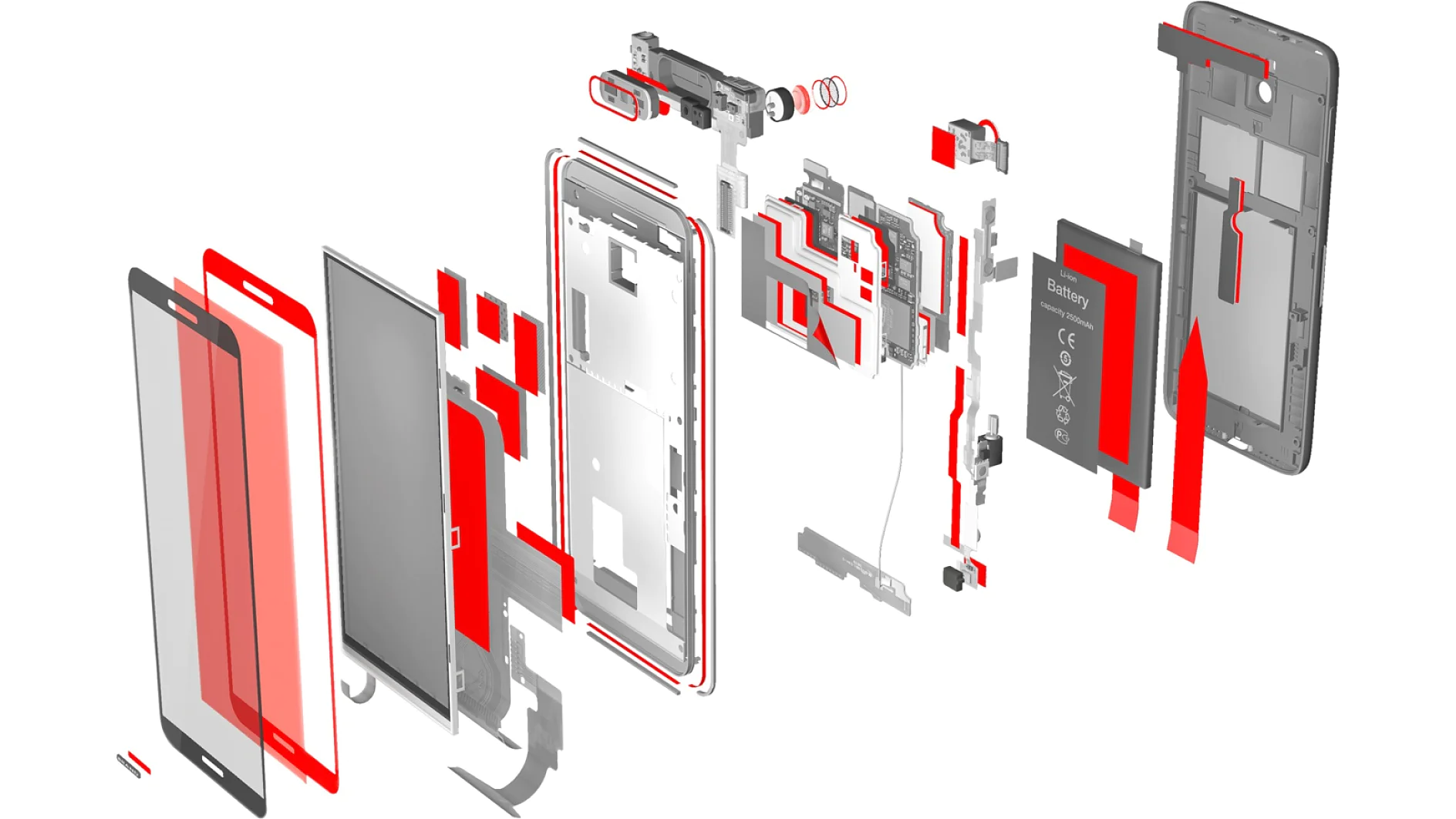
An average smartphone already contains approximately 70 adhesive tapes from tesa, including technologies that secure the screen, the battery, and cameras. Equipping adhesive tapes with "debonding on demand" functions should give consumers the freedom in future to extend the service life of their device by repairing or replacing parts. In this way, devices will stay usable for longer and the volume of electronic waste will decrease. In addition, our tapes make it possible to rework the tapes and cut scrap during manufacturing, and to carefully dismantle devices at the end of the lifecycle so components and valuable materials can be harvested for recycling.
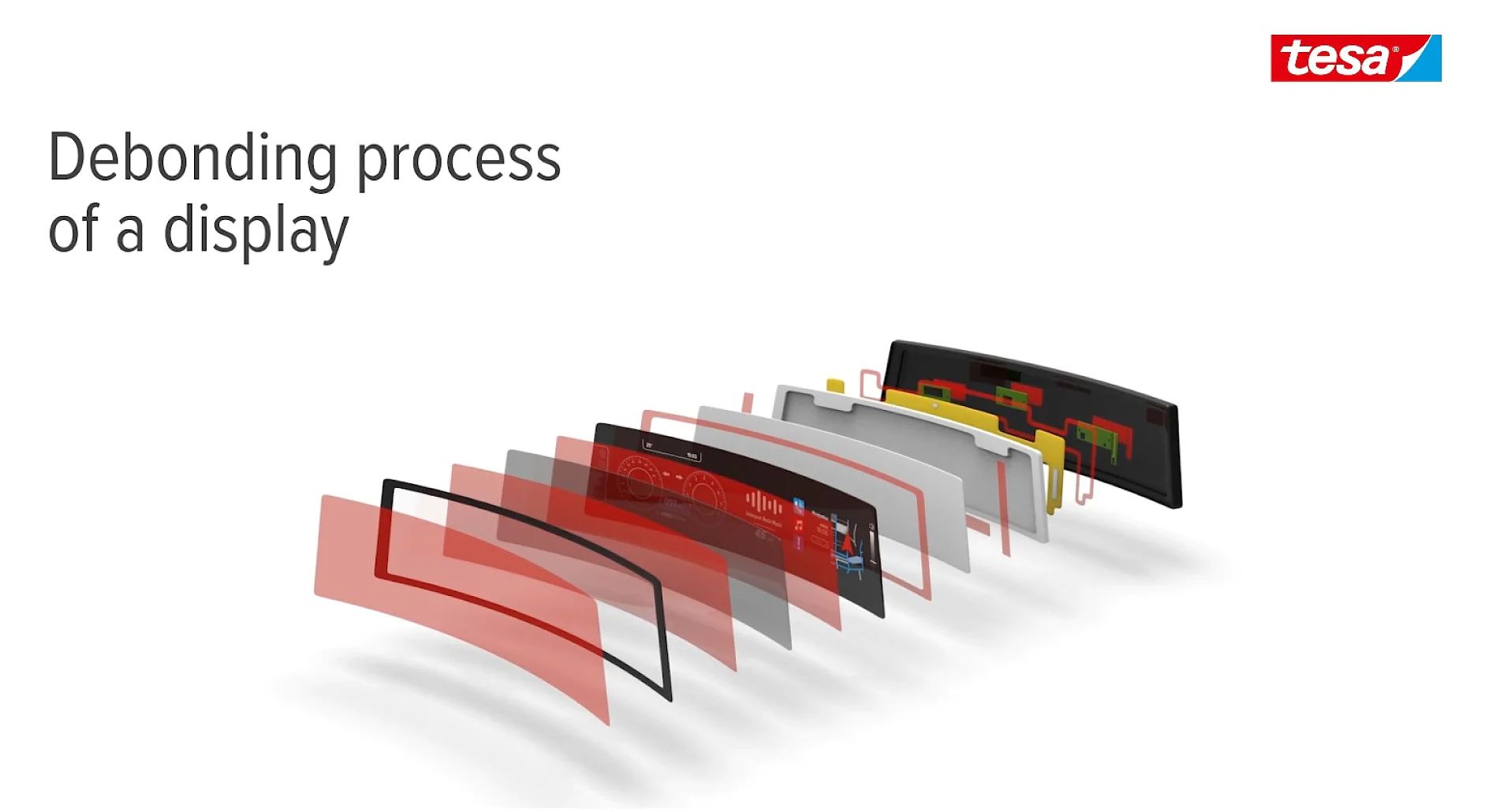
In the automotive sector debonding solutions are at the beginning of their journey. The Council of the EU recently aligned new regulations to strengthen sustainability rules for batteries and waste batteries from production to reuse and recycling. Initial applications mainly involve dashboard displays, where tesa’s debonding tapes already have a record of relevant success within the electronics market. As electric cars gain popularity, there are additional opportunities to use debonding on demand technologies in automotive applications such as battery mounting, cell mounting and battery box sealing.
Advanced Driver-Assistance Systems (ADAS) also offer possibilities to support repair and recyclability in the automotive industry by enabling easier access to cameras, radar modules, electronic control units and other components within modern vehicles.
At first glance, to make the ever-lasting bonding tape debondable without compromising performance sounds like a contradiction and mission impossible. Therefore, smart debonding on demand technology attracts huge interests for the potential to enable contributions to sustainability for the circular economy across industries. Looking to the future, the product developers at tesa aim to integrate debonding mechanisms into more than 7,000 products. Chemists, engineers, and product developers from tesa are engaging with customers to develop optimal solutions for future designs. This growing trend for smart debonding tapes is the latest step in tesa’s proud history of improving products and lives with innovative and sustainable adhesives for more than 125 years. And these bonding, debonding and re-bonding solutions are already gaining popularity with customers across markets worldwide.
tesa's revolutionary Debonding on Demand technology represents a significant breakthrough in adhesive solutions, addressing the growing need for sustainable and repairable products. The technology enables strong bonding with the ability to cleanly separate components when needed, transforming traditional permanent bonding methods. This innovation particularly impacts the consumer electronics and automotive industries, supporting repair rights legislation and circular economy principles. With multiple debonding mechanisms available - including electrical, laser, stretch, and thermal debonding - the technology offers versatile solutions for various applications. From smartphones to electric vehicle batteries, these smart adhesive solutions are helping manufacturers reduce waste, simplify repairs, and extend product lifecycles while maintaining structural integrity. tesa aims to integrate this technology into their products, marking a significant step forward in sustainable product design and manufacturing.
No, debonding on demand does not affect the load-bearing capacity of products. This method is designed to remove adhesives without damaging the structural integrity of the product. tesa also offers debonding tapes for structural bonding. This means for permanent and very strong bonding applications. These bonds can also be removed without affecting the load-bearing capacity of the products.
At present, the debonding tapes themselves cannot be reused, but all the components released by the debonding process can be reused, repaired or, if required, recycled.
Debonding on demand helps generate less waste for several reasons. Firstly, adhesive bonds can be removed and repositioned during the production process, eliminating the need to discard items due to incorrect bonding. Additionally, items that can be repaired or recycled after use reduce waste, as they are not thrown away and recycled materials can re-enter the production cycle. Therefore, debonding on demand offers significant potential to reduce waste in the near future.
Yes, Debonding on Demand can be integrated into existing production processes. It is designed to be adaptable and can be implemented without significant changes to current manufacturing operations but overall allowing for greater flexibility and efficiency. Depending on the application, a decision on the appropriate debonding mechanism should be made in advance. tesa advises its customers on the best method to use.