Sustainability
When it comes to tapes and adhesives, the very idea of reducing waste and improving product sustainability is a real conundrum. After all, tape is usually single-use and isn’t usually something that can be recycled. The big question here is: can you recycle tape?
In this article, we debunk common myths and explain how we are making tape more sustainable. From our approach to our sustainability action areas and targets, get ready to learn more about one of our favorite topics: tapes and sustainability.
What do we mean by ‘more sustainable tapes’?
Sustainability is a priority and an important transformation in our business. For all large projects, a strategic approach is necessary for achieving the most successful outcomes. That’s why we have our five interconnected action areas:
These strategic action areas provide the starting points for making our tapes more sustainable. There is so much more to sustainability than simply asking: Can you recycle tape? Our more sustainable tapes carry our sustainability marker to indicate at least one of the following criteria have been fulfilled:
- Bio-based materials
At least 50% of the materials used are bio-based materials in one component, and 30% in the entire product. - Use of recycled materials
One or more components (the backing, adhesive, or liner) must be made from at least 50% recycled materials. - Use of mass-balanced materials
If the product contains biomass-balanced materials, (opens in a new window or tab) it needs to be certified by ISCC Plus or an equivalent scheme. This should be above 50% for a single component (backing, adhesive, or liner), or a minimum of 30% share in the total product. - Recyclability
Products marked as recycling-friendly or recyclable must be certified by schemes such as INGEDE Method 12 (opens in a new window or tab) or PTS-RH 021:2012 (opens in a new window or tab).
So, can you recycle tape?
It’s more nuanced than a simple yes or no. Yes, you can technically recycle tape. A selection of our portfolio of paper, PET, and Polyactide (PLA) tapes (seen below) is recycling-friendly. This means these tapes are compatible with established recycling streams, such as PET, paper, or cardboard.
tesa’s recycling-friendly tapes portfolio
Not all of our more sustainable tapes are recycling-friendly, so it’s crucial to take note of your chosen tape product data sheet. Here you’ll find out what materials are used and their sustainability claims.
While we don’t currently have any fully recyclable tapes in our portfolio, we’re working on it. You can find out more about our approach and progress here.
What’s the difference between recycling and recycling-friendly?
Recycling-friendly means the tape will not contaminate or disrupt the recycling process, as certified by bodies such as INGEDE Method 12 (opens in a new window or tab).
Recycling/recycled means that the materials can be recovered and reprocessed into something new, whether that’s a new product or material.
Is masking tape recyclable?
At the time of the creation of this article (December 2025), masking tape isn’t generally recyclable unless stated on the product data sheet.
While we hope to change this in the future, for now, we are focused on improving the sustainability of our masking tapes. For example, tesa® 4319 uses a natural rubber adhesive, and its liner is made from 67% bio-based materials.
Is brown packing tape recyclable?
Yes and no. Again, unless specified on the product data sheet, our brown packing tape is not recyclable at this time. However, tesa® 60412, which is available in brown (color: chamois, also available in white and transparent), is certified as ‘recycling-friendly’ according to INGEDE method 12 (opens in a new window or tab). This means that the adhesive does not disturb the paper recycling process.
Is clear packing tape recyclable?
This will vary from product to product and will be detailed on the data sheet. Products in our range, such as tesa® 60418, are certified as ‘recycling-friendly’ according to INGEDE method 12 (opens in a new window or tab). This particular packaging tape is available in transparent and has several attributes that make it a more sustainable packaging tape than the average:
- It contains 60% recycled content (independently certified according to UNI EN ISO 14021:2021 (opens in a new window or tab))
- Composed of tacky synthetic rubber hotmelt adhesive
- Its thin polyester backing is made from 85% recycled post-consumer waste
Is packing tape recyclable?
Generally speaking, you will need to examine the product data sheets to verify if the tape you are utilizing is recyclable. All our data sheets will detail whether or not our products are recyclable, recycling-friendly, and their sustainability attributes.
What’s the difference between recyclable tapes and tapes made from recycled materials?
The simplest way to look at this is to isolate these terms: recyclable and made from recycled materials.
What does recyclable mean?
Recyclability is defined by what is possible AFTER the use of a product. If something is marked as ‘recyclable (opens in a new window or tab),’ it means there is potential to reuse it in some way. The materials should be able to be reused in manufacturing processes to make something new, without the need to combine them with other materials.
What about ‘made from recycled materials’?
Whereas ‘made from recycled materials’ refers to what the product has been made from. Recycled materials can be reprocessed and made into something new, saving raw materials and energy. This could be paper, cardboard, glass, metal, or plastic.
What is the difference between recyclable, biodegradable, and compostable tapes?
To add another level, let’s now define what biodegradable and compostable mean. The terms are often wrongly used, so let’s debunk some myths and look at how they influence the answer to our original question: Can you recycle tape?
What does ‘biodegradable’ mean?
Biodegradable means something can break down naturally over time. Technically, everything has the potential to be biodegradable, but time and ideal conditions will dictate how environmentally friendly that truly is.
Biodegradable materials can take decades to break down (opens in a new window or tab), and may leave residues behind during this process. They need microorganisms such as fungi or bacteria to help make this possible.
You can learn more about our commitment to developing biodegradable tapes here.
What does ‘compostable’ mean?
Compostable, on the other hand, means something that has been developed to naturally break down through biological processes. During this process, the product will disintegrate without leaving behind toxins or waste, and can be reclaimed by natural organic materials. For composting to happen, a delicately balanced environment is required, comprising of microorganisms, humidity, and heat.
All compostable products are biodegradable. This process may take up to 180 days to fully break down. Materials need to be certified to be labeled as ‘compostable’.
Find out more about our journey to develop compostable tape here.
Does a tape have to be paper-based to be considered more sustainable?
No. There is a range of materials that can be used to make tape more sustainable. These include:
- Bio-based materials
- Recycled materials
- Mass-balanced materials
You can find out more about our commitment to achieving our long-term plans for implementing more sustainable materials here.
Are more sustainable tapes as strong as traditional plastic tapes?
Yes. In fact, we rigorously test and report upon what we’re doing to make our product portfolio more sustainable. From reducing our CO₂ impact to minimizing our use of virgin plastics, you can learn all about what we’re doing.
The following is taken into account when we optimize our tapes:
- Packaging security
- User comfort
- Value for money
- Improved sustainability
We test important factors such as peel adhesion on rough surfaces and abrasion resistance to make sure our more sustainable tapes are on par, if not better performing than previous products. These tests are performed at room temperature as well as more extreme variations in order to capture a full picture of the outcome.
For example, we tested the new and improved tesa® 60462 against its older counterpart, tesa® 4662. The testing was carried out at 23 °C and 5°C, on metals, plastics, and rough surfaces such as brickwork. Here were the results:
Can you get more sustainable tapes that are…
It’s part of our mission to make our portfolio of tapes more sustainable. With a catalogue as large as we have, here’s a snippet of our tapes that are marked with our sustainability marker:
Double-sided?
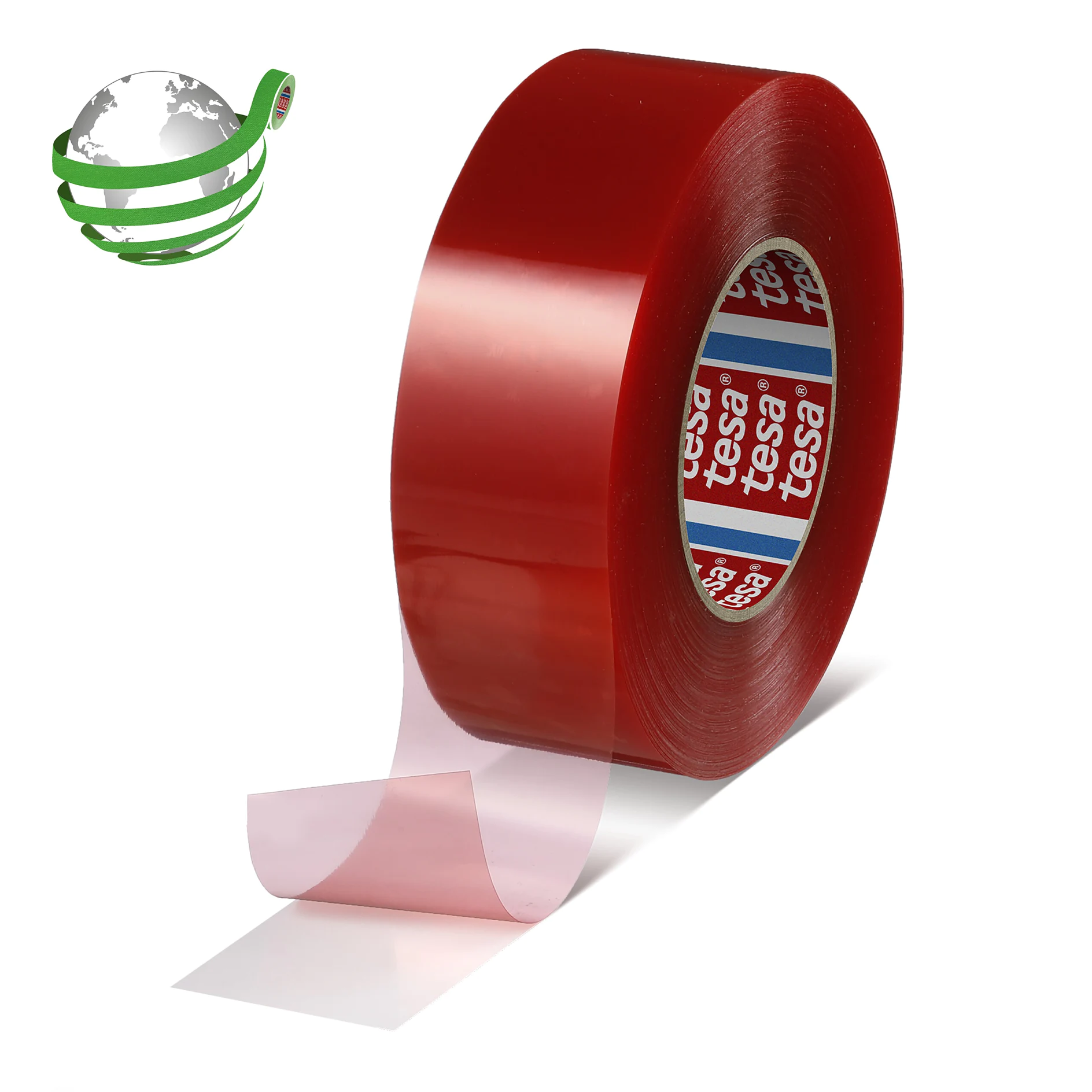
Filmic?
Secure enough for packaging and goods in transit?
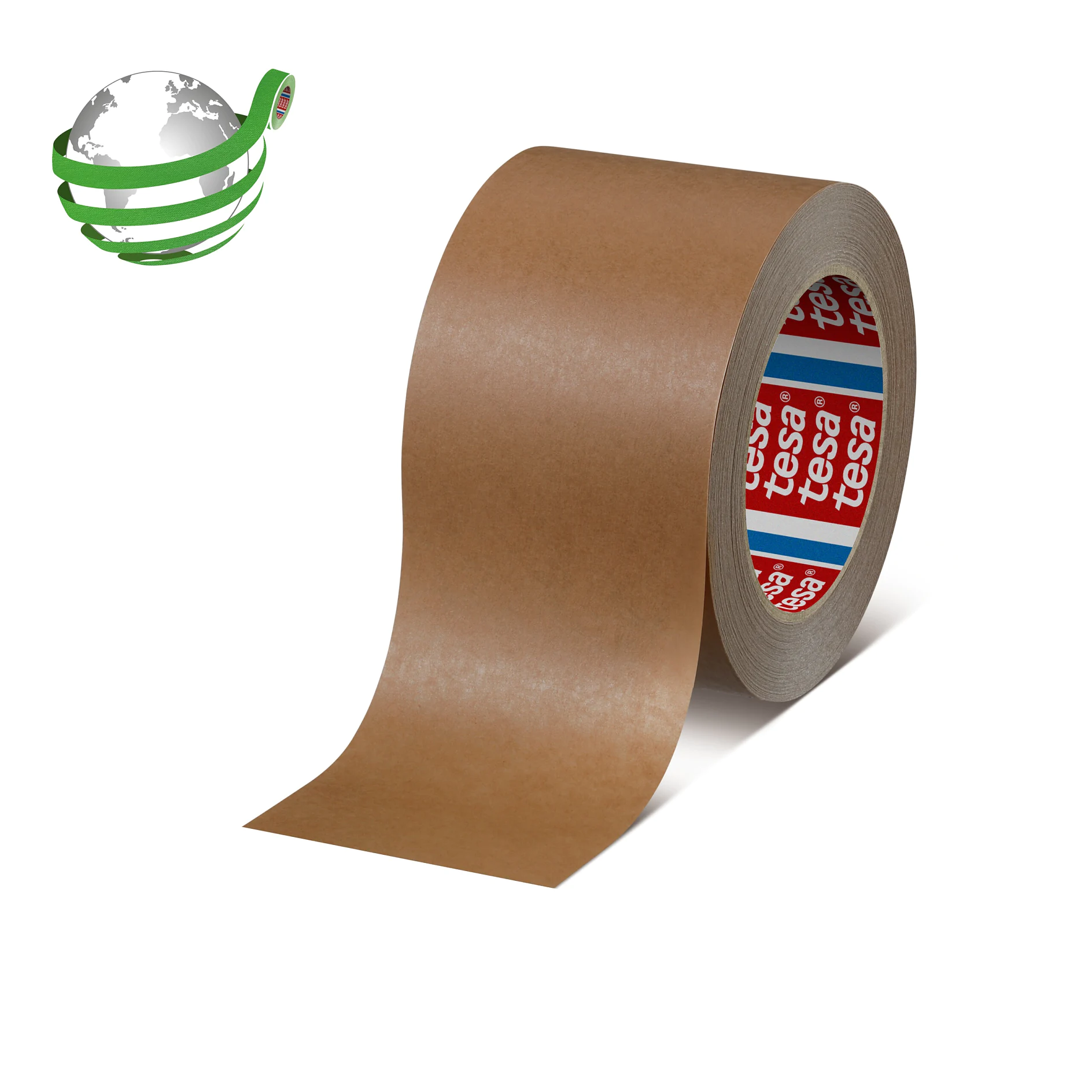
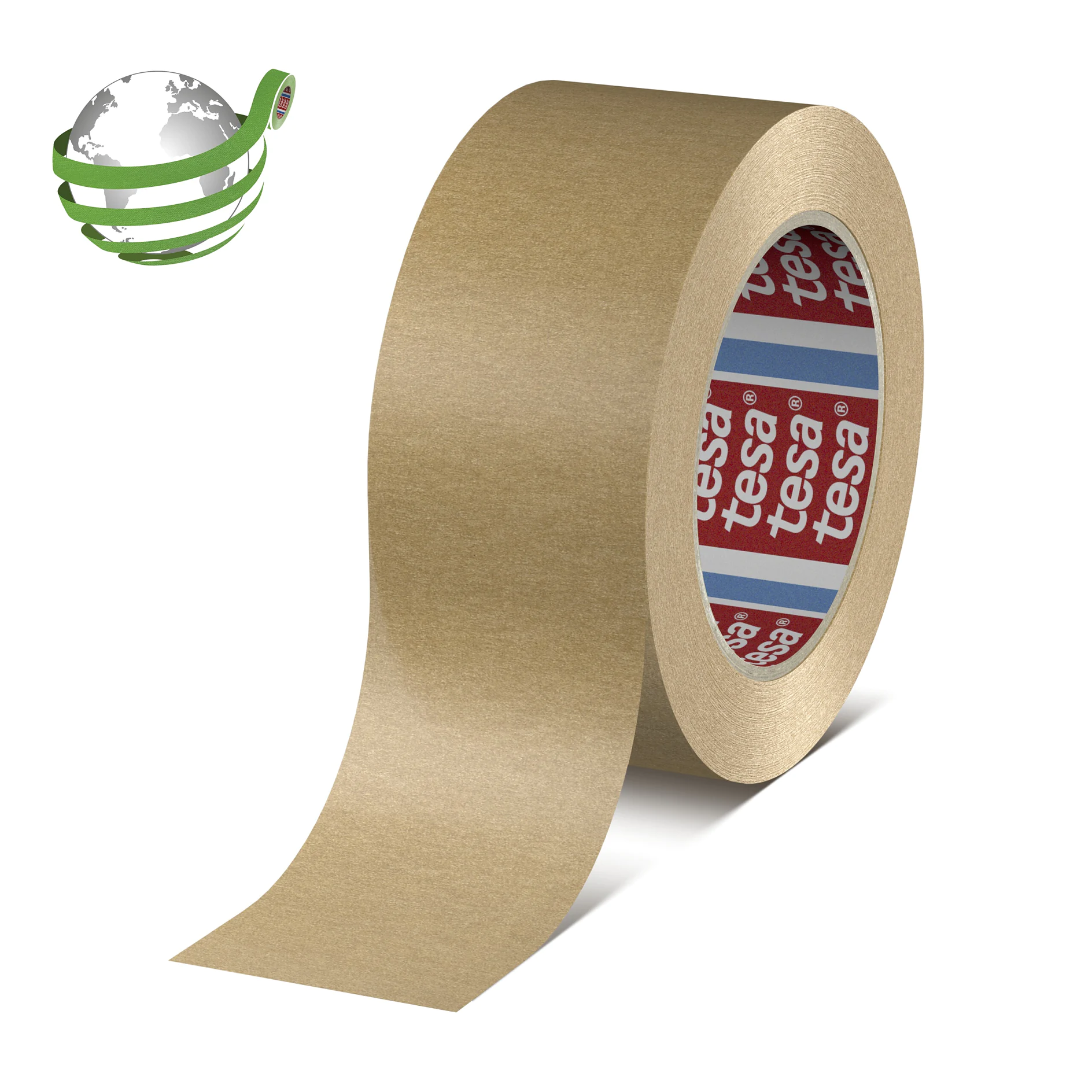
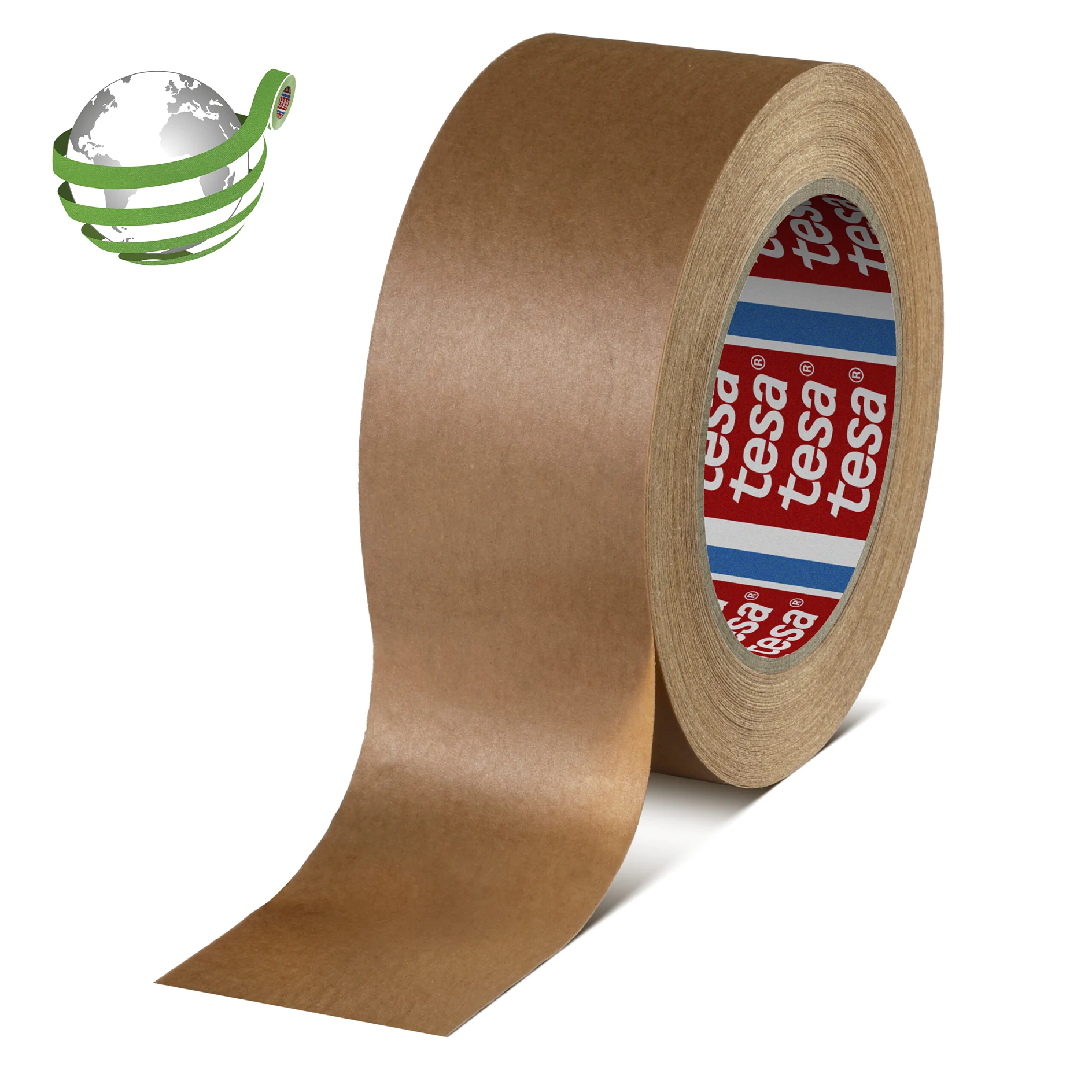
Have you got unanswered questions about tape? We’d love to hear from you!
Whether you want to understand more about tape sustainability or choose a more sustainable tape for your operations, we’re here to help. Get in touch, and our experts will be able to guide you through the process of selecting the right tapes and adhesives for your needs.
Last updated on 10 Feb 2026