Like the sun's rays lighting up the earth, screens illuminate our lives. Smartphone screens help us to exercise our intuitions, make us laugh and cry, and even entice us with pictures of delicious food. Advances in display technology have made these experiences more real than ever.

Protect Your Screen with Single-sided Tapes
Technologies
The requirements in the manufacturing process of displays are high. We help out!
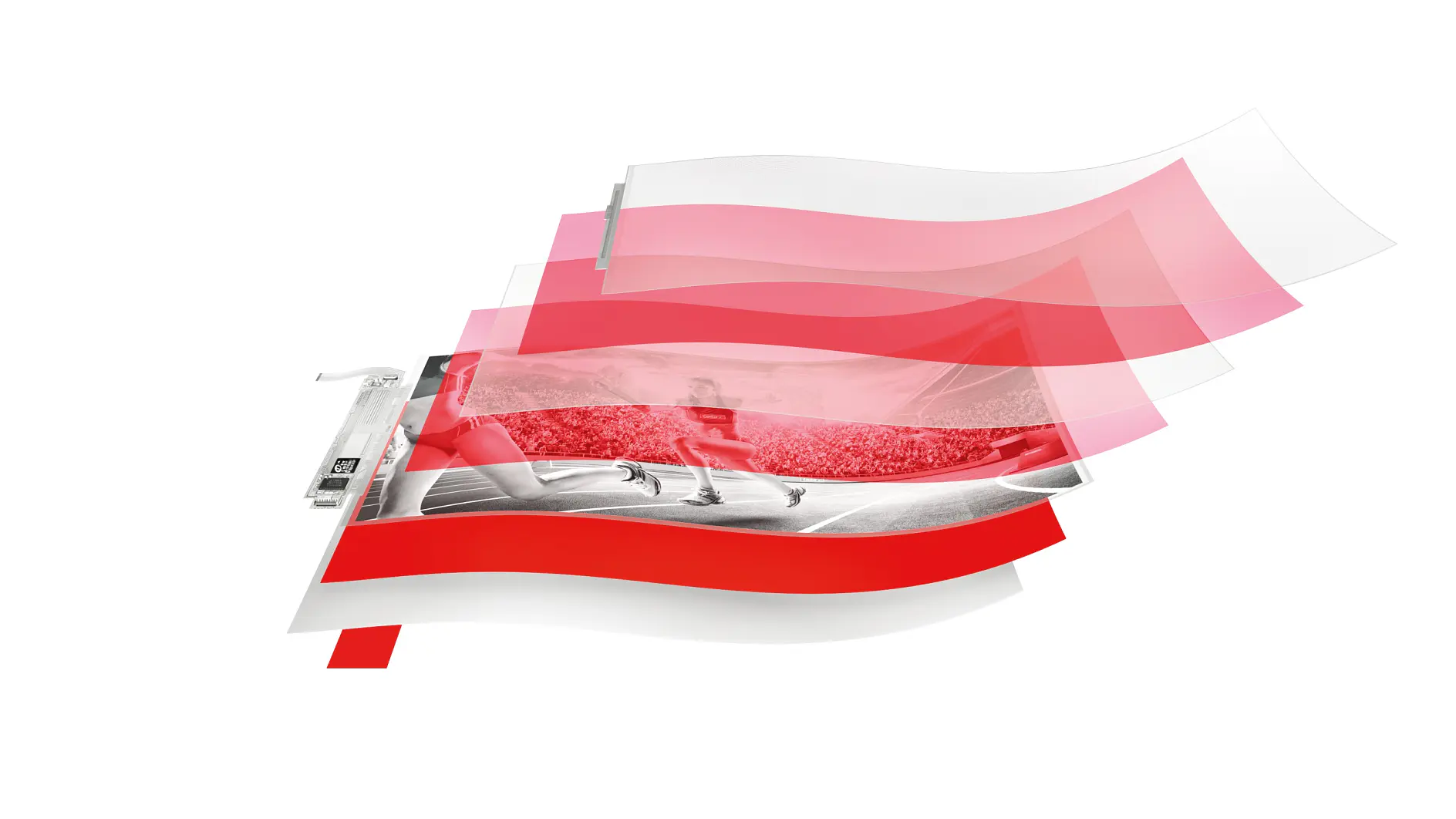
Flexible OLED display
OLED screen setup
Organic light-emitting diode display screens (OLED) outperform liquid crystal displays (LCD); OLEDs provide a clear and natural display, even under natural light. Flexible OLEDs make it possible for the screen to easily "disappear" when we are not using it.
This kind of screen is connected to the motherboard by a small "tongue-shaped" component—you would rarely have occasion to see it, but you can picture that it's there. The display driver and touch IC (integrated circuits) are located on top of this part. Two ways that all this is currently packaged together are COF (Chip-on-Flex) and COP (Chip-on-Plastic), which refer to flip-chip films and packages on flexible OLED substrates, respectively.
Underneath the COF, there is also a flexible printed circuit (FPC) connected to them, which helps this "tongue" bend back towards the back side of the screen. This assembly method can increase the aspect ratio of your mobile phone display. This FPC is no simple device. It is equipped with concave and convex capacitors which assist the IC drivers by charging and discharging. We refer to these small components collectively as IC components.
Requirements in the manufacturing process
The COF and FPC originate from different suppliers. The two come together at the display factory where the task of bonding the IC to the FPC is completed, during which all assembled components are subjected to a high temperature around 140°C for several seconds. During this process, a temporary protective shield is needed to block the heat from reaching sensitive IC components. In addition to this, the electric field environment inside mobile phones can be hazardous and a permanent protective "coat" is needed to prevent any external current from entering.
Electronic circuit board
Covering tape solutions for your success
The tesa 663xx series single-sided polyimide tape uses PI backing material for thermal insulation, and the superior anti-repulsion performance of its adhesive has been verified by our customers.
For some purposes, though, PI tape is not suitable at all. Because it has a very similar amber-colored appearance to the FPC, automated production lines are not able to detect it. The market, unfortunately, offers no other color choice. For this reason, tesa has developed the 52050 tape, which is translucent blue in color and, at the same time, retains the insulation and anti-repulsion capabilities of the 663xx series.
Whether you are using an Android or IOS phone, an LCD or OLED screen, there is always a piece of protective tape used as an organic part of the inner workings of your screen. With a tape like this now available, just imagine the possibilities!
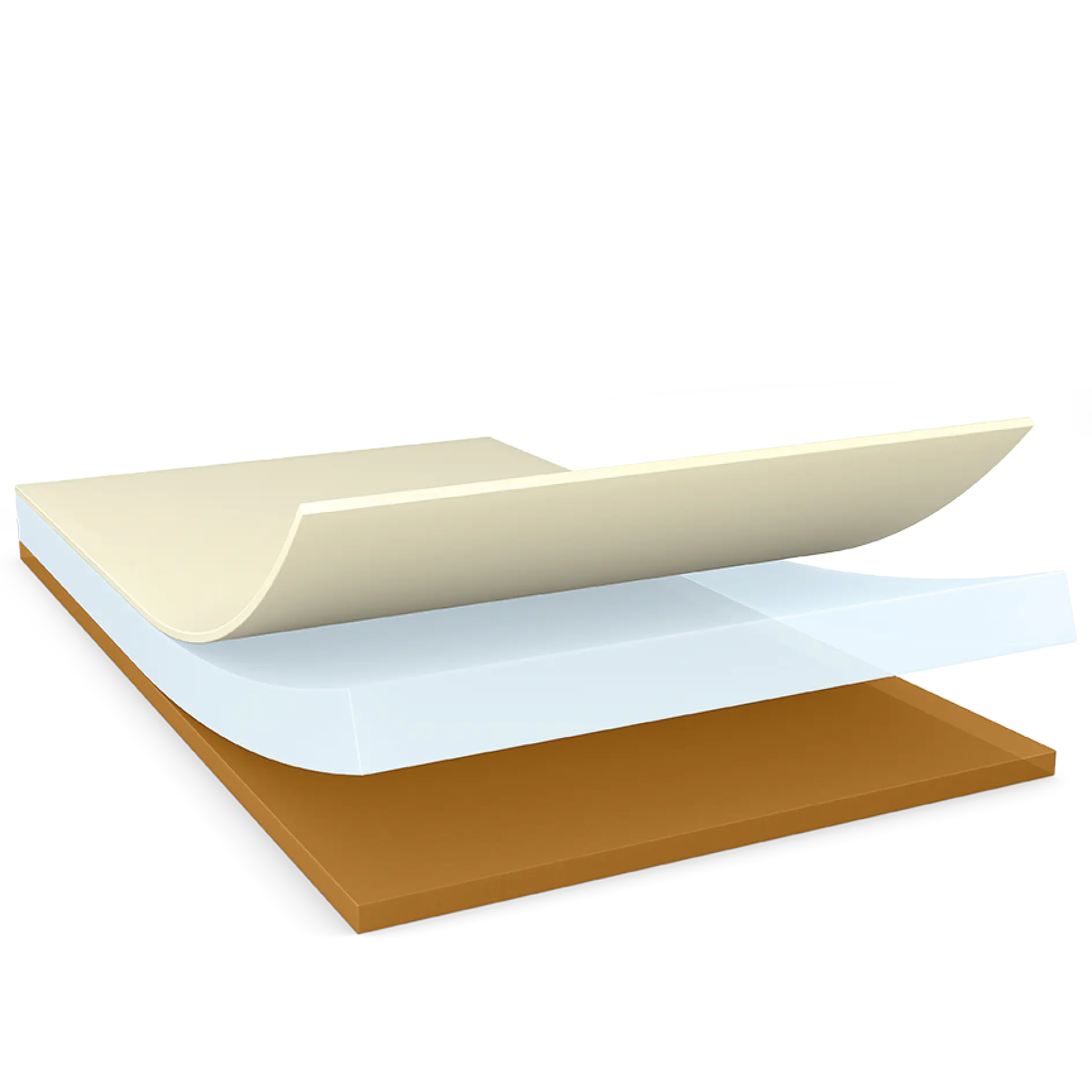
Single-sided PI Film Tape
Last updated on 24 Apr 2026