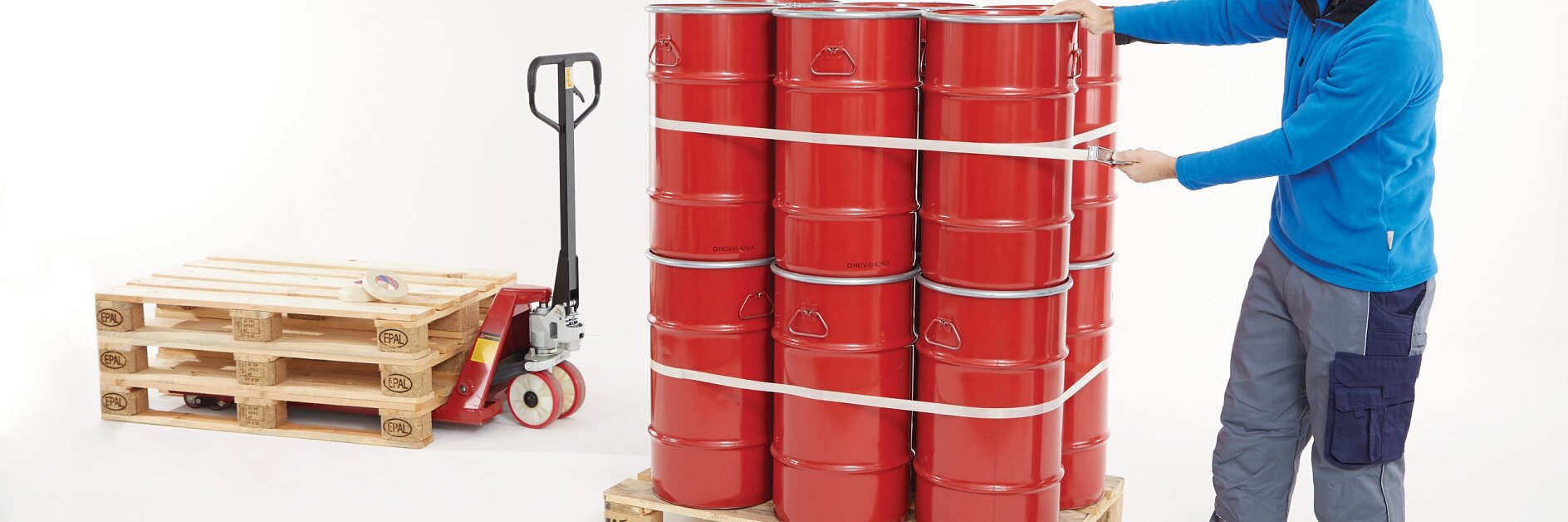
Filament strapping tape for secure bundling and transport

Quick overview
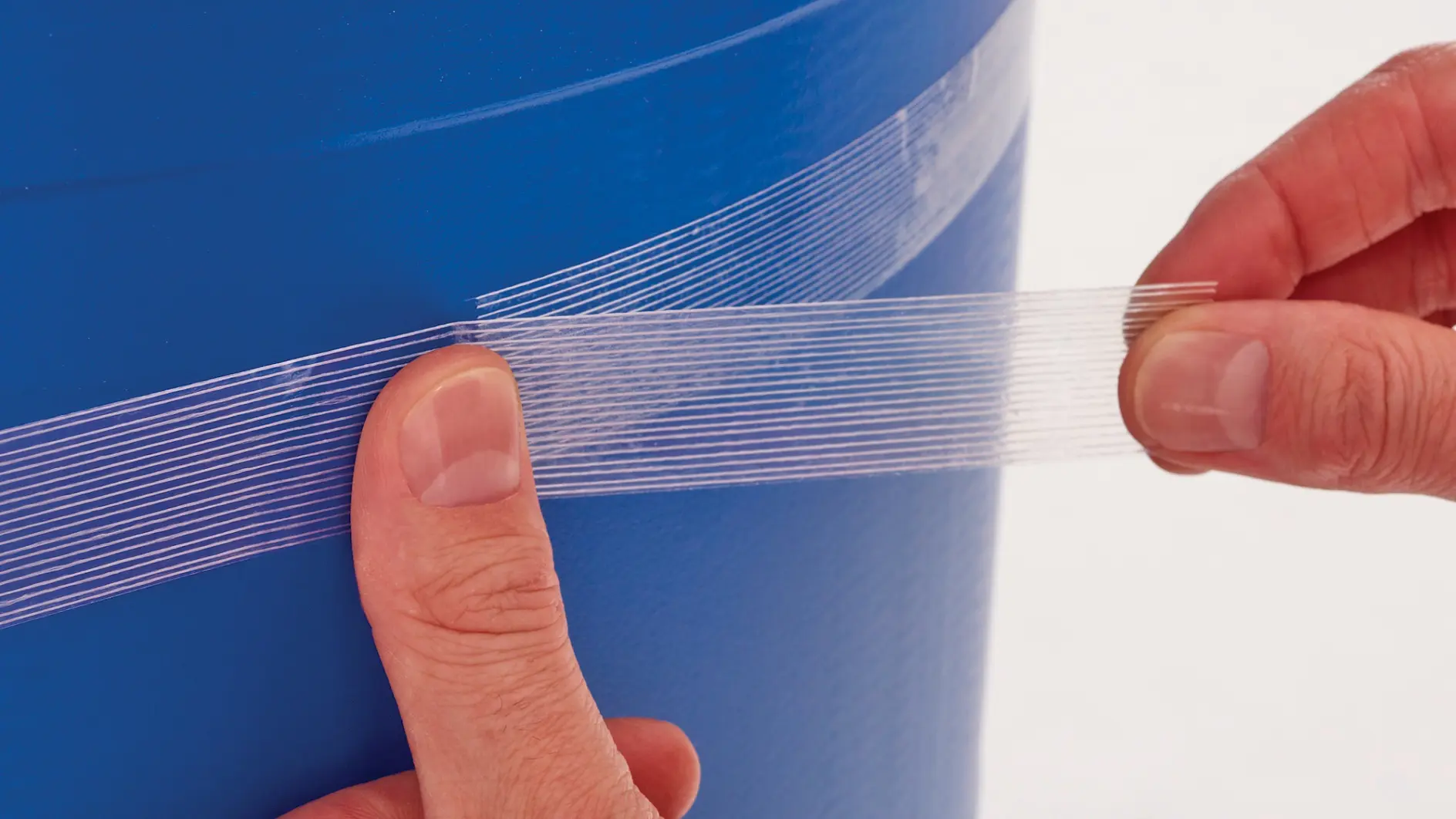
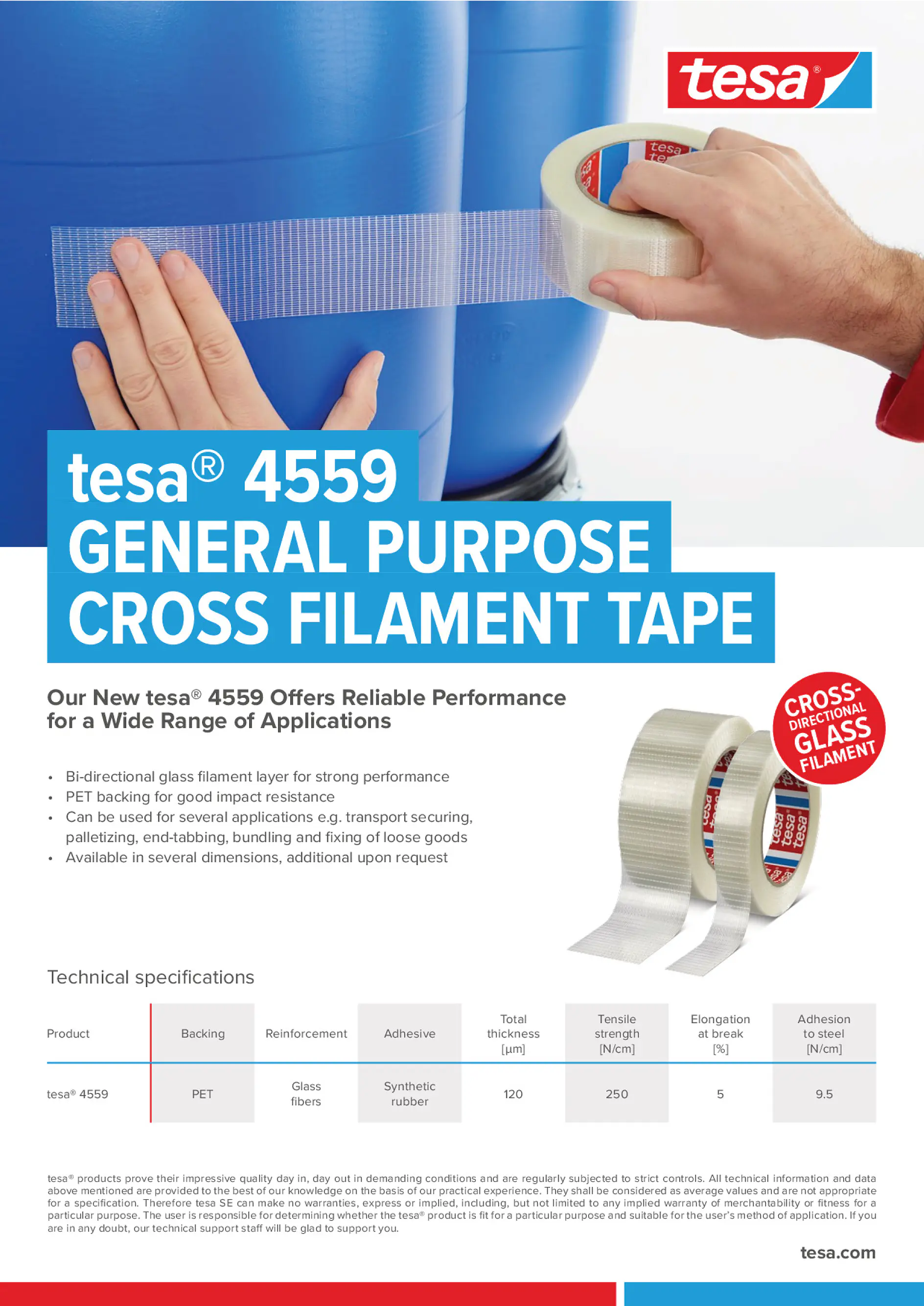
Filament strapping tape is an essential solution for securing and reinforcing heavy or valuable goods during transit and storage, complementing our range of bundling tapes and transportation tapes. Designed with fiberglass-reinforced backings and powerful adhesive systems, our filament strapping tape provides exceptional tensile strength and reliable holding power in demanding logistics and packaging environments.
Whether used for palletizing, reinforcing heavy boxes, or bundling transport units, filament strapping tape ensures that products arrive safely at distribution partners, retailers, and end customers. The combination of strong fiberglass filaments and high-performance adhesive systems makes these tapes ideal for applications where standard packaging tapes cannot withstand heavy loads, mechanical stress, or abrasion.
We offer a comprehensive range of filament strapping tape solutions designed to deliver secure fastening, reliable reinforcement, and efficient handling across various industries and logistics processes.
Key features of filament strapping tape
Filament strapping tapes are engineered to deliver high mechanical strength and dependable bonding performance. Their fiberglass reinforcement provides exceptional durability while the adhesive system ensures strong adhesion to a variety of surfaces.
The fiberglass filaments integrated into the backing create a highly tear-resistant structure that allows the tape to withstand strong tension, shock impact, and abrasion. This makes filament strapping tape particularly suitable for demanding packaging and transport applications where safety and reliability are critical.
In addition to high tensile strength, the adhesive systems used in our filament tapes are designed to provide strong initial tack and reliable bonding performance, especially on corrugated board and other packaging materials. Depending on the product type, the tapes may also offer shear resistance to prevent lifting, abrasion resistance, and clean removal from certain surfaces.
Key performance characteristics include strong fiberglass reinforcement, reliable adhesion to many surfaces, and high resistance to wear, tearing, and mechanical stress. These features help ensure that transport units remain stable and secure throughout the logistics chain.


Typical applications for filament strapping tape
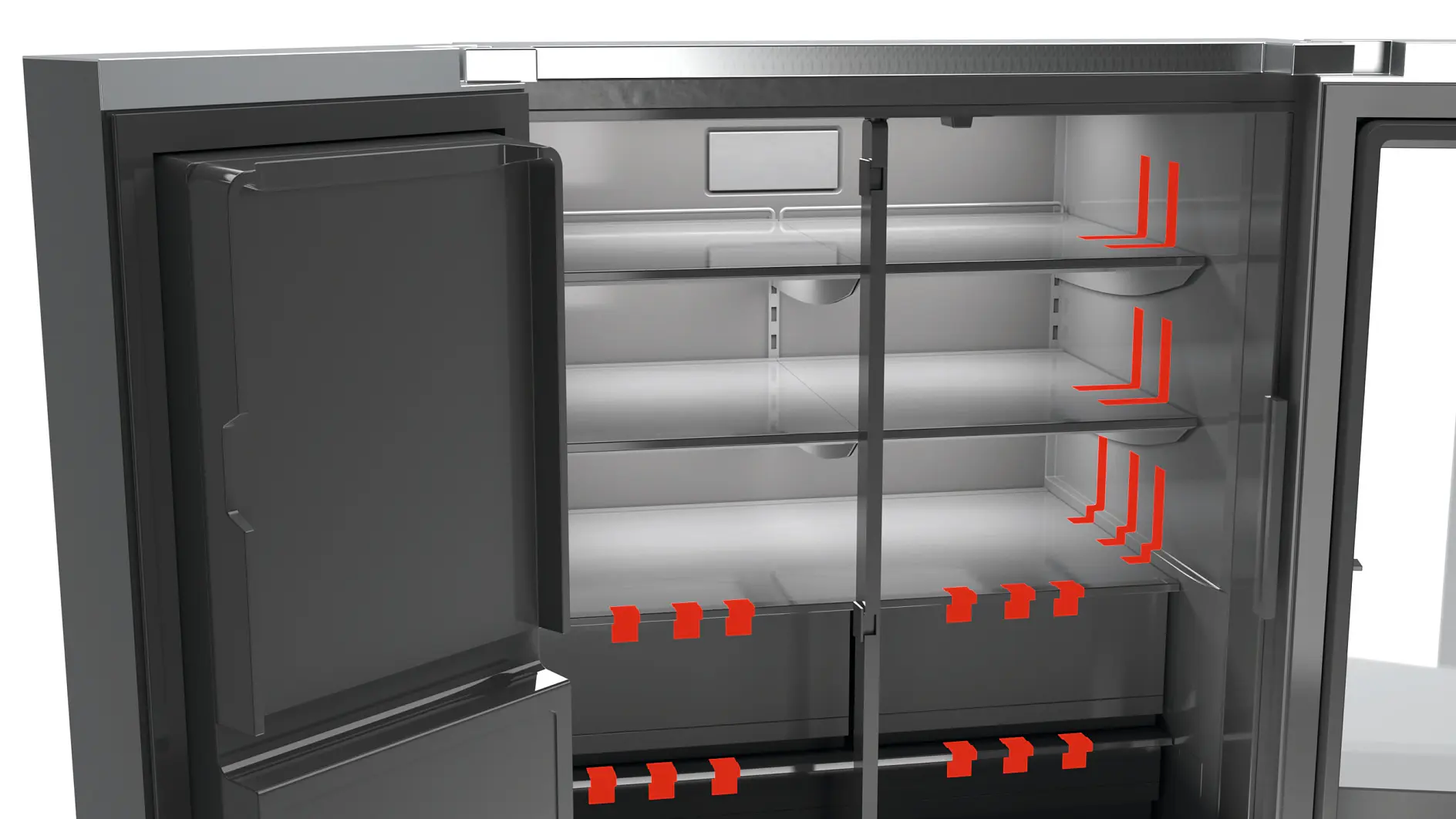
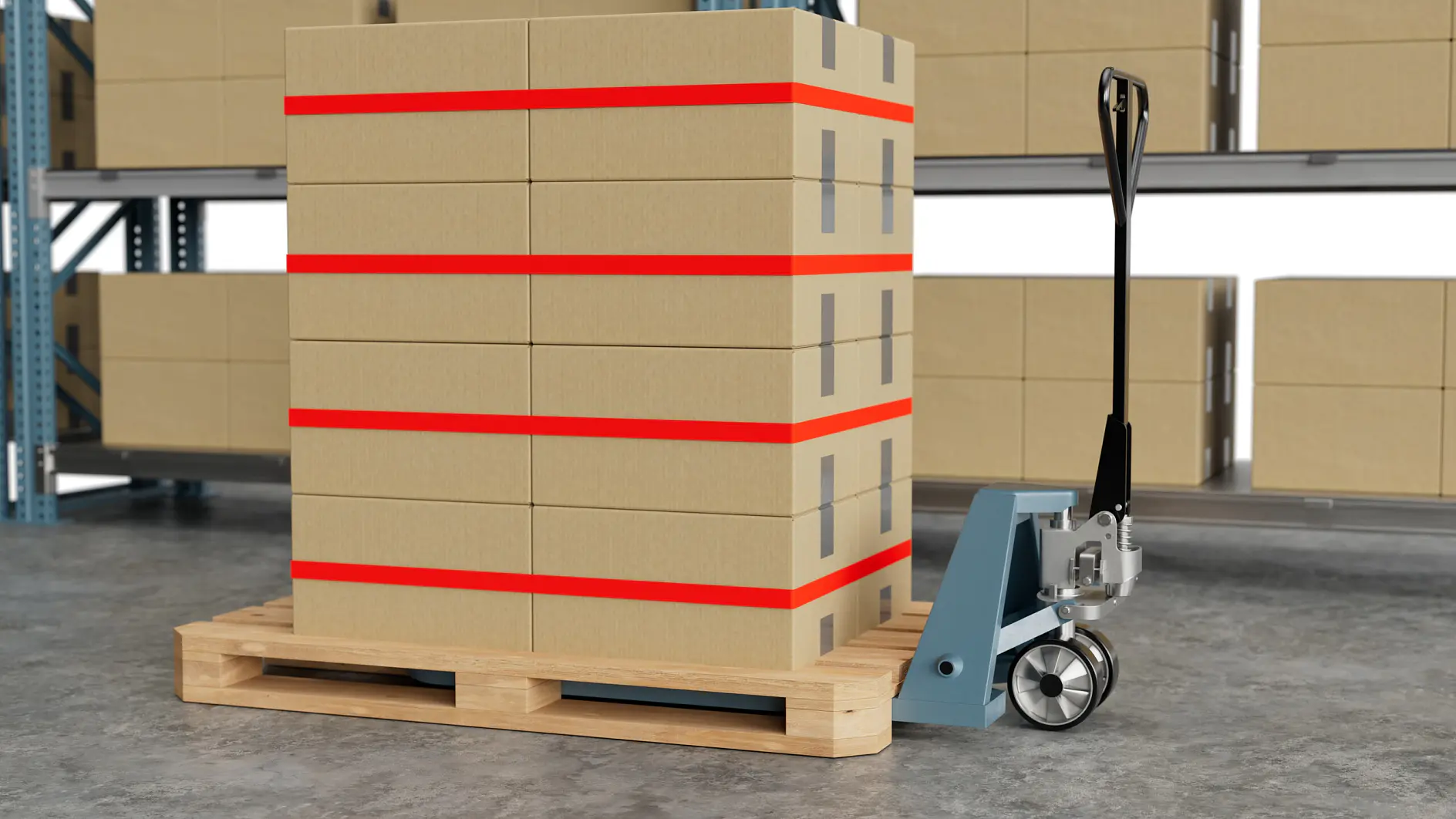
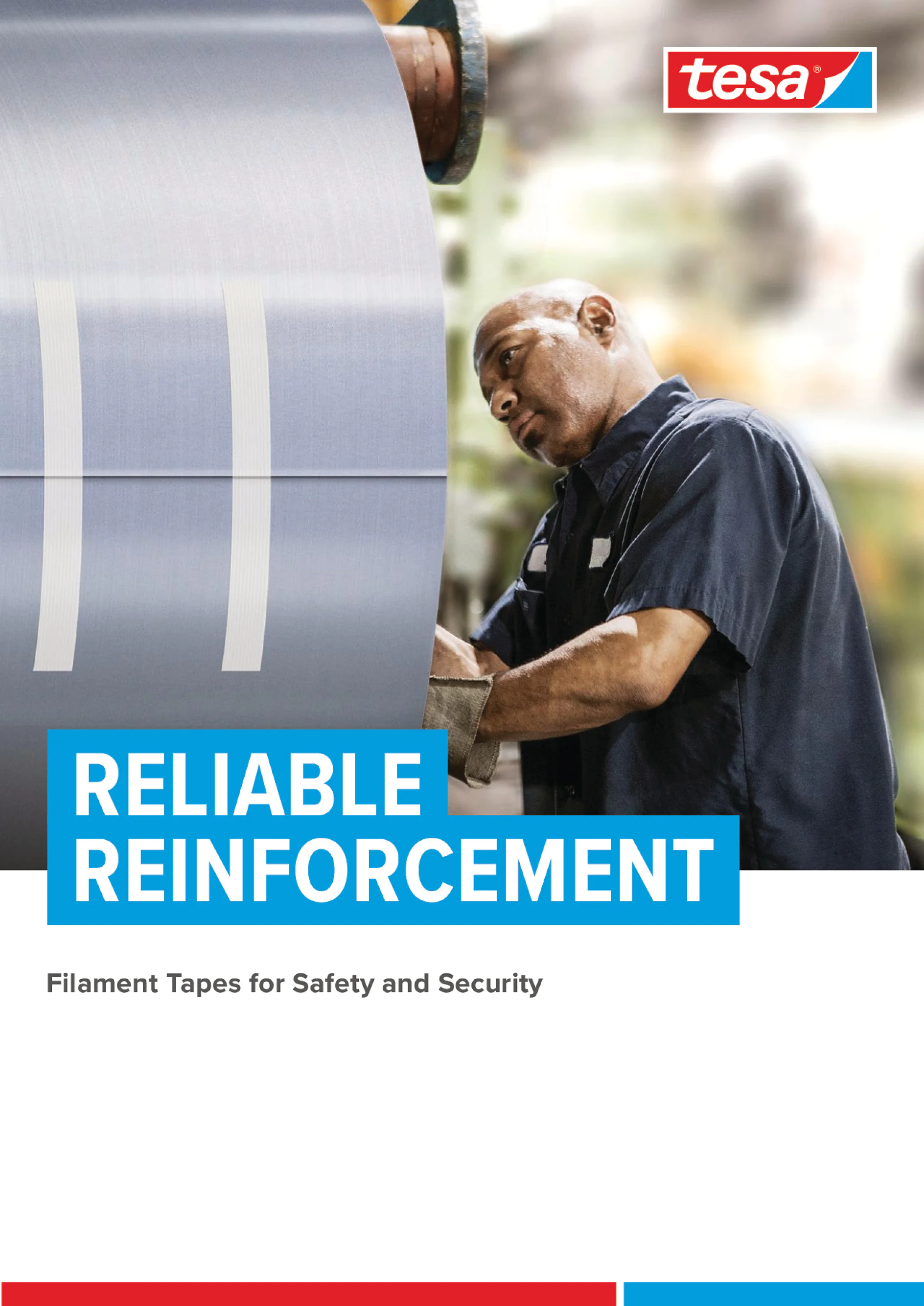
Filament strapping tape is widely used in industries where reliable reinforcement, bundling, and securing of goods are essential. Its fiberglass filaments and strong adhesive provide the strength needed to stabilize transport units and protect products during handling, storage, and shipping. In logistics and packaging, the tape keeps goods securely bundled, withstanding mechanical stress, shocks, and demanding transport conditions.
Beyond transport, it is also used in industrial settings to temporarily secure components, reinforce materials, or stabilize products during manufacturing and processing, offering strength that conventional tapes cannot match.
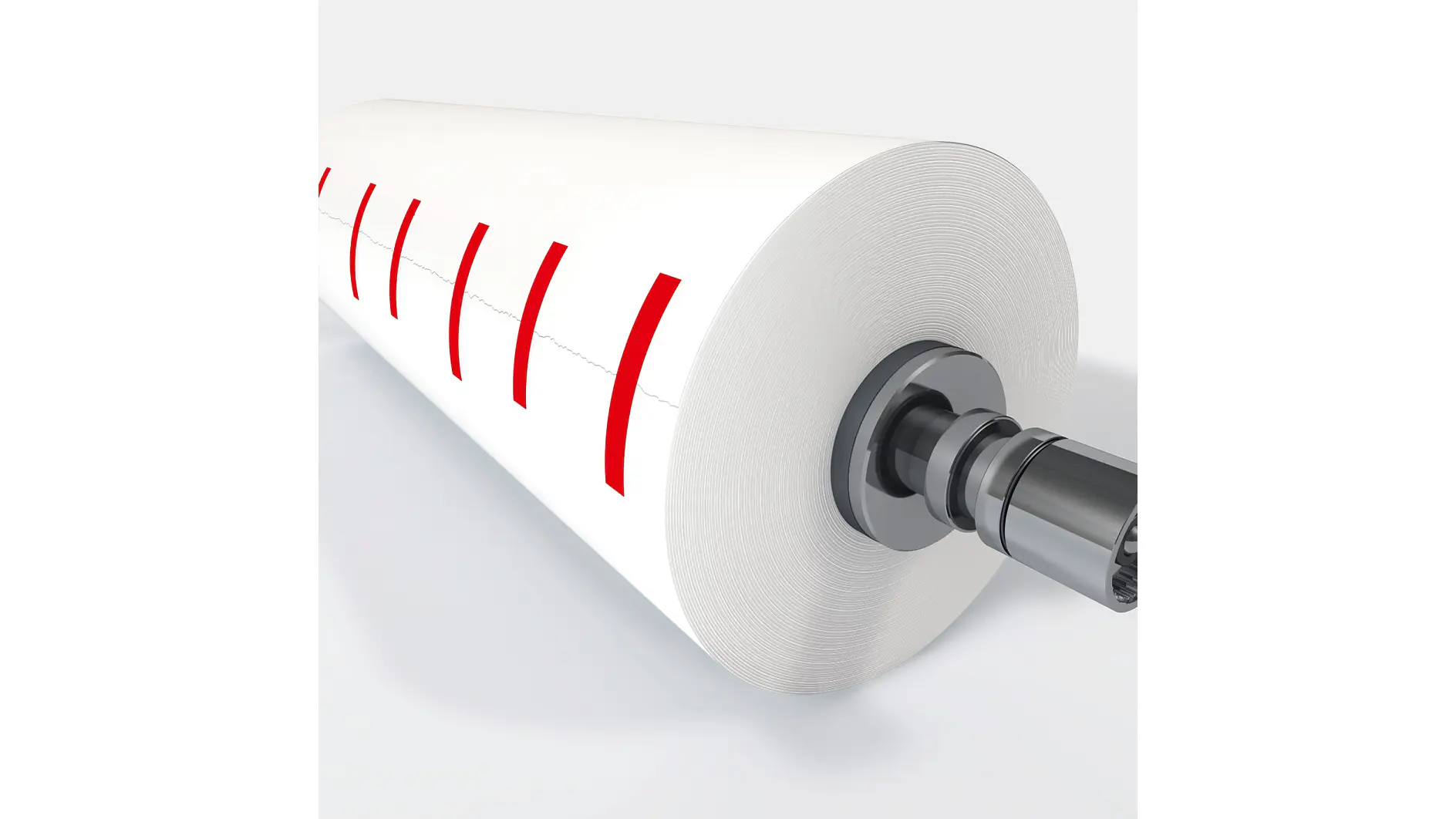

Filament strapping tape for secure bundling and transport
Our filament strapping tape assortment
We offer a wide assortment of filament strapping tapes designed to meet different performance requirements, from general-purpose bundling to heavy-duty transport reinforcement.
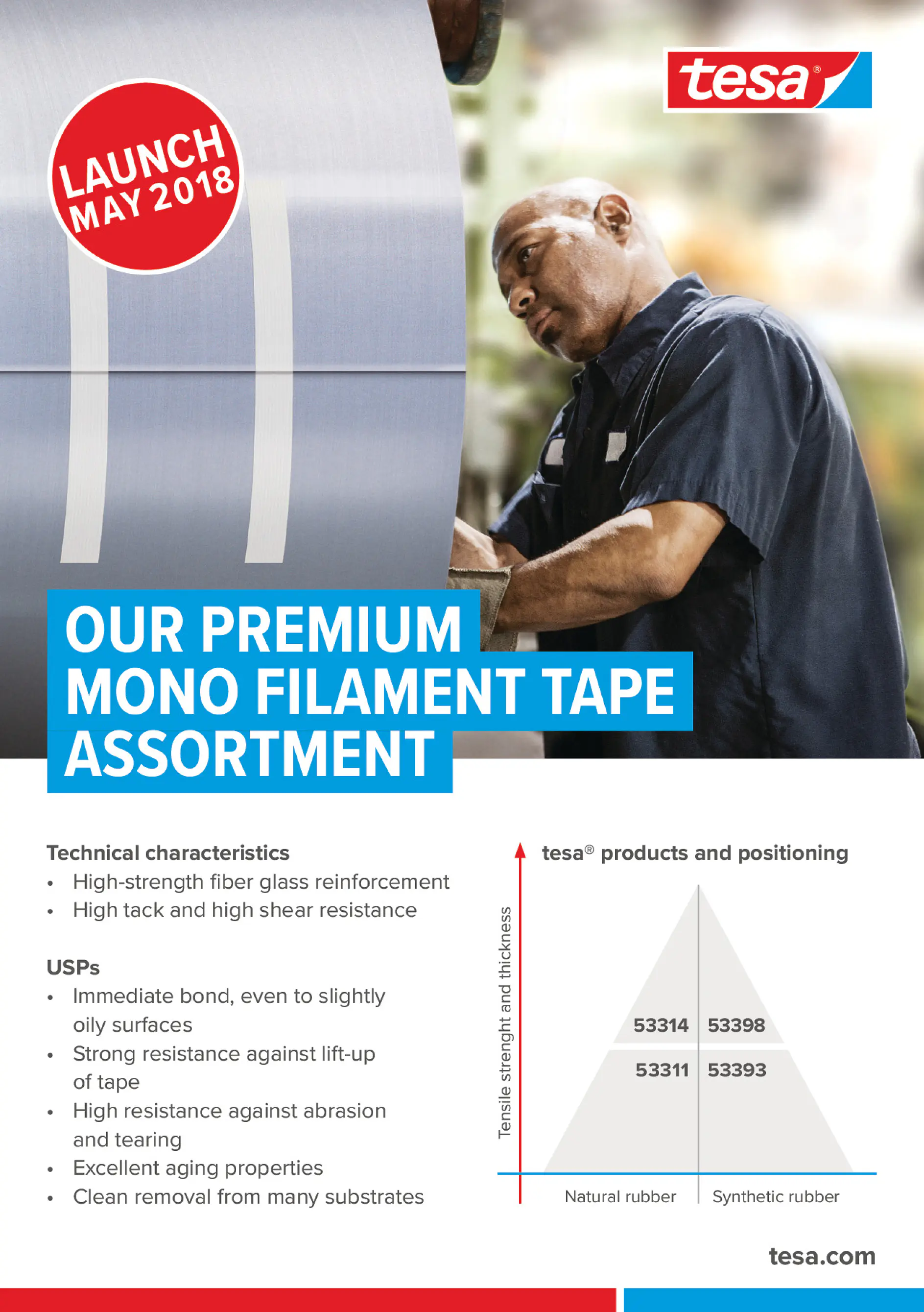
Premium filament tapes, such as tesa® 53398, provide maximum tensile strength, high abrasion resistance, and strong shear performance for demanding logistics operations. These tapes are ideal for heavy packaging, pallet stabilization, and applications where extreme mechanical stress occurs.
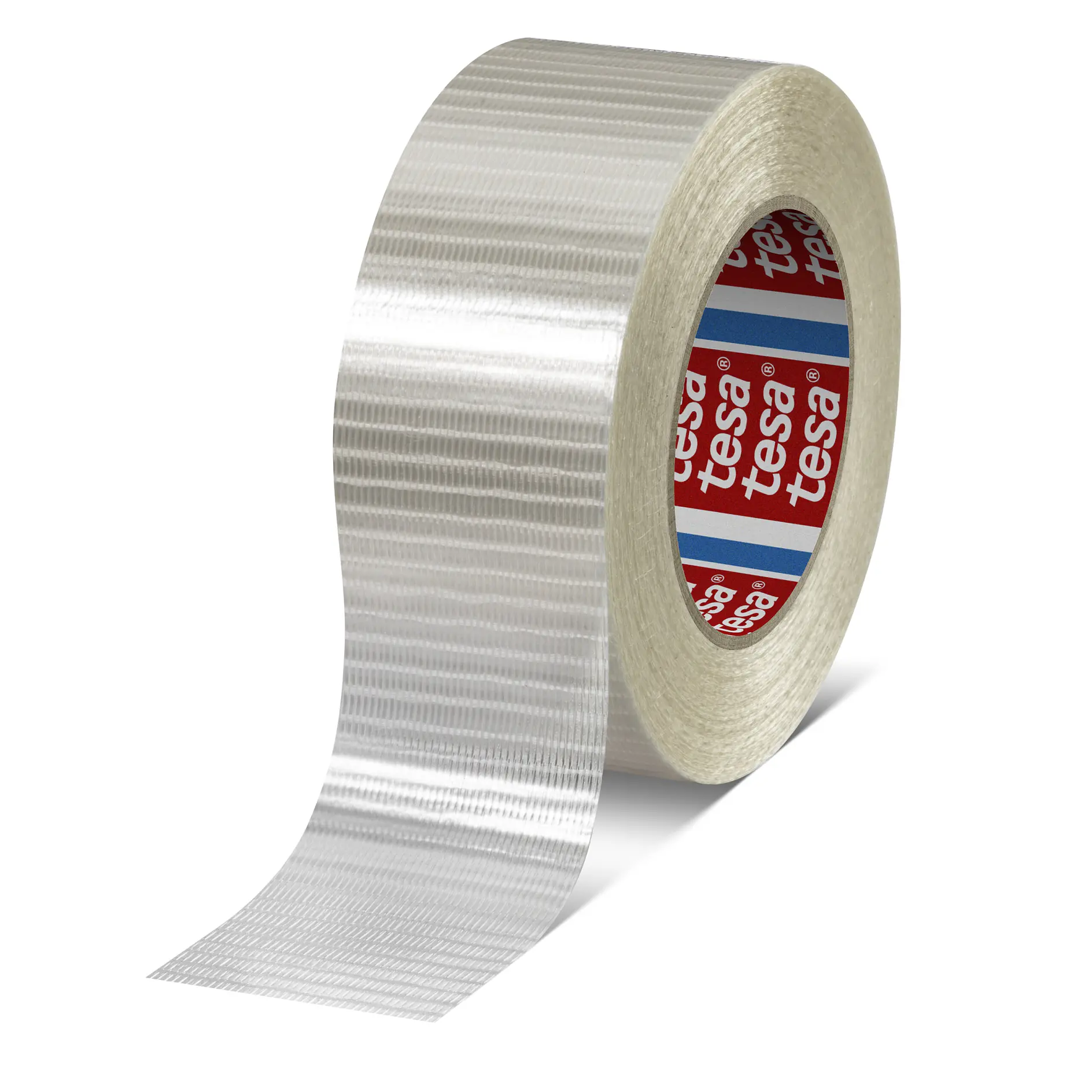
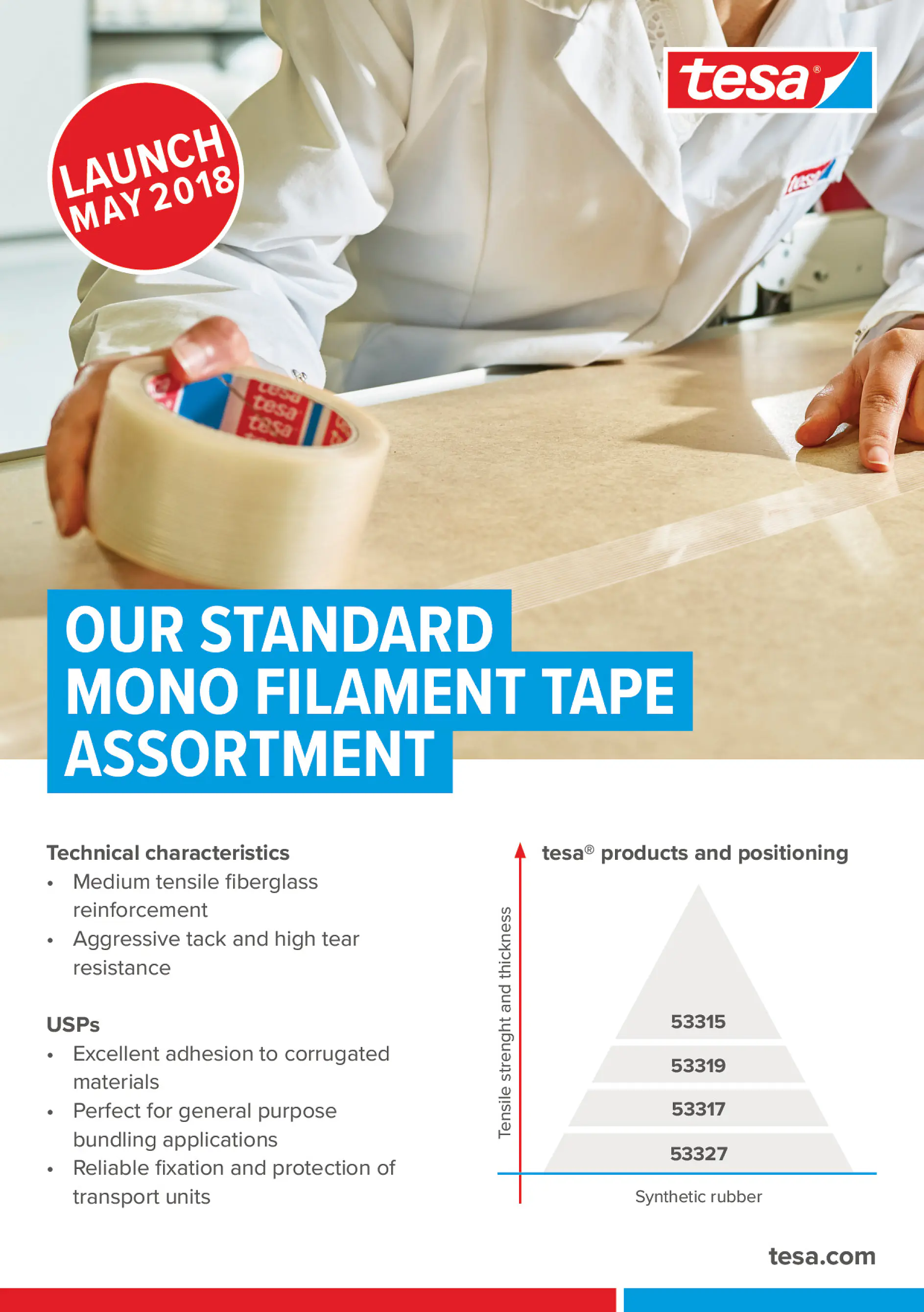
Standard filament tapes, such as tesa® 53315, offer a balanced combination of strength and flexibility, making them suitable for a wide range of bundling, reinforcement, and packaging tasks.
Our portfolio includes mono filament tapes, such as tesa® 4590, which feature fiberglass filaments running in one direction to provide reliable tensile strength and high tear resistance. With strong adhesion — especially to corrugated materials — they are well suited for general-purpose bundling, reliable fixation, and the protection of transport units. Certain mono filament tape solutions also offer high tack, strong shear resistance, and durable performance, including resistance to abrasion and clean removal from many substrates.
FAQs
À quoi sert le ruban de cerclage à filaments ?
Le ruban de cerclage à filaments est principalement utilisé pour le bottelage, le renforcement et la sécurisation de colis ou d’unités de transport lourds ou surdimensionnés. Grâce à ses filaments de fibre de verre intégrés, il offre une résistance à la traction et à la déchirure exceptionnelle, ce qui le rend idéal pour les applications d’emballage, d’expédition et de logistique exigeantes. Il est souvent appliqué pour sécuriser des palettes, renforcer les bords des cartons, fixer des objets lâches et garantir l’intégrité des colis durant le transport. De plus, le ruban à filaments peut servir de solution fiable pour la fermeture d’extrémités, l’assemblage de plaques arrière ou d’autres applications industrielles nécessitant une forte adhérence et une grande durabilité mécanique.
Pourquoi le ruban à filaments est-il plus résistant que le ruban d'emballage standard ?
Contrairement au ruban d’emballage standard, qui ne mise que sur l’adhésif et le film support pour sa résistance, le ruban de cerclage à filaments intègre des filaments de fibre de verre ou de polyester qui traversent le ruban soit dans un seul sens (mono), soit dans les deux sens (croisé). Ces filaments jouent le rôle d’armature interne, offrant une résistance exceptionnelle à la traction et à la déchirure. Par conséquent, le ruban de cerclage à filaments peut supporter des charges plus lourdes, résister aux déchirures accidentelles et endurer les contraintes mécaniques lors de la manutention, du gerbage et de l’expédition — des performances que les rubans d’emballage ordinaires ne peuvent atteindre. Cela rend le ruban à filaments particulièrement adapté aux applications industrielles, d’entrepôt, d’emballage et de logistique, où sécurité et durabilité sont essentielles.
Sur quelles surfaces le ruban de cerclage à filaments peut-il être appliqué ?
Les rubans de cerclage à filaments sont très polyvalents et adhèrent généralement bien au carton ondulé, au carton plat et à d'autres matériaux d'emballage courants. Selon le système adhésif, ils peuvent également adhérer efficacement aux surfaces lisses ou revêtues et à certains plastiques, y compris les substrats non polaires comme le polyéthylène (PE) et le polypropylène (PP). Cette flexibilité permet d'utiliser le ruban filament dans une grande variété de situations d'emballage, allant de la fermeture de cartons lourds et de la palettisation au regroupement d'articles de formes ou de matériaux variés.
Le ruban filament peut-il être retiré sans laisser de résidus ?
Certains produits de ruban de cerclage à filaments sont conçus pour une dépose propre de certains supports, permettant une fixation temporaire ou une sécurisation lors du transport sans laisser de résidus de colle. Cette caractéristique est particulièrement précieuse dans les applications où les colis peuvent devoir être ouverts puis refermés, ou lorsque les aspects esthétiques et la protection des surfaces sont importants. Bien que les rubans à filaments haute résistance destinés au renforcement permanent puissent laisser des résidus lors du retrait, les produits dotés de systèmes adhésifs spécialisés offrent un équilibre entre une forte adhérence durant l’utilisation et une dépose propre par la suite.