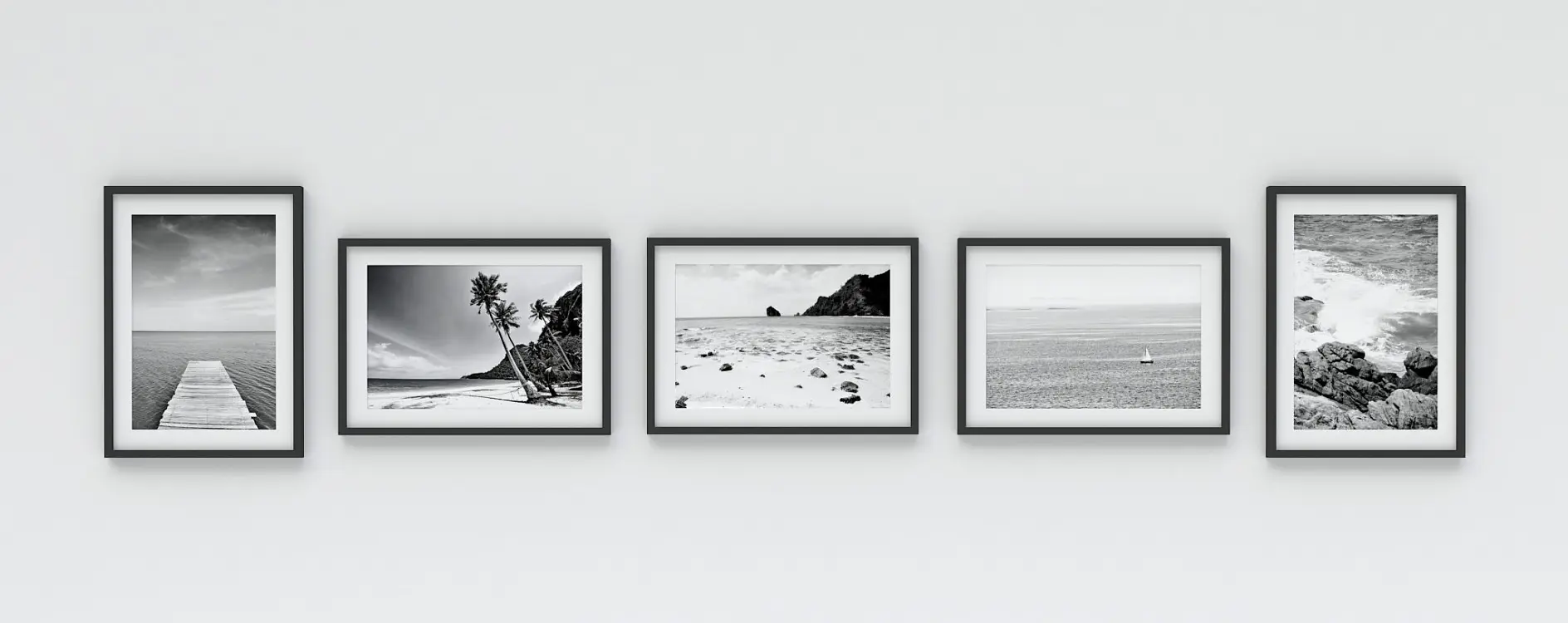
If you like a classic and tidy look, the ‘Row Display’ is your perfect solution. Several pictures are simply placed next to each other on the wall at the same height. “It looks truly classy when related motifs, for example, a series of photos or pictures, are hung next to each other in identical frames,” explains production designer Sebastian Krawinkel.
Stunning! Professional Tips for Displaying Pictures
Technologies
Pictures give a room a certain flair. There are many ways to arrange and hang them artistically. We’ve put together the best options for you.
Photos from your last vacation, your children’s drawings, an old painting found at the flea market – pictures give a personal touch to a living room and they radiate liveliness. But how can you skillfully stage your favorite motifs? With the right mounting system, it’s truly easy!
Elegant and straight
"You can create a great effect when the color scheme of the motifs and the material of the frames are reflected in the furniture of the room."
Sebastian Krawinkel
Production Designer

Sebastian Krawinkel
equips international film sets (“Around the World in 80 Days”, “Inglourious Basterds”, “Vier gegen die Bank”)
One after the other
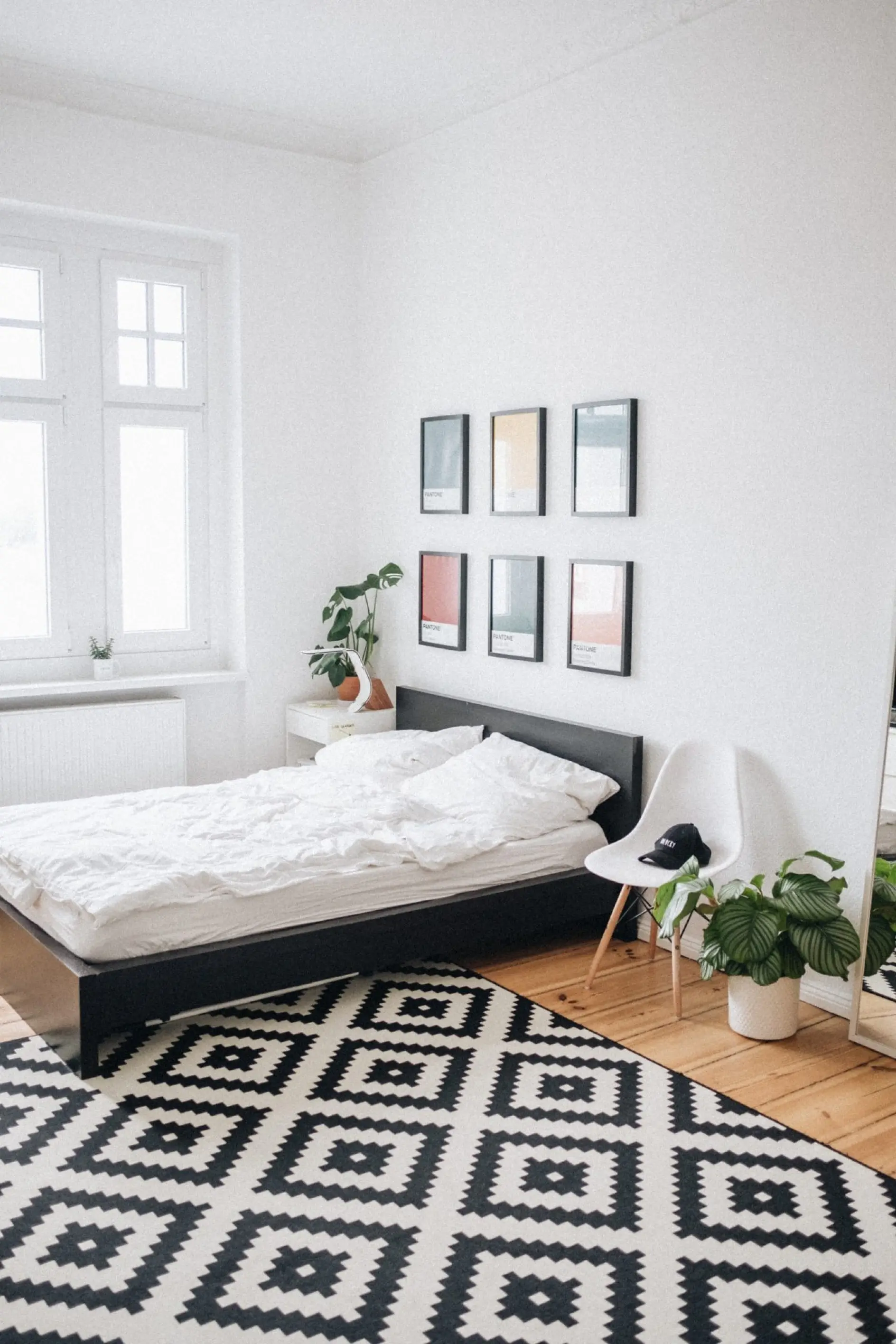
Mounting pictures in a grid requires plenty of patience and precision! Just like a checkerboard pattern, all motifs have the same format. Very important: The distance between the pictures must be identical on all sides. The ideal distance is approx. five centimeters. A tip from interior expert Sebastian Krawinkel: “You can create a great effect when the color scheme of the motifs and the material of the frames are reflected in the furniture of the room.”
145 to 160 centimeters
above the floor – That’s where the center of a picture should be placed. This is a rule of thumb for museums when displaying works of art.
Source: Kunsthalle Hamburg
Framed
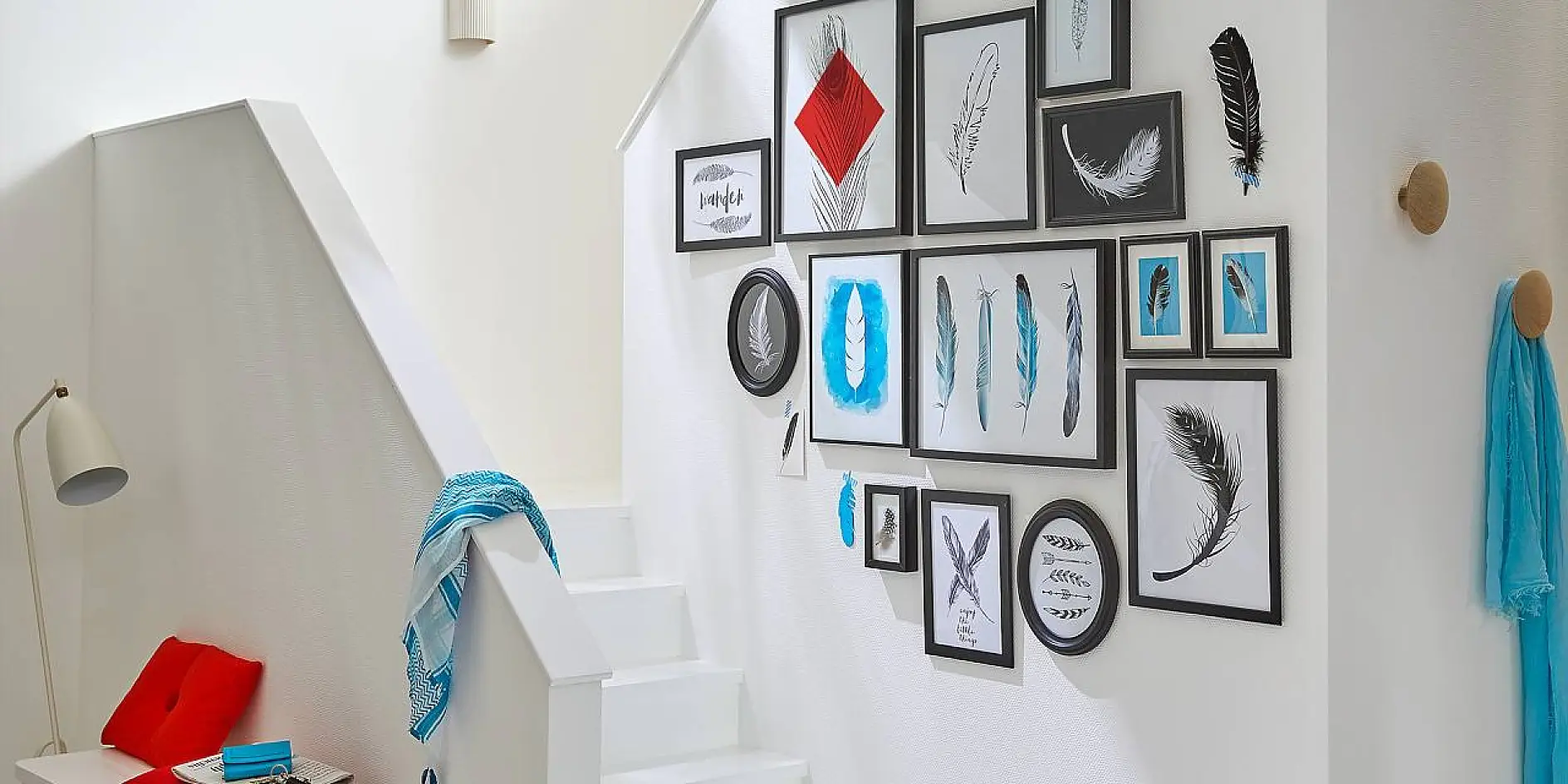
For pictures of different sizes, you best use an imaginary frame. The advantage of the layout “Inside the Lines”: There are neither uniform distances nor predetermined viewing axes. The motifs are arranged in a defined form. It could be a circle, an oval, a square or a heart. It’s best to mark the side edges of the form in advance with masking tape. You then hang up the largest picture and place the remaining works of art around it in a mix of portrait and landscape formats.
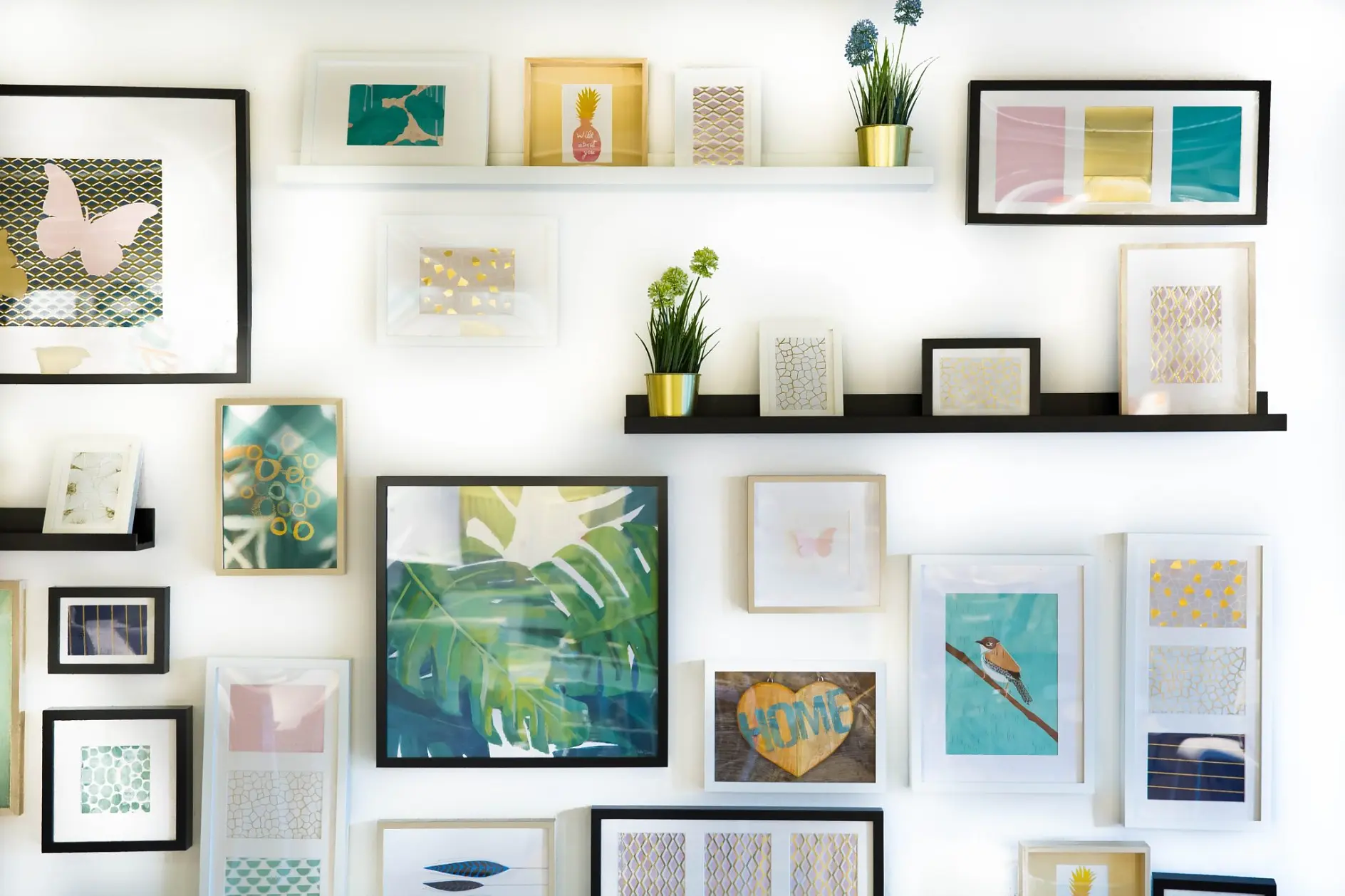
Many pictures – one grand piece of art
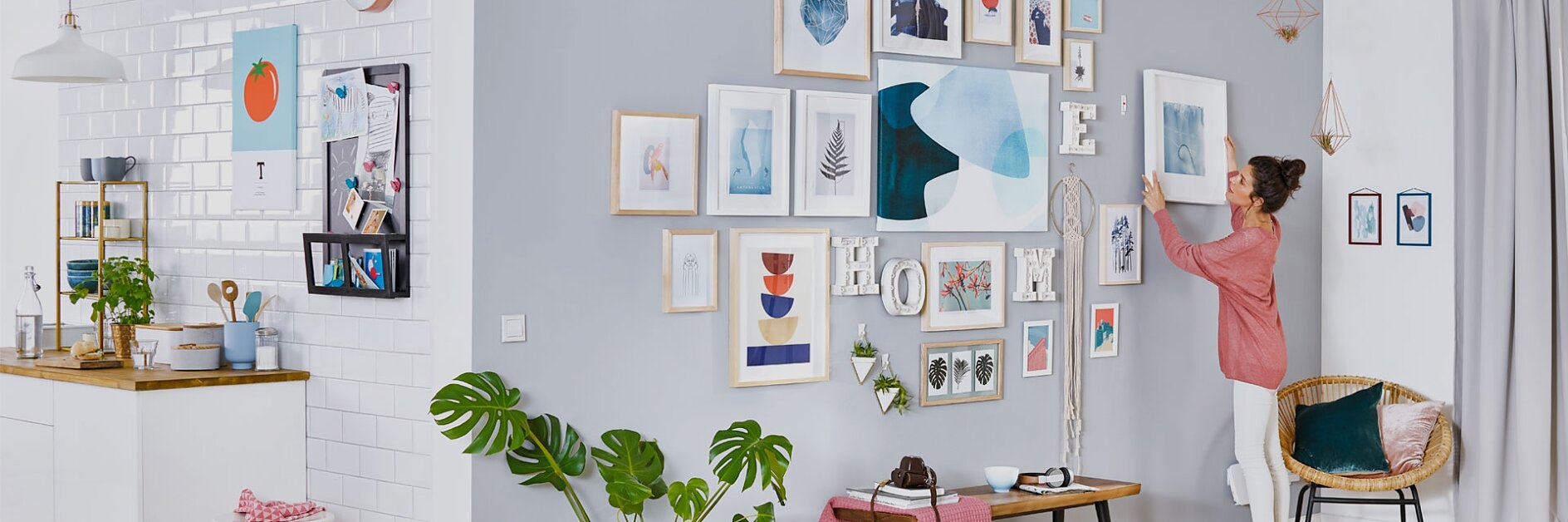
Countless pictures side by side – from floor to ceiling: The St. Petersburg Hermitage, one of the most famous museums in the world, has launched this trend. The St. Petersburg Display once exhibited the wealth of the noble class. Today you don’t need an expensive collection of paintings to be extraordinary. A colorful mix of pictures is all you need! To make the overall work of art look harmonious, simply repeat certain frame shapes, similar color combinations or common content.
On the wall!
Photo frame or canvas: With the height-adjustable adhesive nails from tesa, small and large works of art can be mounted to the wall in just a few simple steps. This way, creative interior artists can fashion new imagery on the wall at any time.
Fixing without hammer and nail
Adhesive nails are a reliable solution for fixing things to the wall – without having to take out the toolbox.
Tips & Tricks
For a successful display, make paper stencils of the pictures beforehand and attach them to the wall with tesa adhesive tape in order to determine the exact position.
Existing lines within the room help you arrange your pictures. For example, the top edge of a door or window frame, but also the position of light switches. Thus, the pictures should be placed in one line.

To the human eye, a combination of three or another odd number of images looks more harmonious.

A picture arrangement becomes more expressive if you pick out one color of the motif and paint the wall behind the artwork accordingly – the darker the color, the better.
Last updated on 15 Apr 2026