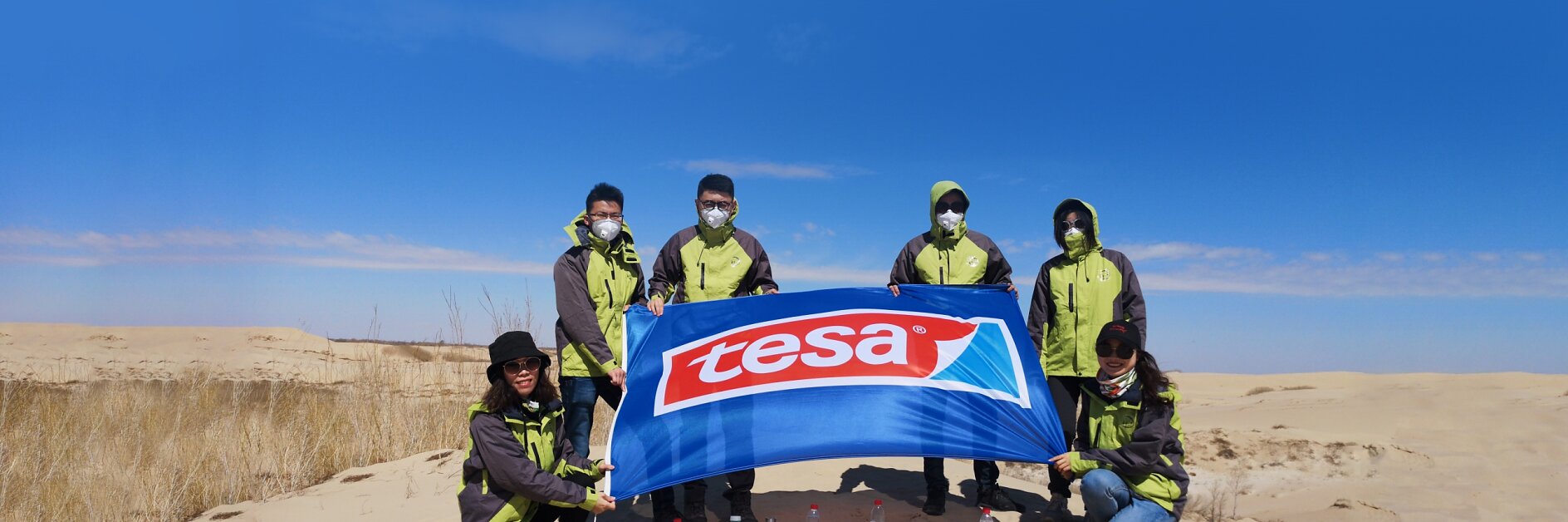
After a three-hour car ride to the Taminchagan desert, the colleagues were first taught under expert guidance how to skillfully trim a tree. Equipped with their new knowledge, they first trimmed older trees in the nearby poplar forest so they can grow better and stronger. The voyage of the tesa employees then continued to Kezuohou Qi. Others had already performed good preparatory work there: the desert is already covered with a large green area of grass and shrubs.
A Green Oasis in the Desert
Sustainability
Since 2015, tesa China has been regularly involved in the “Million Tree Project” – a tree-planting campaign in the Mongolian desert. The goal: to counteract global warming and desertification.
Text
The “Million Tree Project” was launched by the environmental protection organization “Shanghai Roots & Shoots.” Since 2015, the tesa China Team has been involved in the environmental project and taken part regularly in the initiative. This year, tesa employees not only donated 3000 trees but also sent six volunteers to participate in the tree-planting expedition in Inner Mongolia.
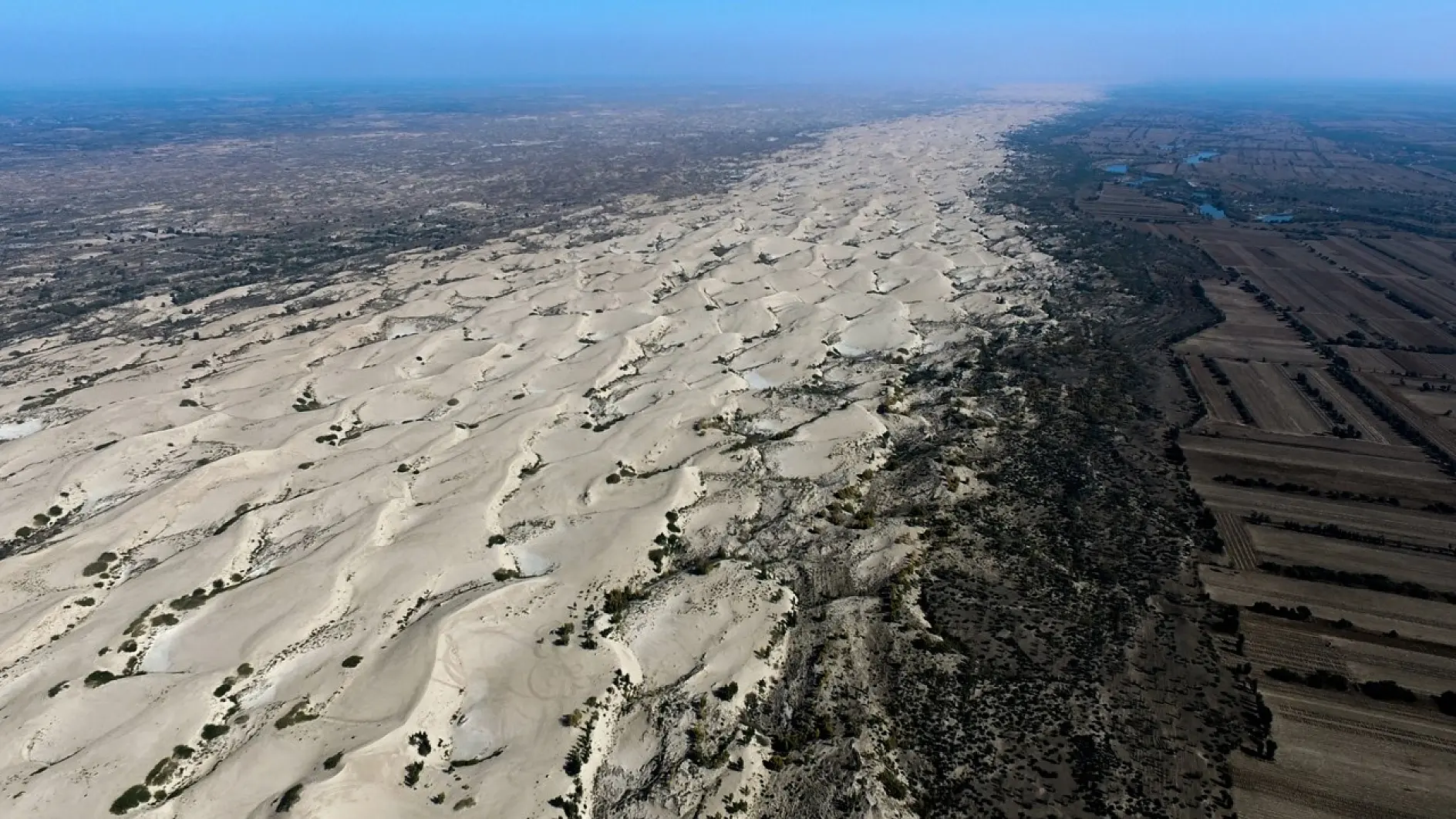
Challenge in the desert sand – the “Million Tree Project” covers the Taminchagan desert with grasses and shrubs.
The Forest is Growing
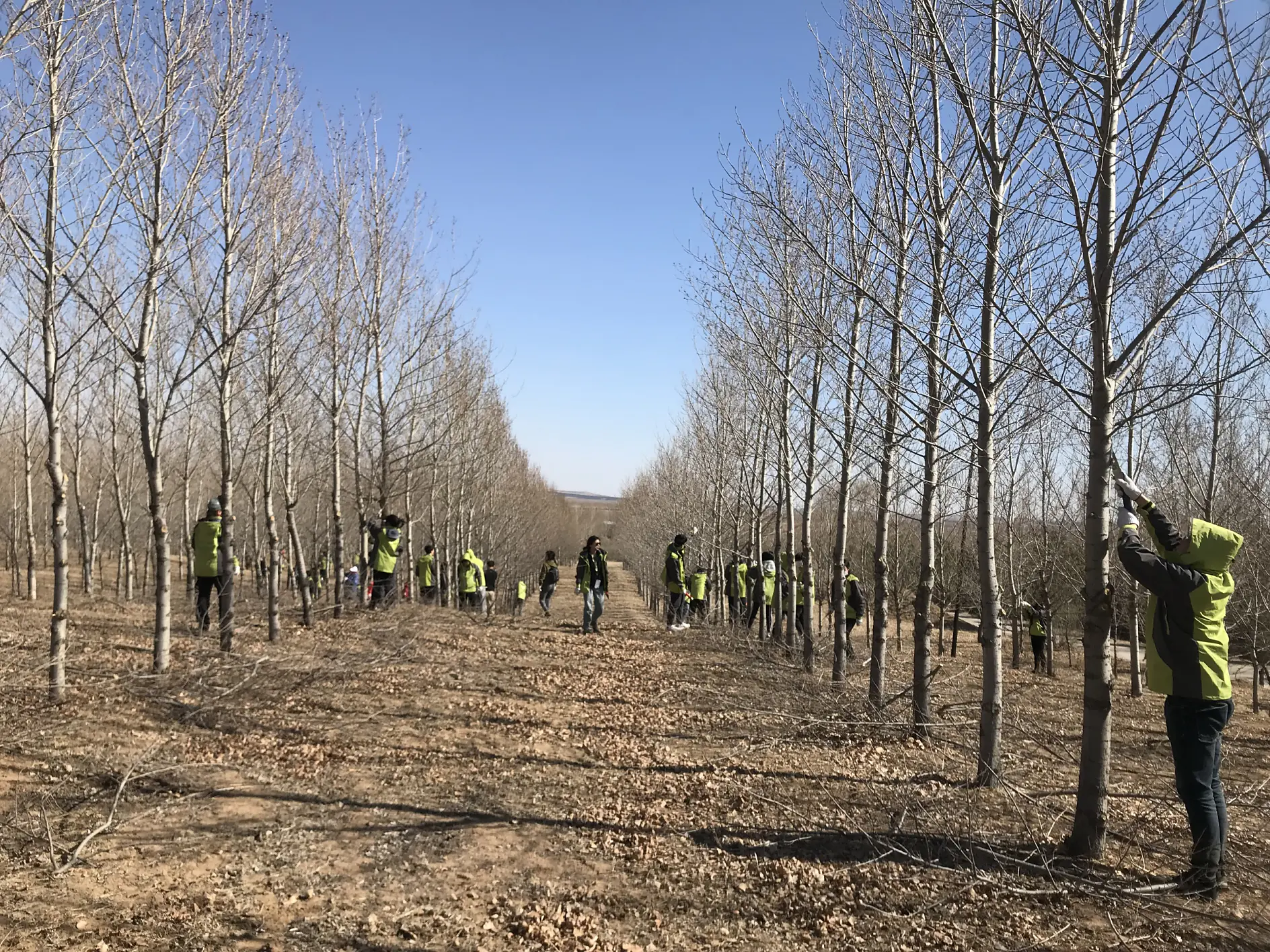
50 volunteers, 668 new trees – the revegetation is working.
In order to further recultivate the area, the team planted trees typical for the region, such as Scots pine. This was a real challenge, not least because of the strong wind that stirred up the desert sand around the area. At the end of the day, however, the desert had gained exactly 668 trees thanks to the perseverance of the approximately 50 volunteers.

Working in the desert – six tesa employees from the China Team took part in the tree planting project in Inner Mongolia.
"Participation in this project has had a major impact on me and I have learned a lot about environmental protection. This experience will remain with me throughout my future life and work."
Ethan Xin
Senior Sales Engineer
Trees for Climate Protection
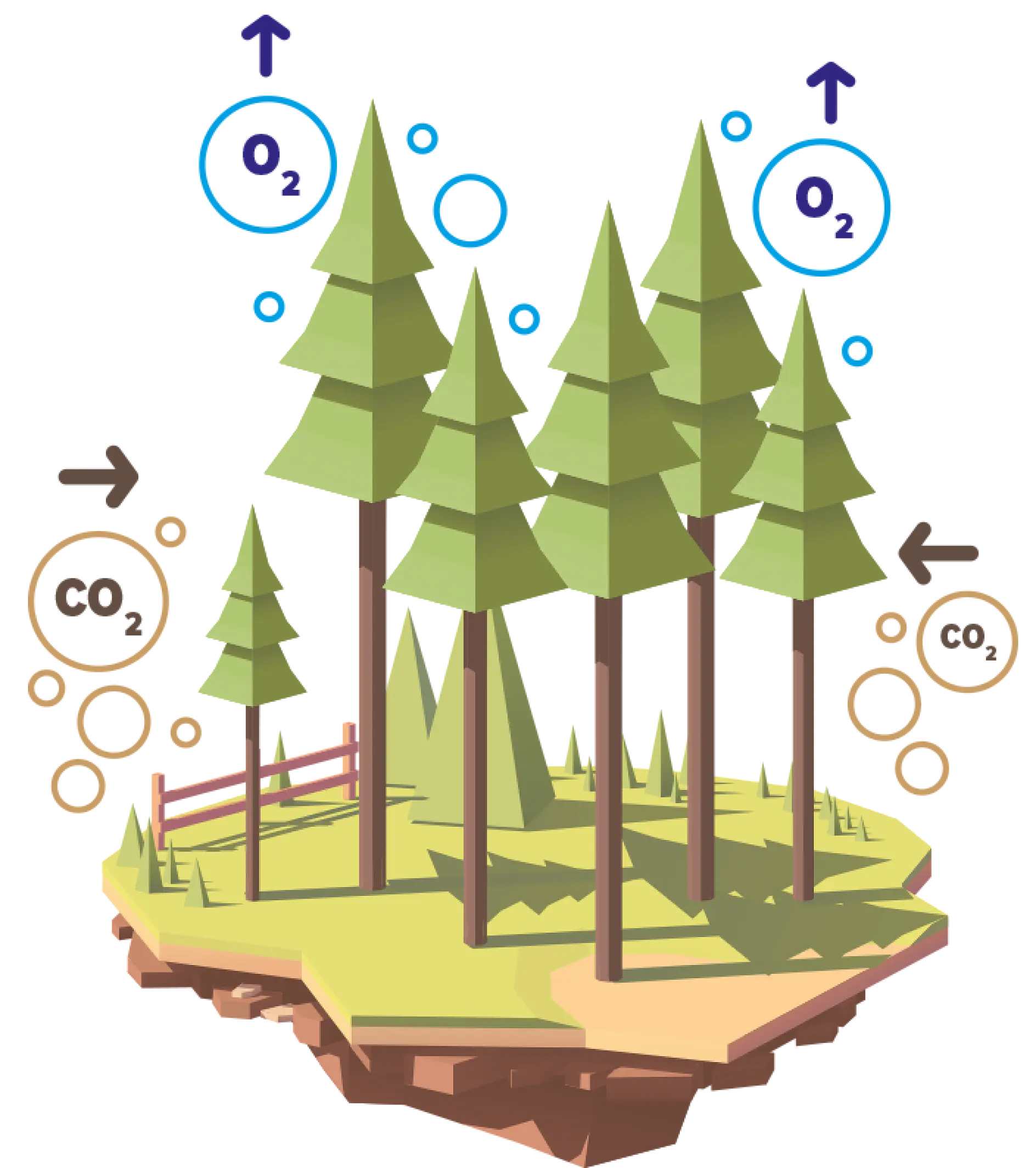
Trees extract the greenhouse gas CO₂ from the atmosphere through carbon sequestration and wood growth: Trees convert carbon (C) into biomass by means of photosynthesis and emit oxygen (O₂) into the air. According to a study by Yale University and 23 other universities, there are approximately 3000 billion trees on earth. This seems like quite a lot but the study also comes to the conclusion that humans have already destroyed 46 percent of all trees that ever existed. Even today, some 15 billion trees are cut down each year.
Last updated on 15 Apr 2026